

Most people assume exclusive events are simply a matter of paying more. The reality is far more structured. Understanding how exclusive event access is arranged reveals a system built on curated guest lists, psychological scarcity, layered ticketing models, and on-site technology that most attendees never see. Whether you are trying to secure a seat at a sold-out concert or organising a private gathering for high-profile guests, the mechanics behind exclusivity follow clear, repeatable patterns. This article breaks down each stage of that process, from the first invitation to the final check-in.
Table of Contents
- Key takeaways
- How exclusive event access is arranged
- The invitation process and selection criteria
- Tiered access models and how they work
- Access control on the day
- What actually makes exclusive access work
- Access exclusive events with A1lifestyle
- FAQ
Key takeaways
| Point | Details |
|---|---|
| Exclusivity is engineered | Access is controlled through invitation policies, sealed allotments, and sponsorship packages, not just price. |
| Guest lists are curated deliberately | Selection criteria combine event objectives, social dynamics, and networking goals to shape attendance. |
| Layered access models expand reach | Confirmed seats, waitlists, and digital overflow allow organisers to manage demand without sacrificing prestige. |
| Technology enforces access on the day | RFID wristbands, separate entry points, and timed access windows keep VIP experiences distinct from general admission. |
| Follow-up timing affects attendance rates | A structured follow-up sequence significantly improves RSVP conversion and final guest list accuracy. |
How exclusive event access is arranged
Exclusive events are not simply expensive events. They are events where access is actively restricted, controlled, and communicated as limited. That distinction matters.
The most recognisable examples sit at the extreme end of the scale. Individual tickets for elite events such as the Met Gala can cost $75,000 per seat, with table packages starting at $350,000. At the other extreme, sponsorship packages for ringside seats at select events such as the White House UFC event have reached between $1 million and $1.5 million. These figures are not just price tags. They are access barriers, designed to filter attendance to a specific profile of guest.
The core mechanisms used to control access include:
- Invitation-only policies. No public ticket sale exists. Attendance is by direct invitation from the organiser or a designated host.
- Sealed allotments. A fixed number of tickets are distributed through sponsors, partners, or media relationships, never through open channels.
- Sponsorship packages. Corporate partners receive access as part of a broader commercial arrangement, often with tax implications under exclusive provider rules.
- Psychological scarcity. Limiting availability and making that limit visible creates urgency and FOMO among those who know about the event but have not yet secured a place.
The scarcity does not need to be extreme to be effective. Even modest restrictions, clearly communicated, change how people perceive an event's value.
The invitation process and selection criteria
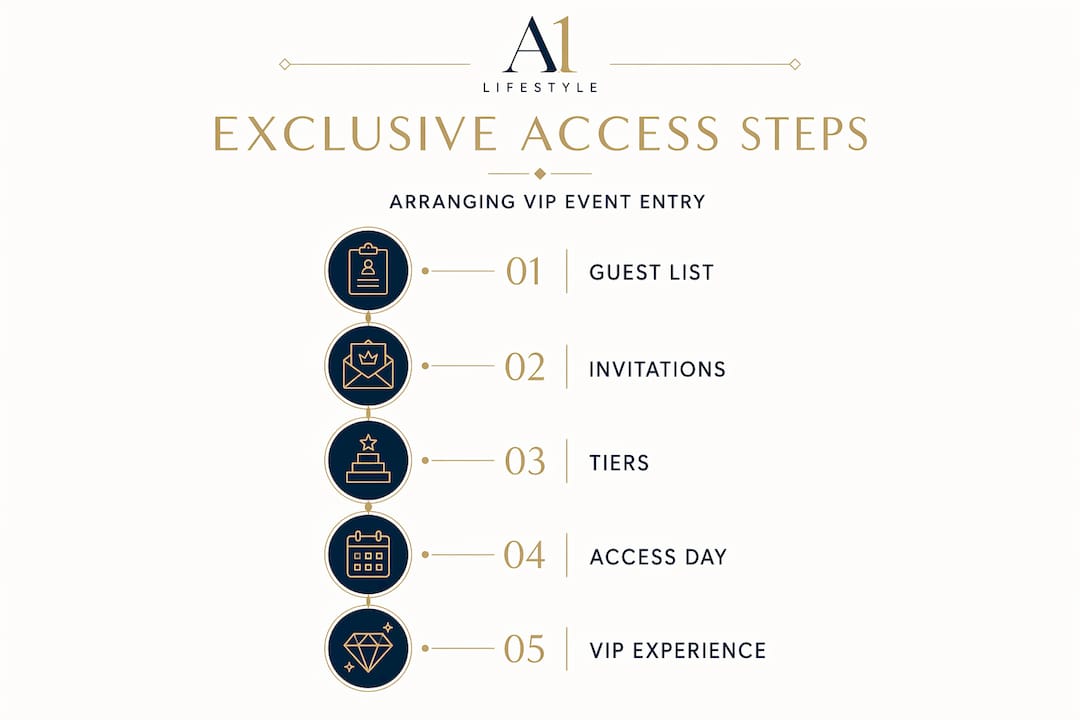
Guest list curation is where the real work of arranging VIP event access begins. A well-constructed guest list does not simply reflect who can afford to attend. It reflects what the organiser wants the event to achieve.
For a product launch, the list might prioritise press, influencers, and buyers. For a charity gala, it might weight major donors alongside celebrities who amplify media coverage. For a private sports hospitality box, it might focus on corporate clients and their key decision-makers. The exclusive event invitation process is always goal-driven.
Once the criteria are set, the invitation itself carries significant weight. Personalised, elegantly presented invitations signal the event's prestige before a single word is read. The wording, the channel used, and even the timing of delivery all contribute to how the recipient perceives the occasion.
Key practices in the invitation process include:
- Personalisation. Address recipients by name and reference their specific connection to the event or organiser.
- Social proof. Name-dropping confirmed high-profile guests within the invitation increases perceived value and raises the likelihood of attendance.
- Clear exclusivity signals. State directly that attendance is limited and that the invitation is non-transferable.
- Defined RSVP windows. Short response deadlines reinforce scarcity and help organisers manage their lists efficiently.
Pro Tip: Send the initial invitation at least four to six weeks before the event. Then schedule a follow-up nine days after first contact, with a final reminder closer to the deadline. This sequence captures both prompt responders and those who need a second prompt.
The follow-up cadence matters more than most organisers realise. A single invitation, however well-crafted, will not capture everyone. A structured sequence, timed correctly, consistently improves final attendance rates.
Tiered access models and how they work
The binary model of "invited or not invited" is increasingly being replaced by layered systems. These give organisers more flexibility and allow more people to engage with an event without diluting the experience for those at the top tier.
A typical layered model looks like this:
| Tier | Access type | Description |
|---|---|---|
| Tier 1 | Confirmed seats | Direct invitation, guaranteed entry, full hospitality |
| Tier 2 | Waitlist | Registered interest, offered places as they become available |
| Tier 3 | Digital overflow | Live stream or virtual attendance for those not physically present |
| Tier 4 | Post-event content | Recordings, highlights, or exclusive write-ups released after the event |
Tiered access with confirmed seats, waitlists, and digital overflow allows organisers to manage the gap between demand and physical capacity without turning people away entirely. It also builds a community around the event, which increases engagement for future editions.
The use of lotteries is a specific variation worth noting. Apple's WWDC developer conference has long used a lottery system to allocate in-person passes. Transparency in lottery-based invitation rules increases trust and significantly reduces resentment among unsuccessful applicants. When people understand the rules, they accept the outcome more readily.
Pro Tip: Publish your selection criteria publicly, even in broad terms. Applicants who understand how decisions are made are more likely to apply again next time and to speak positively about the event regardless of whether they attended.
The waitlist is particularly powerful as a tool for generating hype. A visible waitlist tells prospective guests that demand exceeds supply, which reinforces the event's perceived value before it has even taken place. Effective exclusivity balances restricted access with alternate pathways such as digital attendance or post-event content, so that community growth continues even when physical capacity is fixed.
Access control on the day
Arranging VIP event access does not end when the invitations go out. On-site logistics are where the exclusivity is either reinforced or undermined.
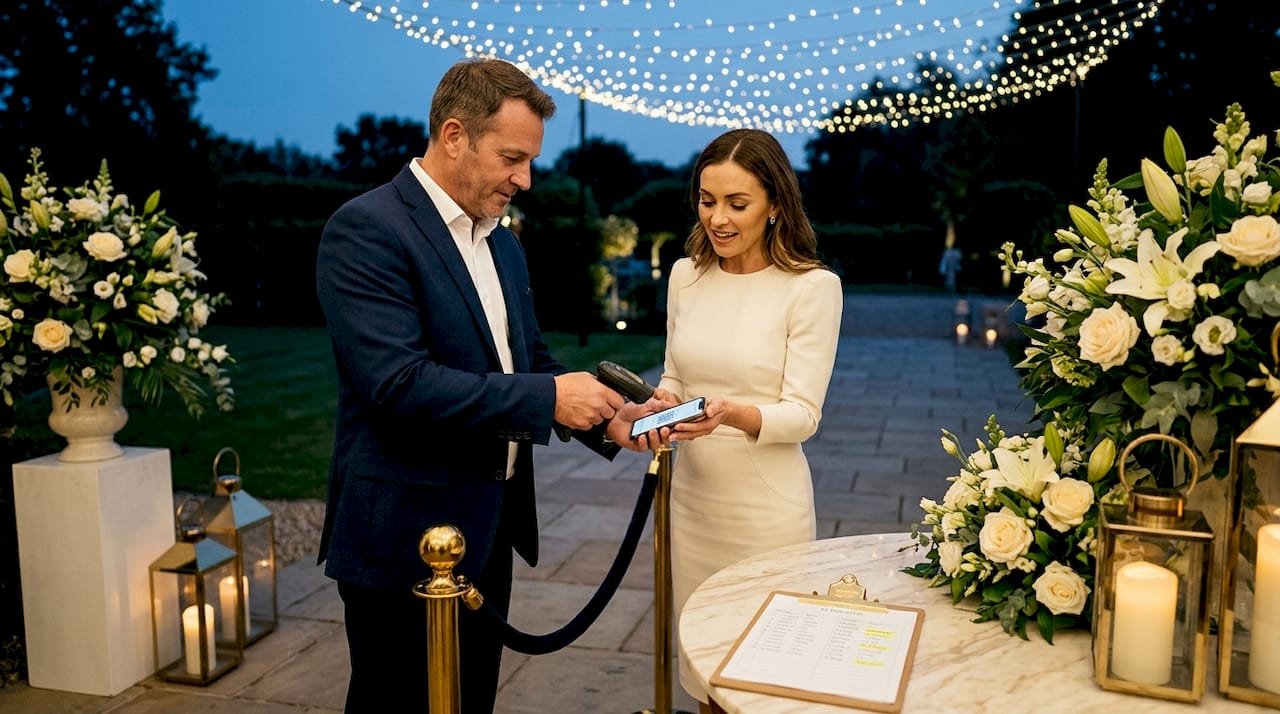
The technology used to manage entry has become considerably more sophisticated. Basic barcoded tickets remain common for general admission, but high-end events now routinely use RFID wristbands and lanyards that can be scanned at multiple points throughout a venue. These allow organisers to control not just entry to the event, but access to specific areas within it, such as backstage zones, private dining rooms, or hospitality suites.
Separate entry points for VIP guests are standard practice at major events. They serve two purposes. First, they reduce wait times and friction for premium guests. Second, they make the distinction between access tiers physically visible, which reinforces the perceived value of the higher tier.
Key on-site access control elements include:
- Dedicated VIP entrances with separate queuing and check-in procedures
- RFID or NFC wristbands that unlock specific areas or time-sensitive access windows
- Timed access slots for experiences such as meet-and-greets, pre-show receptions, or post-event briefings
- Trained hospitality staff positioned at each transition point to manage flow and resolve issues without disruption
On-site access control technologies integrate with hospitality to deliver a premium experience that goes well beyond a simple entry check. The goal is that a VIP guest never encounters a queue, a confusion, or a moment where the logistics feel visible. The experience should feel effortless, even though the organisation behind it is anything but.
Behind-the-scenes content and intimate interactions not available to the general public are among the most valued elements of VIP access. These are not add-ons. They are often the primary reason guests accept an invitation in the first place.
What actually makes exclusive access work
I have worked alongside enough high-demand events to know that the thing most organisers get wrong is treating exclusivity as a status signal rather than an experience design problem.
The guest who arrives at a VIP entrance, collects a wristband, and then spends the evening in an overcrowded hospitality suite with no clear purpose has not received exclusive access. They have received a different queue. The distinction matters enormously.
In my experience, the events that generate the most loyalty and word-of-mouth are the ones where every layer of access is backed by a genuinely different experience. Tier one guests should encounter something tier two guests do not. That difference does not need to be expensive. It needs to be meaningful.
I have also seen organisers underestimate the follow-up stage. The invitation goes out, the event happens, and then nothing. No post-event communication, no acknowledgement of attendance, no pathway to the next edition. That is a significant missed opportunity. The relationship built through an exclusive event is often more valuable than the event itself.
The future of this space is in technology-enabled personalisation. RFID data, combined with guest preference profiles, will allow organisers to tailor the on-site experience in real time. That is not a distant prospect. It is already happening at the top end of the market.
— Tony
Access exclusive events with A1lifestyle
A1lifestyle has spent over 30 years building the relationships and industry knowledge needed to arrange access to events that are not publicly available. From VIP concert packages and private hospitality boxes to group invitations and table arrangements at high-profile sporting occasions, the team handles the full logistics of securing and managing exclusive entry.
Whether the requirement is a single premium seat or a coordinated group experience, A1lifestyle works directly with venues, rights holders, and event organisers to source access that is not available through standard channels. The concierge services cover everything from initial enquiry through to on-the-day coordination, so clients arrive knowing every detail has been managed. For sports, music, and live entertainment, explore the full events calendar to see what is currently available.
FAQ
What does invitation-only mean at exclusive events?
Invitation-only means no public ticket sale exists. Attendance is granted solely through a direct invitation from the organiser, a sponsor, or an authorised partner.
How do organisers decide who gets on the guest list?
Guest lists are built around event objectives, combining factors such as professional profile, existing relationships, and the social dynamics the organiser wants to create. It is not purely based on wealth or status.
What is the purpose of a VIP waitlist?
A waitlist manages demand beyond physical capacity while maintaining interest and community engagement. It also signals that the event is oversubscribed, which reinforces its perceived value.
How is access controlled at high-end events?
High-end events use RFID wristbands, separate entry points, and timed access windows to manage movement across different tiers. Hospitality staff are positioned throughout to keep the experience smooth.
How can I gain exclusive access to a sold-out event?
Working through a specialist concierge service with established industry relationships is the most reliable method. These services hold or can source allotments that are not available through public channels.