

TL;DR:
- Sports hospitality offers premium services at live events that create emotional and social connections for fans. It also significantly boosts local economies by increasing visitor spending and venue revenue through year-round operations. The industry is shifting toward tiered, technology-enabled experiences that improve logistics and accessibility for all fans.
Sports hospitality is the provision of premium, immersive services at live events that transforms attendance into a memorable experience. The role of sports hospitality in fan experience extends well beyond a comfortable seat. It shapes emotional connection, social interaction, and lasting loyalty to a club or venue. Providers like Sodexo Live! and venues such as AMEX Stadium have demonstrated that fans who receive quality hospitality spend more, return more often, and speak more positively about their experience. The industry now recognises that what happens off the pitch matters as much as what happens on it.
How does sports hospitality shape the emotional fan experience?

Fan experience in sports is best understood through the concept of emotional residue: the feelings a fan carries home long after the final whistle. A win is temporary. A well-executed hospitality experience becomes a story worth retelling. Sports Business Journal describes this as "not a seat but a story," which captures precisely why clubs and venues invest so heavily in off-field environments.
The social dimension of hospitality is equally significant. Corporate and luxury hospitality has evolved into a networking and status platform, offering fans access to exclusive lounges, private dining, and curated social environments that exist entirely apart from the match itself. Fans pay for the access, the company, and the social bragging rights that come with it. This is not a niche behaviour. It reflects a broad shift in what fans expect from attending live sport.
Mid-tier fans are not excluded from this shift. Hospitality services at events now include a wide spectrum of offerings, from premium private boxes to upgraded general admission areas with better food and dedicated service. The key distinction is that all tiers share the same goal: reducing friction and increasing the quality of the overall visit.
Key emotional and social benefits of sports hospitality include:
- Exclusive access to off-field environments that create a sense of belonging and status
- Social networking opportunities that make the event valuable beyond the sport itself
- Reduced stress through priority entry, dedicated service, and pre-arranged logistics
- Stronger club loyalty driven by positive associations with the matchday experience
Pro Tip: If you are attending a hospitality package for the first time, arrive early. The pre-match period in a hospitality suite is often where the most valuable social connections and memorable moments occur.
What economic impact does sports hospitality have?
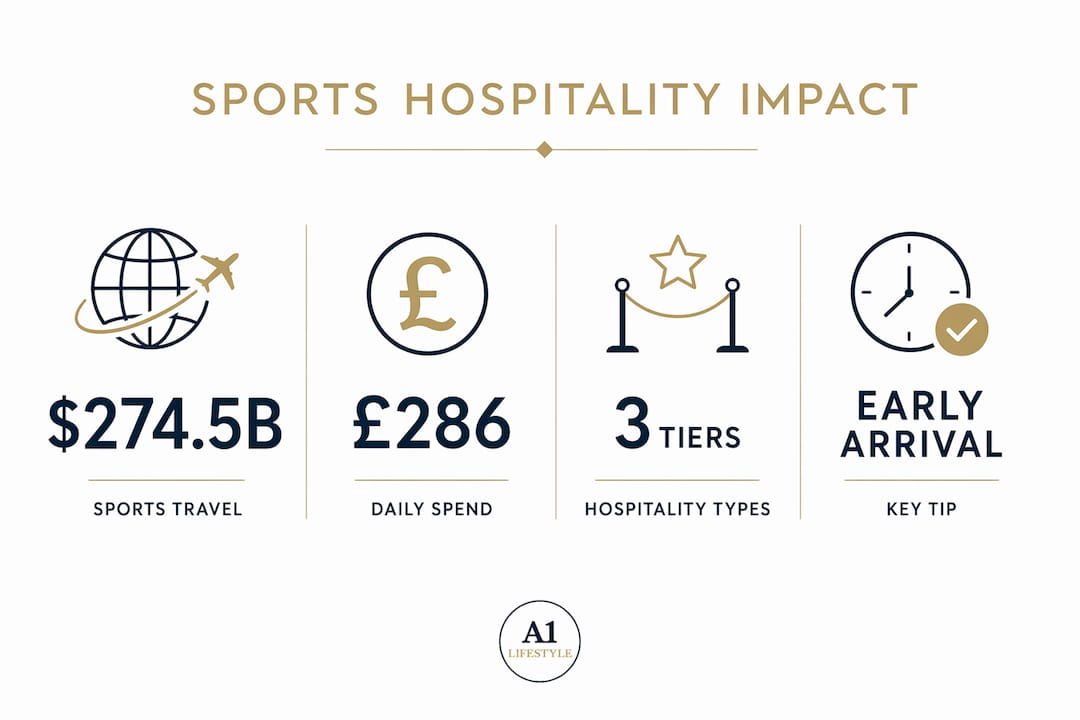
The financial scale of sports hospitality is substantial. Sports-related travel generated a $274.5 billion economic impact in the United States in 2025, with 124.3 million hotel room nights recorded. That figure confirms that hospitality infrastructure around sport is not a luxury add-on. It is a core economic driver.
At the individual event level, the numbers are equally compelling. Average hospitality expenditure at major sports events reached £286 per visitor per day, with mega-events delivering approximately a 5:1 return on investment for host cities. That level of spending flows directly into hotels, restaurants, transport, and retail, creating a multiplier effect that extends well beyond the stadium gates.
| Economic indicator | Figure |
|---|---|
| U.S. sports travel economic impact (2025) | $274.5 billion |
| Hotel room nights generated | 124.3 million |
| Average spend per visitor per day | £286 |
| Approximate event ROI ratio | 5:1 |
| Average transaction value increase (modernised venues) | 30% to £16.80 |
Venue operators have responded by treating hospitality as a year-round revenue source rather than a matchday supplement. AMEX Stadium's The Terrace is one example of a facility designed to operate 365 days a year, hosting conferences, weddings, and private dining alongside football fixtures. Sustainable hospitality governance is now a recognised discipline within this model, ensuring that growth in revenue does not erode community support or long-term venue competitiveness.
The role of catering in sports hospitality is particularly visible in transaction data. Venues that modernised their food and beverage zones increased average transaction value by 30% to £16.80. That uplift comes from better quality, faster service, and a more considered environment, not simply from raising prices.
What hospitality tiers are transforming fan experience in 2026?
The traditional split between corporate boxes and standard terrace seats no longer reflects how fans consume live sport. Venues are shifting towards tiered hospitality models that include mid-tier packages, experiential food concepts, and flexible spaces that serve different audiences across the week.
The rise of "GA+" packages is the clearest expression of this trend. These are general admission upgrades that offer street food concessions, covered standing areas, dedicated bar access, and faster entry. They appeal directly to younger fans who want a better experience without the formality or cost of a private box. 71% of fans say they would pay for enhanced hospitality areas, which validates the commercial case for investing in this tier.
| Hospitality tier | Typical features | Fan profile |
|---|---|---|
| Premium box | Private suite, fine dining, dedicated host | Corporate, high-spend |
| Club lounge | Shared premium space, table service, priority entry | Frequent attenders |
| GA+ upgrade | Street food, covered area, fast-track entry | Younger fans, groups |
| Standard with add-ons | Upgraded catering, reserved seat, lounge access | Casual fans |
Technology integration is accelerating across all tiers. Mobile ordering, e-bar systems, and digital queuing tools reduce wait times and give fans more control over their experience. The benefit is not just convenience. It removes the moments of frustration that most damage a fan's overall memory of the day.
Pro Tip: When comparing hospitality packages, check whether the price includes pre-match dining. Many mid-tier packages include a set menu that adds significant value and removes the need to queue at concession stands.
How do hospitality services improve fan logistics and event flow?
Poor logistics destroy a good experience faster than a bad result on the pitch. Fans forgive losses but they do not forgive bad hospitality. Congested entry points, inadequate transport links, and long queues at food and drink outlets are the friction points that most consistently damage fan satisfaction and reduce the likelihood of repeat attendance.
The concept of "logistics with empathy" captures what separates good hospitality operations from poor ones. It means anticipating the fan's journey from the moment they leave home, not just from the moment they enter the stadium. Hospitality packages that include transport arrangements, dedicated entry lanes, and pre-ordered catering address the full journey rather than just the seat.
Improving fan logistics through hospitality services involves several practical steps:
- Dedicated entry lanes for hospitality guests reduce queuing time and signal status from the moment of arrival.
- Pre-match dining removes the need to navigate busy concourse areas during peak periods.
- Mobile ordering technology allows fans to order food and drinks from their seat or suite without leaving the experience.
- Transport coordination as part of a hospitality package removes the stress of parking and public transport at peak times.
- Post-match access to hospitality areas allows guests to avoid the worst of the crowd dispersal.
Digital tools such as e-bars and mobile ordering correlate directly with higher visitor satisfaction scores and increased repeat attendance. The operational investment required to deploy these tools is recovered quickly through higher per-head spend and stronger retention. Behind the scenes, the coordination required to deliver this at mega-events involves detailed planning across transport authorities, catering suppliers, security teams, and venue management.
Pro Tip: Check whether your hospitality package includes a dedicated concierge or host. A single point of contact on the day resolves issues quickly and significantly improves the overall experience.
Key takeaways
Sports hospitality transforms fan attendance into a lasting experience by addressing emotional, social, logistical, and economic factors simultaneously.
| Point | Details |
|---|---|
| Emotional residue drives loyalty | Fans remember how an event made them feel, not just the result on the pitch. |
| Economic impact is substantial | Average visitor spend reaches £286 per day, with mega-events delivering a 5:1 ROI. |
| Tiered hospitality serves all fans | Mid-tier GA+ packages make premium experiences accessible to younger and casual fans. |
| Logistics define satisfaction | Dedicated entry, mobile ordering, and transport coordination prevent the friction that damages fan memory. |
| Year-round venue use increases ROI | Facilities like AMEX Stadium's The Terrace generate revenue beyond matchdays through conferences and private events. |
Why the shift from transactional to experiential hospitality matters
The sports hospitality industry spent decades selling access. A box, a seat, a meal. The transaction was clear and the value was straightforward. What has changed is that fans now measure value differently. They measure it by how the experience made them feel, who they met, and whether they would go back.
I have watched this shift play out across Premier League grounds, Formula 1 circuits, and major tennis venues. The clubs and operators that understood it early invested in staff training, venue design, and technology. The ones that did not are now scrambling to catch up. The gap between a well-run hospitality operation and a poor one is visible the moment you walk through the door.
The inclusivity question is one that the industry has not fully resolved. Premium hospitality remains expensive, and the GA+ tier is a partial answer rather than a complete one. Younger fans and those on lower incomes still face a significant barrier to accessing the best experiences. Venues that address this through creative pricing and flexible packages will build stronger long-term fan bases than those that treat hospitality as exclusively a corporate product.
Technology will continue to reshape what hospitality looks like. Mobile ordering, digital concierge services, and data-driven personalisation are already standard at the best venues. The next step is using that data to anticipate what a fan needs before they ask for it. That is where the most significant improvements in fan satisfaction will come from over the next five years.
— Tony
Discover premium sports hospitality with A1lifestyle
A1lifestyle has over 30 years of experience securing exclusive access to the world's most sought-after sports events. Whether you are looking for Premier League hospitality packages or Arsenal matchday experiences, A1lifestyle provides private boxes, VIP lounges, and personalised concierge services that cover every detail of your visit.
From transport and pre-match dining to post-match access and insider perks, A1lifestyle handles the logistics so you can focus on the experience. Packages sell out quickly, particularly for high-profile fixtures, so early enquiry is advisable. Explore the full range of sports hospitality packages and find the option that fits your preferences and budget.
FAQ
What is sports hospitality?
Sports hospitality is the provision of premium services at live sports events, including private suites, fine dining, priority entry, and dedicated concierge support. It is designed to enhance the overall fan experience beyond standard attendance.
Why does hospitality matter more than the match result?
Research shows that fans forgive a poor result on the pitch but do not forgive poor hospitality. The quality of logistics, catering, and service has a greater long-term impact on fan loyalty and repeat attendance than the outcome of the game.
How much do fans typically spend on sports hospitality?
Average hospitality expenditure at major sports events reaches £286 per visitor per day. Venues that have modernised their food and beverage offerings have recorded a 30% increase in average transaction value.
What is a GA+ hospitality package?
A GA+ package is a mid-tier upgrade on standard general admission, typically including street food concessions, covered areas, fast-track entry, and dedicated bar access. It appeals to younger fans who want a better experience without the cost of a private box.
How does technology improve the fan hospitality experience?
Digital tools such as mobile ordering, e-bar systems, and digital queuing reduce wait times and remove friction from the fan journey. Venues that deploy these tools report higher satisfaction scores and stronger repeat attendance figures.