

TL;DR:
- Sports hospitality packages sell out early mainly due to pre-event allocation to sponsors, agents, and partners that reduce public inventory significantly. Tiered pricing and bundled Venue Series packages compel buyers to commit early, while scarcity messaging and FOMO accelerate purchase decisions. High-demand marquee fixtures and commercial pre-sales cause most desirable options to vanish quickly, making early engagement essential.
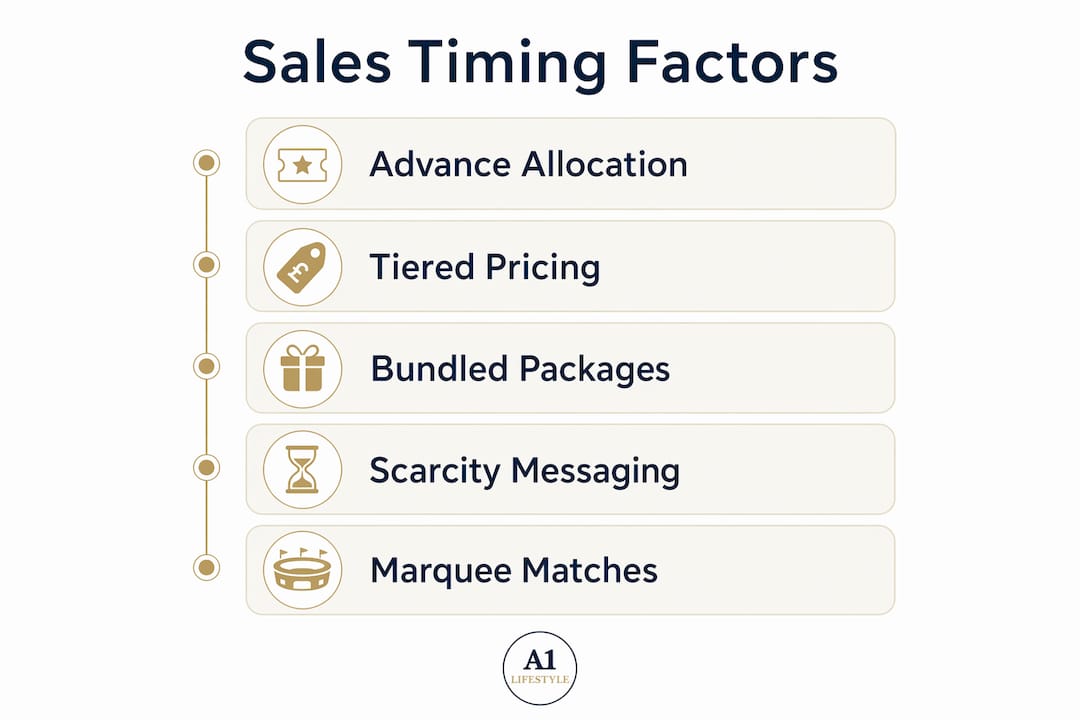
Sports hospitality sells out early because demand is deliberately front-loaded through advance allocation, tiered pricing, and bundled packages that compress the buying window months before an event begins. This is not coincidence. For the FIFA World Cup 2026, On Location allocated over 500,000 packages by late May 2026, setting a record and confirming that sports hospitality demand operates on a fundamentally different timeline to standard ticketing. Understanding why hospitality sells quickly requires looking at allocation mechanics, pricing structures, psychological triggers, and the commercial partnerships that quietly absorb large volumes of inventory before the public ever sees them.
Why sports hospitality sells out early: allocation comes first
The single most direct reason sports hospitality packages disappear so fast is that organisers distribute the majority of inventory through pre-arranged channels long before general sale opens. This is advance allocation, and it is the structural foundation of every early sell-out in the industry.
For a tournament of the scale of the FIFA World Cup 2026, the allocation process involves multiple layers:
- Official hospitality partners such as On Location receive exclusive rights to sell packages across all venues, locking in large volumes from the outset.
- Sponsor and commercial partner reserves absorb a significant share of premium inventory before any public listing appears.
- Regional authorised agents receive allocations for specific markets, meaning the same package may be sold through a dozen different channels simultaneously.
- Venue-specific allocations are made per stadium, with premium tiers such as pitchside suites and private lounges distributed first.
The practical effect is that visible public inventory is a fraction of total supply. A buyer checking the official site in the weeks before an event may see very little available, not because every seat is genuinely sold, but because most of the stock has already moved through pre-arranged channels. This is a critical distinction that most buyers miss entirely.
Pro Tip: Check multiple authorised sales agents and regional distributors, not just the official event page. Inventory is spread across channels, and one agent may still hold allocations that appear sold out elsewhere.
The highest tiers of hospitality, including pitchside lounges, private suites, and premium dining packages, are prioritised in earlier sales windows and typically sell out before lower tiers. This shapes the demand curve so that the most desirable products vanish first, creating a perception of total sell-out even when mid-tier options remain.
How tiered pricing and bundled packages drive early commitment
Sports hospitality operates as a distinct premium segment with fixed-tier pricing that decouples entirely from the dynamic pricing used for standard tickets. This structure has a direct effect on when buyers commit.
When pricing is fixed at launch and tiers are clearly defined, buyers face a straightforward calculation: pay the stated price now, or risk losing access entirely. There is no mechanism to wait for a price drop, as there might be with airline tickets or hotel rooms. This removes the most common reason for delay and pushes decisions earlier.
Bundling amplifies this effect considerably. The Venue Series model used for FIFA World Cup 2026 hospitality requires buyers to purchase packages covering multiple matches at a single venue rather than selecting individual fixtures. The comparison below illustrates how this changes buyer behaviour:
| Package type | Flexibility | Commitment level | Effect on timing |
|---|---|---|---|
| Single-match hospitality | High | Low | Buyers may wait and see |
| Venue Series bundle | Low | High | Buyers commit early to secure preferred fixtures |
| Full tournament package | None | Very high | Immediate purchase required |
Bundling is a deliberate strategy to prevent single-fixture speculation and drive early commitment from buyers. A buyer who wants to attend the final must purchase the full Venue Series, which includes earlier rounds. This forces a decision months in advance and removes the option of waiting until closer to the event.
The value proposition of bundled packages also increases perceived worth. Official FIFA hospitality includes suite access, curated dining, and networking experiences alongside the match itself. When buyers calculate the combined value of seating, food, and exclusive access against the package price, the perceived discount encourages faster purchase decisions.
Pro Tip: If you are targeting a specific fixture within a Venue Series, calculate the per-match cost of the full bundle against standalone hospitality at comparable events. The bundled rate frequently represents better value, and the commitment forces you to plan properly.
Understanding how stadium hospitality levels work is the most practical step any buyer can take before entering the market. Tier structure determines both price and availability timeline.
Does scarcity messaging actually make people buy faster?
Scarcity messaging accelerates purchase decisions in sports hospitality because it activates emotional responses that override rational deliberation. Research published by the International Journal of Indian Psychology found that quantity scarcity correlates with purchase influence at r=0.61, while FOMO registers the strongest effect at r=0.64. These are not marginal influences. They represent a consistent, measurable shift in buying behaviour.
The mechanism works through two distinct channels. Quantity-based scarcity, such as "only 12 packages remaining," creates urgency by signalling that delay carries a direct cost. Time-based scarcity, such as "offer closes Friday," creates a deadline that forces a decision. Sports hospitality sales routinely use both simultaneously.
FOMO operates differently. It is mediated by emotional drivers rather than rational scarcity awareness. A buyer who sees that colleagues or peers have already secured hospitality at a major event experiences social pressure that is distinct from simply knowing inventory is limited. This is why hospitality providers publicise allocation milestones and record-breaking sales figures. The announcement that 500,000 packages have been allocated for the FIFA World Cup 2026 is itself a scarcity signal.
"Scarcity messaging's effect on hospitality sales is mediated by emotional drivers like FOMO, not just rational scarcity awareness." — International Journal of Indian Psychology
Demographic factors also influence how strongly buyers respond to these cues. Younger buyers and those with prior hospitality experience tend to respond more quickly to scarcity signals, having learned from previous events that hesitation results in missing out. This creates a self-reinforcing cycle where experienced buyers act fast, reducing inventory further, which then triggers urgency in less experienced buyers.
Why marquee matches sell out hospitality faster than others
Demand in sports hospitality is not evenly distributed. It concentrates heavily on specific fixtures, and this concentration is the primary reason certain packages disappear within hours of going on sale.
For the FIFA World Cup 2026, the heaviest demand centres on the opening match in Mexico City, Los Angeles fixtures, and the New York/New Jersey slate including the Final. These are the matches that carry the highest symbolic value, the widest broadcast audience, and the greatest corporate entertainment appeal. Hospitality buyers, particularly those purchasing for client entertainment, prioritise fixtures with guaranteed prestige.
Organisers respond to this concentration by restricting access. To attend a USA, Canada, or Mexico host-nation match through the hospitality programme, buyers must purchase the entire Venue Series at premium prices. This restriction serves two purposes. It prevents the most desirable fixtures from being stripped out of packages, and it forces buyers who want those matches to commit to a larger spend earlier in the sales cycle.
The data on this is clear. Hospitality revenue and packaged sales for the FIFA World Cup 2026 are record-breaking months before the tournament begins. This is not organic demand. It is the direct result of product design that channels demand for marquee fixtures into larger, earlier commitments.
For buyers, this means that targeting a specific high-profile fixture without understanding the Venue Series structure leads to frustration. The fixture is not sold out in isolation. It is only available as part of a bundle that was designed to sell out early.
How commercial partnerships reduce public availability
A significant portion of sports hospitality inventory never reaches the public market at all. Packages allocated to commercial partners and sponsors reduce what is publicly listed, contributing directly to early sell-out perceptions.
The allocation chain for a major tournament typically includes:
- Global sponsors such as Adidas, Coca-Cola, and Visa receive hospitality allocations as part of their commercial agreements, covering multiple matches and venues.
- Broadcast partners and media organisations receive packages for journalists, executives, and commercial guests.
- National football associations receive allocations for their own commercial and VIP use.
- Official hospitality operators distribute remaining inventory through their own authorised agent networks.
By the time general public sale opens, the visible inventory has already been substantially reduced by these pre-allocations. A buyer who arrives at the official sales page weeks after launch and finds limited availability is not seeing the full picture. Much of what appears sold out has simply moved through a different channel.
The practical implication is that buyers should treat early sports event ticket sales as a multi-channel process. Checking only the official event page provides an incomplete view of what is actually available. Authorised sellers and regional agents hold their own allocations and may have access to inventory that does not appear on the primary sales platform.
Key takeaways
Sports hospitality sells out early because advance allocation, bundled pricing, and scarcity psychology combine to compress the buying window to months before an event starts.
| Point | Details |
|---|---|
| Advance allocation limits public supply | Large volumes are distributed to sponsors and agents before general sale opens. |
| Bundled packages force early commitment | Venue Series structures remove the option to wait and select individual fixtures. |
| Scarcity and FOMO accelerate purchases | FOMO correlates with purchase intention at r=0.64, making emotional urgency the primary driver. |
| Marquee fixtures sell fastest | Opening matches, host-nation games, and finals concentrate demand and disappear first. |
| Commercial pre-sales reduce visible inventory | Sponsor and partner allocations mean "sold out" often reflects channel distribution, not total sell-out. |
What I have learned about timing sports hospitality purchases
Tony here. After years of working in this market, the single most common mistake I see buyers make is treating sports hospitality like a standard ticket purchase. They assume there will be availability closer to the event, or that prices will soften. Neither is true.
The scarcity signals used in hospitality sales are not manufactured. They reflect genuine structural constraints. When a Venue Series for a host-nation match is listed as sold out, it is sold out through that channel. But that does not mean all channels are exhausted. The buyers who consistently secure the best packages are the ones who understand the allocation system and engage with multiple authorised agents early.
The other misconception I encounter regularly is that bundled packages represent poor value because they include matches the buyer does not want. In practice, the per-match cost of a Venue Series is almost always lower than a comparable single-match hospitality package at a premium fixture. The bundle is the value. The commitment is the price of access.
My advice is straightforward: decide on your target event, understand the tier structure before you contact any seller, and move at the start of the sales cycle rather than the middle. The full premium experience at a marquee fixture is not available to those who wait. It never has been.
— Tony
Secure your sports hospitality before it sells out
A1lifestyle has spent over 30 years building the relationships and allocations that give clients access to packages that are no longer visible on official sales platforms. For Premier League hospitality and Arsenal matchday packages, A1lifestyle holds allocations across multiple tiers, including private boxes and VIP lounge access, that are not publicly listed. The team works directly with clients to identify the right package for their fixture, group size, and budget, and handles all booking logistics through a dedicated concierge service. If the package you want appears sold out through standard channels, contact A1lifestyle before assuming it is gone entirely.
FAQ
Why do sports hospitality packages sell out before the event?
Sports hospitality packages sell out early because large volumes are allocated to sponsors, commercial partners, and authorised agents months before general sale opens, reducing visible public inventory quickly. Bundled pricing structures and scarcity-driven purchasing behaviour compress the buying window further.
What is a Venue Series package and why does it affect availability?
A Venue Series package bundles multiple matches at a single venue into one purchase, requiring buyers to commit to the full series rather than individual fixtures. This structure is used for events like the FIFA World Cup 2026 to manage demand for marquee matches and drives earlier, larger purchases.
Is "sold out" always accurate for sports hospitality?
Not always. "Sold out" frequently means a specific channel has exhausted its allocation, not that all inventory across all authorised agents and sales routes is gone. Buyers should check multiple authorised sellers before concluding a package is unavailable.
How early should you book sports hospitality?
For major tournaments and marquee fixtures, booking at the start of the sales cycle is the only reliable strategy. Premium tiers such as pitchside suites and private lounges are prioritised in the earliest sales windows and sell out before mid-tier options.
Does FOMO genuinely influence sports hospitality purchases?
Research confirms that FOMO correlates with purchase intention at r=0.64, making it the strongest single psychological driver of early buying decisions in online sales environments. In sports hospitality, this effect is amplified by public announcements of allocation milestones and record-breaking sales figures.