
TL;DR:
- Sports hospitality relies on limited inventory that sells out months before major events, making early booking essential. As demand compresses closer to the event, prices soar and availability diminishes rapidly, especially for private suites and premium lounges. Securing your package early through official channels ensures guaranteed access, better prices, and a superior event experience.
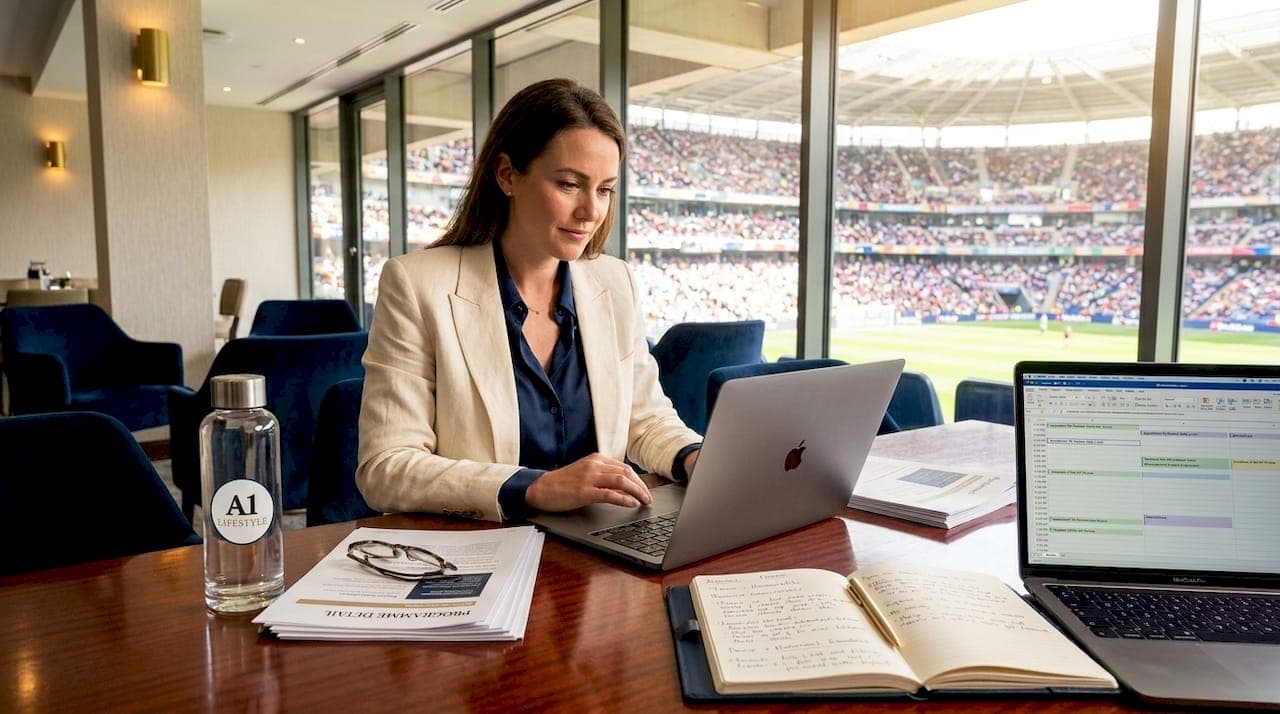
Sports hospitality is defined as a premium event experience that combines guaranteed seating, private lounge access, concierge service, and curated food and beverage, sold in fixed allocations that sell out well before match day. The reason why sports hospitality needs advance booking is straightforward: supply is capped, demand is unpredictable, and the best inventory disappears first. Whether you are a fan planning a once-in-a-decade trip to the FIFA World Cup 2026 at MetLife Stadium or a corporate client entertaining guests at a Premier League fixture, the window to secure the right package is shorter than most people expect. Sports hospitality has evolved far beyond a simple ticket. It now includes private suites, dedicated lounges, and personalised access that cannot be replicated on the day.
Why sports hospitality needs advance booking: the core argument
The fundamental constraint in sports hospitality is inventory. Private suites, premium lounges, and Platinum Access packages are not manufactured on demand. They are allocated in fixed blocks, tied to specific venues and match dates, and released through official platforms during designated sales windows. Once those allocations are gone, they are gone.
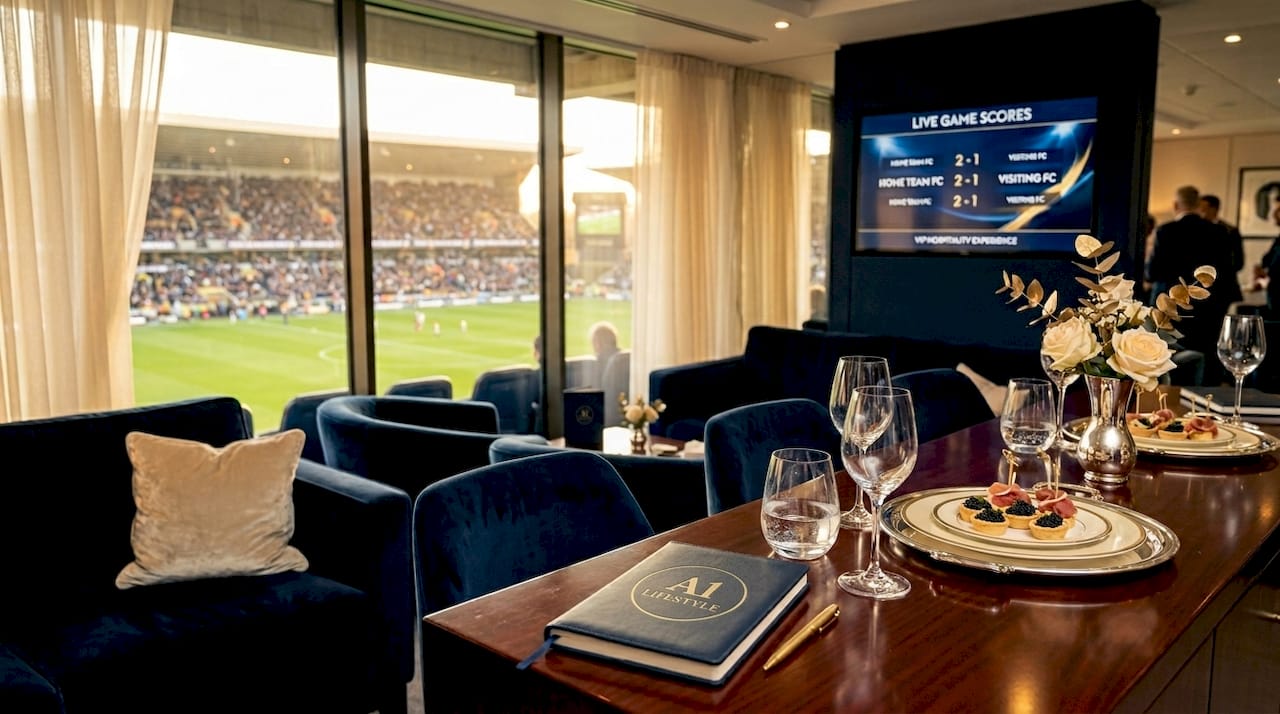
LA28 hospitality packages are sold exclusively via the official LA28 platform, with tiers including Leisure, Premium, and Signature, each guaranteeing tickets, lounge access, and premium seating. This structured release system means that buyers who miss the initial window face either a depleted selection or no access at all. The same principle applies to Premier League hospitality, Champions League finals, and major tennis Grand Slams.
Premium hospitality sales function like limited presales with reserved purchase windows, governed by official platforms that phase availability deliberately to prevent mass open-day purchasing. This is not accidental. Organisers use phased releases to manage demand, reward early commitment, and protect the exclusivity of the product. Waiting for a better deal or more certainty is a strategy that consistently backfires.
How does booking window compression affect availability?
Booking windows in sports hospitality compress dramatically as events approach. Typical lead times of 30 to 60 days shrink to as little as 3 to 10 days for knockout rounds and finals. The cause is fan behaviour: supporters wait for schedule confirmation and team advancement before committing, then rush simultaneously when certainty arrives.
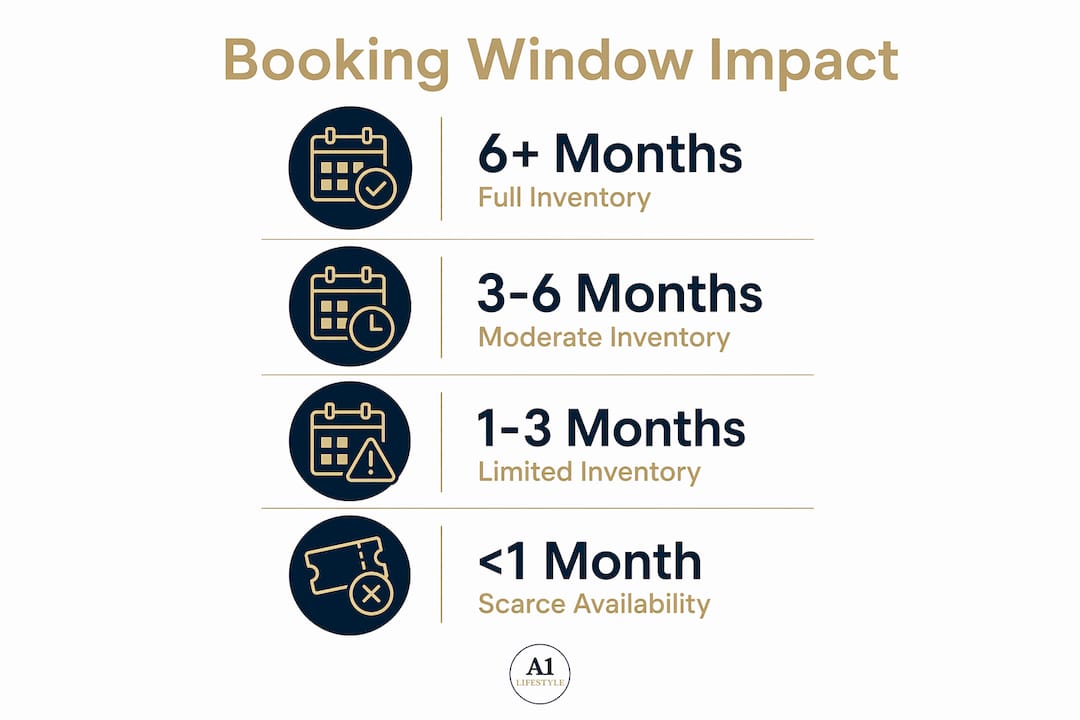
The consequences are measurable. MetLife Stadium booking volume for the 2026 FIFA World Cup Final rose 102% year-over-year in the days following schedule release, with average daily rates increasing by 72%. That figure illustrates what compressed demand does to pricing. A package that was available at a fixed rate three months earlier becomes a bidding war within 72 hours of a schedule announcement.
| Booking timing | Typical availability | Pricing impact |
|---|---|---|
| 6 or more months ahead | Full inventory across all tiers | Fixed, lowest rates |
| 3 to 6 months ahead | Good selection, some tiers filling | Stable, minor increases |
| 1 to 3 months ahead | Limited premium options remaining | Moderate price rises |
| Under 4 weeks | Scarce, often sold out | Significant surcharges |
| Last minute (under 1 week) | Near zero for premium tiers | Maximum prices or unavailable |
Fans delay booking because of genuine uncertainty about which teams will progress and which fixtures will matter most. This is understandable, but it creates a collective problem. When thousands of fans make the same rational individual decision to wait, the resulting simultaneous surge overwhelms available inventory within hours.
Pro Tip: Set a calendar reminder for the official ticket and hospitality release date of any major event you plan to attend. Treat that date as a deadline, not a starting point.
What makes premium hospitality inventory so limited?
Premium hospitality includes private suites, dedicated lounges, concierge service, and enhanced food and beverage. These are physical spaces inside a venue, and venues have a finite number of them. A stadium with 80,000 seats might have 50 private suites. Each suite holds a fixed number of guests. Once those suites are allocated for a given match, no additional supply exists.
Corporate suites and private lounges are venue and event specific, meaning corporate buyers cannot substitute one match date for another once allocations are confirmed. This rigidity is a defining feature of the product. It is also why understanding the components of a matchday hospitality package before you book matters. Knowing exactly what is included in each tier prevents costly mismatches between expectation and reality.
The contrast between general admission and hospitality tiers is stark:
- General admission: Open sale, large inventory, no guaranteed seating category, no ancillary services.
- Hospitality lounges: Fixed capacity, guaranteed seats, food and beverage included, dedicated entry.
- Private suites: Smallest allocation, fully enclosed, personalised service, often multi-day or multi-match packages.
- Platinum or Signature packages: Highest tier, first to sell out, include exclusive access to restricted areas and curated programming.
For corporate clients, private suites at major sporting events serve a dual purpose: they deliver a premium guest experience and they function as a controlled environment for client entertainment. Neither purpose is served by a last-minute booking, because the best suites are allocated months in advance.
What are the financial risks of last-minute sports hospitality bookings?
Waiting to book does not save money. It increases cost and reduces choice. Near the IPL final in Ahmedabad, hotel tariffs surged sharply as venues approached 85% capacity, with room rates at The Leela, Gandhinagar rising from Rs 14,000 per night to significantly higher figures in the final days. The Forum Hotel saw similar surges amid 50% bookings. This pattern repeats at every major sporting event globally.
The financial risks of delayed booking extend beyond accommodation:
- Hospitality packages: Premium tiers sell out; remaining options are lower quality at higher prices.
- Travel costs: Flights and transfers near event dates carry peak surcharges.
- Hotel blocks: Corporate room blocks near venues are reserved by early bookers; late arrivals pay spot rates.
- Opportunity cost: The experience you wanted is unavailable. You settle for less or pay a scalper's premium.
Advance booking functions as a form of risk management. Locking in a hospitality package six months ahead fixes the price, guarantees the tier, and removes the uncertainty that drives last-minute cost inflation. For corporate clients managing entertainment budgets, this predictability is a direct financial benefit. For fans, it is the difference between the experience they planned and a compromise.
Advance booking is a key risk management tool for corporate clients to ensure guaranteed access to premium experiences and avoid last-minute availability issues. The cost of early commitment is almost always lower than the cost of late scrambling.
How to secure sports hospitality: practical booking strategies
Securing the right hospitality package requires a structured approach. The following steps apply to both individual fans and corporate clients planning for major events in 2026 and beyond.
-
Identify the official release calendar. Every major event publishes a hospitality sales schedule. For FIFA World Cup 2026, LA28, and Premier League fixtures, these dates are announced well in advance. Mark them and act on the first day of availability.
-
Lock core assets first. Secure your hospitality package, suite, or lounge access before addressing secondary elements such as hotel rooms and travel. Locking premium inventory early and adjusting secondary details later is the standard approach used by experienced hospitality planners.
-
Book through official platforms only. Unofficial resellers carry the risk of invalid tickets and unverified access. LA28 hospitality, for example, is sold exclusively through the official platform. Premier League hospitality is available through club-authorised channels and trusted specialists such as A1lifestyle.
-
Plan for multi-city or multi-round events. For tournaments like the FIFA World Cup 2026, which spans multiple US cities, book hospitality for your target matches as soon as the group stage draw is confirmed. Do not wait for knockout round certainty.
-
Use tiered packages for corporate groups. For clients entertaining guests, hospitality packages that impress clients are structured in tiers. Book the highest tier your budget allows early, then manage guest lists closer to the event.
Pro Tip: For multi-day events or tournaments, book your hospitality package for the final or headline match first. These sell out fastest and are the hardest to recover if missed.
For fans tracking team progress through a tournament, the practical advice is to book for the matches you are most confident about attending, then treat any additional fixtures as a bonus. The exclusive fan experiences available at major 2026 events reward those who plan early and commit decisively.
Key takeaways
Advance booking is the single most effective strategy for securing premium sports hospitality because inventory is fixed, demand is compressed, and prices rise sharply as events approach.
| Point | Details |
|---|---|
| Inventory is capped | Private suites and premium lounges are finite physical spaces that sell out months before match day. |
| Booking windows compress | Lead times shrink from 60 days to under 10 days for knockout rounds, causing simultaneous demand surges. |
| Late booking costs more | Hotel and hospitality prices surge near event dates; early commitment locks in the lowest available rate. |
| Official platforms protect buyers | Booking through authorised channels such as LA28 or A1lifestyle prevents invalid ticket risks. |
| Corporate clients need precision | Suite allocations are venue and match specific; substitutions are rarely permitted after confirmation. |
The case for committing early: a personal view
The most common mistake I see from both fans and corporate clients is treating the booking decision as something to revisit later. The reasoning is always the same: wait to see if the team advances, wait for a better price, wait for more certainty. In practice, waiting produces the opposite of certainty.
What I have observed over years of working in this space is that the people who have the best experiences at major sporting events are not the ones who found a last-minute deal. They are the ones who made a decision early, secured the right package, and arrived knowing exactly what to expect. The event itself becomes the focus, not the logistics.
There is also a subtler point about exclusivity. Premium hospitality is not just about comfort. It is about being in a specific place, with a specific group, at a specific moment. That combination cannot be reconstructed after the fact. When the 2026 FIFA World Cup Final kicks off at MetLife Stadium, the people in the private suites will be the ones who booked when the opportunity was available, not the ones who waited.
For corporate clients, the relationship value of a well-planned hospitality experience is significant. Guests remember the quality of the occasion. A last-minute compromise, a lower-tier lounge, or a scrambled hotel arrangement communicates the opposite of what a client entertainment budget is meant to achieve.
The advice is simple: treat the booking date as the event itself. Act on it with the same urgency you would bring to the match.
— Tony
Secure your sports hospitality with A1lifestyle
A1lifestyle has over 30 years of experience securing premium sports hospitality for fans and corporate clients at sold-out events worldwide. From Premier League hospitality packages to exclusive access at Arsenal fixtures, A1lifestyle provides guaranteed tickets, private box options, and full concierge support. The booking process is handled by specialists who understand allocation windows, official platform requirements, and the timing strategies that protect your investment. For clients who want access to the best inventory at major 2026 events, early engagement with A1lifestyle's team is the most reliable route. Browse the sports events calendar to see current availability across Premier League, Formula 1, and international fixtures.
FAQ
Why does sports hospitality sell out so far in advance?
Premium hospitality inventory is fixed to specific venues and match dates, with private suites and lounge tiers allocated in limited blocks. Once those allocations are sold, no additional supply is created.
How early should you book sports hospitality?
For major events such as the FIFA World Cup or LA28 Olympics, booking six or more months ahead secures the widest selection and the lowest fixed rates. For Premier League fixtures, booking at the start of the season is standard practice.
Does booking early actually save money on sports hospitality?
Yes. Last-minute bookings consistently carry higher prices due to compressed demand. Near the IPL final in Ahmedabad, hotel tariffs near the venue surged as capacity reached 85%, with rates rising sharply in the final days before the match.
Can corporate clients change their hospitality booking after confirmation?
Rarely. Corporate hospitality allocations are venue and match specific, meaning substitutions between dates or venues are typically not permitted once confirmed. This makes precise early booking critical for corporate groups.
What is the safest way to book sports hospitality?
Book through official platforms or authorised specialists such as A1lifestyle. Official channels guarantee ticket validity, confirmed lounge access, and the correct tier of service without the risks associated with secondary market resellers.