

TL;DR:
- A personalized concert experience involves tailored ticketing, venue interactions, and live content shaped by fan data and real-time technology. These layers include pre-show access, in-venue contextual services, and adaptive performances, all interconnected to enhance fan engagement. Effective integration of these elements transforms the live event into a uniquely immersive and participatory experience.
A personalised concert experience is defined as a tailored live music event where ticketing access, venue interactions, and live performance content are each shaped by individual fan data and real-time technology. How personalised concert experience works spans three distinct layers: pre-show ticketing eligibility, in-venue contextual services, and co-creative or adaptive live content. Platforms like Spotify Reserved, tools from Ticket Fairy, and interactive formats such as Arena One and VOLTA each operate within one of these layers. Understanding how they connect gives fans a clearer picture of why some concerts feel genuinely personal and others do not.
How personalised ticketing works to give fans exclusive access
Personalised ticketing is the first layer of the experience, and it begins before a fan sets foot near a venue. Spotify Reserved identifies genuine fans by measuring streams, shares, and Premium account activity, then offers them a dedicated pre-sale purchase window ahead of general sale. This approach means the fans who have spent months listening to an artist are rewarded with first access to seats, rather than losing out to automated bots or bulk buyers.
Eligibility for Spotify Reserved depends on geographic location and tour-specific criteria, so not every listener qualifies for every show. The system sends notifications through email and the Spotify app, giving fans a limited window to select and purchase seats. This time-limited structure creates urgency without the chaos of a general on-sale, and it gives artists confidence that their front rows are filled with people who genuinely know the music.
The anti-scalper benefit is significant. Spotify's validation of human fan activity through multiple engagement signals reduces the opportunity for bots to acquire tickets at scale. For fans, this means a fairer process. For artists, it means a more engaged audience from the first song.
- Eligibility is based on streaming history, shares, and Premium activity
- Notifications arrive via email and the Spotify app within a defined purchase window
- Seat selection is available within the pre-sale window before general release
- Geographic and tour-specific rules determine which fans receive offers
- The system actively reduces scalper interference by verifying real fan engagement
Pro Tip: If you use Spotify regularly, check your notification settings and ensure marketing emails are enabled. Missing the Reserved window means falling back to general sale, where availability is far less predictable.
For fans wanting to understand the full range of exclusive concert access options available in 2026, the landscape extends well beyond a single platform.
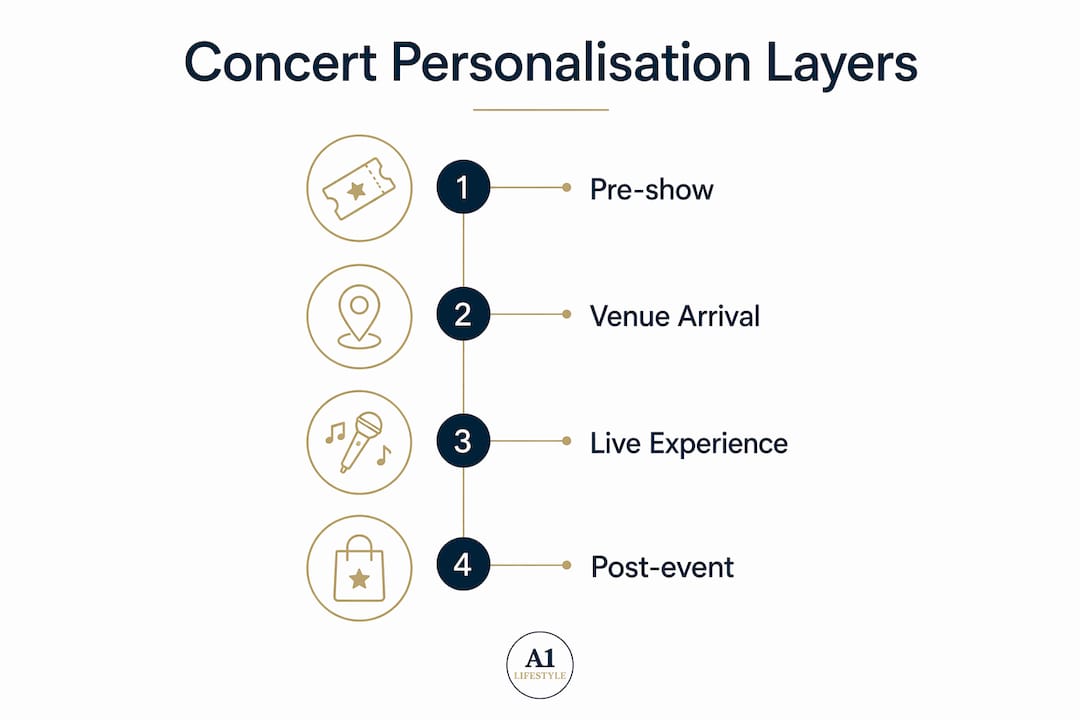
How venues use fan data to personalise your arrival and on-site experience
Venue personalisation is the second layer, and it operates through consented first-party data collected at multiple touchpoints. Ticket Fairy notes that venues gather information from ticket purchases, RSVPs, gate scans, and in-venue purchases, then use CRM systems to build individual attendee profiles. The shift from a single audience segment to multiple well-defined groups allows venues to send contextual messages timed to specific moments in the fan journey.
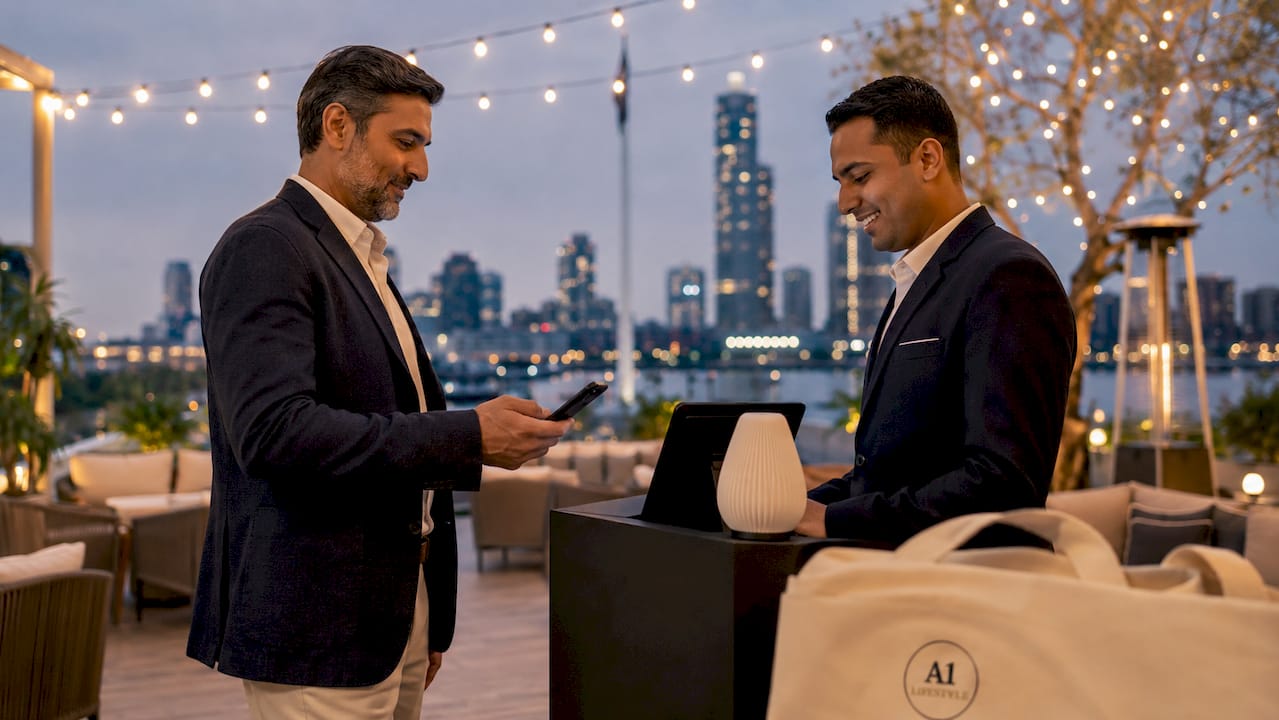
The practical result is communication that feels relevant rather than generic. A fan arriving at a venue might receive a welcome message that references their ticket tier, followed by a concession offer based on previous purchases, followed by a VIP access prompt if their profile qualifies. Each message is triggered by a real event, such as a gate scan or a geo-fence crossing, rather than sent in bulk to everyone.
Smart venues are also using facial recognition at entry points. Mercedes-Benz Stadium in Atlanta has demonstrated that this technology reduces queue wait times by up to 65% and allows staff to greet fans by name. That reduction in friction at the gate changes the tone of the entire evening before the first note is played.
The steps a venue typically follows to build this experience are:
- Collect consented data at ticket purchase, RSVP, and gate scan stages
- Build individual attendee profiles within a CRM or ticketing platform
- Segment the audience into defined groups based on ticket tier, purchase history, and engagement
- Set up triggered messages tied to arrival, VIP access, and concession moments
- Use mobile apps and geo-fencing to deliver messages at the right physical location
- Review post-event data to refine segmentation and messaging for future shows
Pro Tip: Opt in to venue and promoter communications when purchasing tickets. Fans who have consented to data use are the ones who receive early concession deals, queue-skip alerts, and personalised upgrade offers on the night.
Effective venue personalisation depends on combining consented first-party data with AI-driven message timing, so that communication feels helpful rather than intrusive.
What interactive and AI-driven technology does during the concert itself
The third layer of how concert personalisation works is the live show itself, and this is where technology has moved furthest in 2026. VOLTA's multi-view platform, used with Dave Matthews Band, allows fans to select their own camera angles and perspectives during a performance. This shifts the fan from a passive viewer to an active co-creator of their own viewing experience, and the platform preserves those choices as digital mementos after the show.
At Coachella 2026, Google DeepMind tested AI prototypes that convert live performances into explorable 3D environments. By capturing lighting, audio, visuals, and movement in real time, the system creates what it calls a living archive built using Unreal Engine. Fans can then replay the show from any position in the virtual space, effectively attending a performance they were physically present at from an entirely different vantage point.
Arena One, launched with AMC Theatres, takes a different approach. This format uses audience energy and performer signals to shape the live experience across multiple cinema locations simultaneously, creating a shared national concert moment where crowd response feeds back into the production. The experience is interactive at a collective level rather than an individual one, which is a meaningful distinction.
All of these formats depend on low-latency infrastructure to function. If audiovisual cues fall out of sync with the music by even a fraction of a second, the immersive quality collapses. Minimal latency is not a technical footnote. It is the condition that makes real-time personalisation coherent.
| Technology | Format | Fan role | Key benefit |
|---|---|---|---|
| VOLTA multi-view | Live and digital | Active: chooses camera angles | Personal viewing archive post-show |
| Google DeepMind 3D archive | Post-show replay | Exploratory: navigates virtual space | Replay from any perspective |
| Arena One at AMC Theatres | Live cinema | Collective: crowd energy shapes show | Shared national concert experience |
| Geo-fenced venue apps | In-venue | Passive recipient of triggered offers | Contextual, timely communication |
The three layers of concert personalisation compared
Understanding how these layers interconnect clarifies why some fans feel the personalisation and others do not. Each layer operates independently but compounds when combined.
| Layer | Stage | Technology example | Fan benefit |
|---|---|---|---|
| Pre-show ticketing | Before purchase | Spotify Reserved | Fair access for genuine fans |
| Venue personalisation | Arrival and on-site | Ticket Fairy CRM, facial recognition | Contextual offers and faster entry |
| Live show personalisation | During performance | VOLTA, Arena One, Google DeepMind | Active participation and unique replay |
Layer one determines who gets in and on what terms. Spotify Reserved is the clearest current example, but the principle applies to any system that uses fan engagement data to allocate access. The challenge at this layer is eligibility transparency: fans need to understand why they did or did not receive an offer.
Layer two operates from the moment a fan arrives at the venue. The quality of this layer depends entirely on the data a venue has collected and how well its CRM is configured. A venue with poor data hygiene delivers generic messages. A venue with clean, consented profiles delivers experiences that feel considered.
Layer three is the most visible and the most technically demanding. Capturing multimodal data including lighting, audio, visuals, and movement is the foundation for any AI-driven replay or interactive live format. Without that capture infrastructure in place, the live personalisation layer simply cannot function.
Key takeaways
Personalised concert experiences work through three compounding layers: pre-show ticketing access, in-venue data-driven communication, and interactive or adaptive live content.
| Point | Details |
|---|---|
| Ticketing is the first layer | Platforms like Spotify Reserved use fan engagement data to allocate pre-sale access fairly. |
| Venue data drives on-site experience | CRM systems and geo-fencing deliver contextual messages timed to arrival and key moments. |
| Live technology enables co-creation | Tools like VOLTA and Arena One let fans shape or respond to the performance in real time. |
| Low latency is non-negotiable | Synchronised audiovisual delivery is the technical condition that makes live personalisation coherent. |
| All three layers compound | Fans who benefit from all three layers experience a fundamentally different event from those who encounter none. |
Why the layered model changes how I think about live music
The three-layer framework is the most useful way I have encountered to think about concert personalisation, because it separates problems that are often conflated. Ticketing fairness, venue communication, and live interactivity are each solvable independently. Treating them as one problem leads to solutions that address none of them well.
What strikes me most about where this is heading is the shift in fan agency. Platforms like VOLTA do not just improve the experience. They change the fan's relationship to the event entirely. Choosing your own camera angle during a Dave Matthews Band set is a fundamentally different act from watching a fixed broadcast. The fan becomes a participant in the production, and that changes what the memory of the event feels like.
The risk I see is over-engineering the live moment. Facial recognition at the gate and triggered concession offers are genuinely useful. But if a venue prioritises data capture over atmosphere, the technology becomes visible in the wrong way. The best personalisation is the kind a fan notices only because something felt right, not because a system announced itself.
AR glasses and extended digital mementos are the next frontier, and the Google DeepMind work at Coachella points directly at that. A living archive you can explore from home, weeks after the show, is a meaningful extension of the live experience rather than a replacement for it. That distinction matters. The goal of personalisation is to deepen the connection to the music, not to substitute a digital product for a physical one.
— Tony
Experience VIP concert access with A1lifestyle
A1lifestyle specialises in VIP concert access for fans who want more than a standard ticket. With over 30 years of industry expertise and a global network of contacts, A1lifestyle secures access to sold-out shows, private boxes, and premium hospitality at high-profile music events worldwide. Every booking includes personalised concierge support, from seat selection through to on-the-night arrangements. For fans who want the full benefit of all three personalisation layers without navigating each platform independently, A1lifestyle handles the access, the logistics, and the details. Explore the full range of tailored event options and find out what a genuinely customised concert experience looks like in practice.
FAQ
What is a personalised concert experience?
A personalised concert experience is a live music event where ticketing access, venue services, and live content are each shaped by individual fan data and technology. The three main layers are pre-show ticketing, in-venue communication, and interactive or adaptive live performance content.
How does Spotify Reserved work for concert tickets?
Spotify Reserved identifies fans based on streams, shares, and Premium activity, then offers them a pre-sale ticket window before general release. Eligibility depends on geographic location and tour-specific criteria, and offers arrive via email and the Spotify app.
How do venues use fan data to personalise the experience?
Venues collect consented data from ticket purchases, RSVPs, gate scans, and in-venue transactions to build attendee profiles. CRM systems then trigger contextual messages at key moments such as arrival, VIP access, and concession opportunities.
What is VOLTA's role in interactive concert personalisation?
VOLTA provides a multi-view platform that lets fans choose their own camera angles during a live performance, turning them from passive viewers into active co-creators. The platform also preserves those choices as a personal digital archive after the show.
Why does low latency matter for personalised concerts?
Low-latency infrastructure keeps audiovisual cues synchronised with music in real time, which is the technical condition that makes interactive and adaptive concert formats coherent. Without it, the immersive quality of personalised live experiences breaks down.