
TL;DR:
- Premium seating upgrades allow event attendees to access better seats and exclusive services within a venue. These upgrades improve comfort, sightlines, and provide perks like lounge access and dedicated entrances, enhancing the overall experience. Attendees should act early, monitor invitations or bidding opportunities, and understand the cost factors to secure the best upgrade options.
Premium seating upgrades are a mechanism that allows event attendees to move from standard seats to superior positions or amenity tiers within a venue. Understanding how premium seating upgrades work is relevant across sports, concerts, theatre, and live events, where the gap between a standard ticket and a premium experience can be significant. The process involves structured channels, eligibility rules, and pricing dynamics that reward those who plan ahead. This guide covers the full picture: benefits, mechanics, costs, and practical tips for securing the best possible seat.
What benefits do premium seating upgrades offer attendees?
Premium seating delivers measurable physical improvements over standard tickets. Wider seats, additional legroom, and unobstructed sightlines are the most immediate gains. At stadium events, premium areas are typically positioned at optimal viewing angles, removing the frustration of restricted views or distant screens.
Exclusive services accompany the physical upgrades. Expedited entry through dedicated entrances removes queuing time entirely. Access to VIP lounges and hospitality areas means attendees have a private space before, during, and after the event. Dedicated servers, reserved restrooms, and bottle service are standard features at many premium tiers.
There is also a psychological dimension that is easy to underestimate. Premium seating provides a sense of having a fixed "home base" within a large, crowded venue. That feeling of stability and control changes the entire experience. Attendees report feeling less fatigued and more present when they are not navigating crowds or competing for space.
The service layer matters as much as the seat itself. A dedicated VIP entrance and a private lounge transform an event from a logistical challenge into a comfortable occasion. For high-profile events such as Premier League matches or major concerts, these benefits compound across a full day of attendance.
- Wider seats and increased legroom compared to standard areas
- Unobstructed sightlines at optimal viewing angles
- Expedited entry through dedicated access points
- Access to VIP lounges and hospitality areas at concerts
- Dedicated servers and reserved restroom facilities
- A private, stable space within large venues
Pro Tip: If you attend events lasting more than three hours, the lounge access alone justifies the upgrade cost. Having a quiet space to rest between sets or at half-time changes the physical toll of a long event.
How does the upgrade process work for premium seating at events?
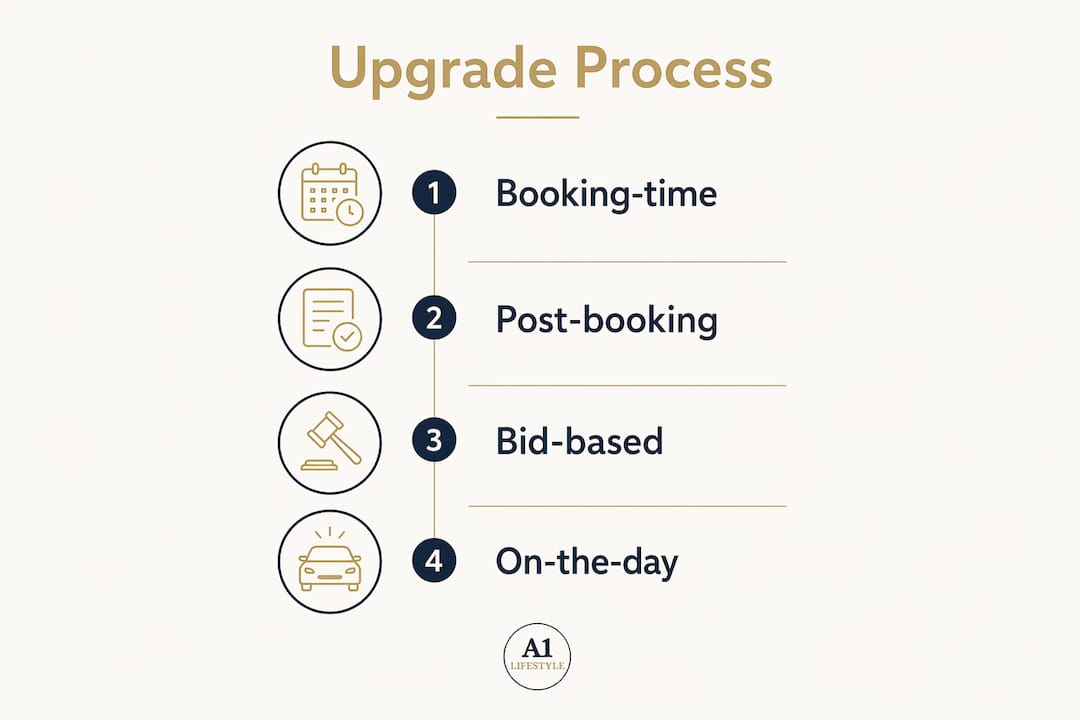
The upgrade process follows several distinct channels, and knowing which one applies to your ticket type determines your options. Most venues and event organisers offer upgrades at three points: at the time of original booking, through a post-booking reservation management portal, and at the venue itself on the day of the event.

Booking-time upgrades
Purchasing a premium seat at the point of sale is the most straightforward route. Inventory is at its highest, and the full range of premium options is available. The trade-off is that you pay the full premium price upfront with no discount.
Post-booking upgrade offers
Many venues and event organisers send upgrade invitations after the initial purchase. These offers arrive by email or through an app and often present a reduced price compared to the original premium ticket cost. Post-booking upgrade offers can represent genuine savings. The window for these offers typically closes 24–48 hours before the event.
Bid-based upgrade systems
Some events use a structured bidding system. Attendees place a cash offer within a set range, and the venue accepts or declines based on availability and competing bids. Bid-based upgrades require booking first, then submitting a bid within a specified window before the event. Bids can be modified until the deadline. If accepted, the fee is non-refundable.
On-the-day upgrades
Upgrades at the venue on the day of the event are largely automated. Gate-level upgrade decisions are made by venue management systems that consider loyalty status, original ticket tier, and revenue factors. Staff rarely override these decisions manually. Attendees who expect to negotiate an upgrade at the door are likely to be disappointed.
The practical steps for securing an upgrade are as follows:
- Purchase your ticket and confirm eligibility for upgrades based on your ticket class.
- Check your email or the venue's app for post-booking upgrade invitations.
- If a bidding system is available, place your bid within the advertised window.
- Modify your bid before the deadline if you want to improve your position.
- Arrive at the venue knowing your upgrade status in advance, rather than relying on day-of availability.
Pro Tip: When using a bid system, submit your offer close to the deadline rather than immediately. You will have a clearer picture of your budget and can place a slightly stronger bid than the minimum, which improves acceptance rates without overpaying.
What factors influence the cost and value of premium seating upgrades?
Upgrade pricing is not fixed. It responds to demand, event type, venue capacity, and the timing of the purchase. Premium upgrades typically cost 40–80% more than standard tickets. That range reflects the wide variation in what "premium" means across different events and venues.
The duration of the event is a key variable in assessing value. A three-hour concert and a full-day festival present very different cost-per-hour calculations. For shorter events, the premium feels steeper relative to the time spent. For full-day or multi-session events, the comfort and service benefits accumulate in a way that makes the cost easier to justify.
"The most useful way to assess an upgrade is not to compare the total price to the standard ticket, but to calculate what each hour of improved comfort and service actually costs. For a six-hour event, a £120 upgrade works out to £20 per hour. That reframes the decision entirely."
Dynamic pricing also affects upgrade costs. Venues hold premium inventory and release it at different price points depending on remaining availability and time before the event. Buying early locks in a known price. Waiting introduces uncertainty but occasionally produces lower offers when inventory remains unsold.
| Factor | Effect on upgrade cost |
|---|---|
| Event duration | Longer events produce better cost-per-hour value for upgrades |
| Demand and popularity | High-demand events carry higher upgrade premiums |
| Timing of purchase | Early purchase offers certainty; late purchase may offer discounts |
| Ticket class held | Higher original ticket tiers often access better upgrade options |
| Loyalty or membership status | Members may receive preferential pricing or early access |
Subjective comfort is a legitimate factor in the value assessment, not just a secondary consideration. Attendees who attend events infrequently often find the upgrade worthwhile precisely because the occasion is rare. Frequent attendees may apply a stricter cost threshold.
What practical tips can attendees use to secure premium seating upgrades?
Securing a premium upgrade consistently requires preparation rather than luck. The attendees who succeed most often are those who understand the system and act at the right moment.
- Book early. The widest range of premium options is available at the point of initial sale. Waiting reduces choice and often increases price.
- Join loyalty programmes. Venues and event organisers with membership schemes prioritise loyal customers for upgrades. Status built over time pays dividends at high-demand events.
- Check your ticket class. Lowest fare brackets are frequently excluded from upgrade eligibility. Knowing this before you book prevents wasted effort later.
- Monitor your email and the venue app. Post-booking upgrade invitations are time-limited. Missing the window means losing the offer.
- Bid strategically. Place bids close to the deadline with a slightly higher offer than the minimum. This approach balances cost control with a realistic chance of acceptance.
- Weigh guaranteed purchase against bidding risk. If the event is important to you, buying the premium seat outright removes uncertainty. Bidding suits attendees who are flexible about the outcome.
- Do not rely on day-of upgrades. On-the-day decisions are automated and favour attendees with established loyalty status or high-tier original tickets.
Pro Tip: Check the venue's official website or the event organiser's app for upgrade options specific to your event. Upgrade availability and pricing are not always advertised prominently, but they are usually listed in the booking management section after purchase.
Understanding how event seating categories work at your specific venue also helps. Not all premium tiers offer the same benefits, and knowing the difference between a premium seat and a full hospitality package prevents mismatched expectations.
Key takeaways
Premium seating upgrades deliver the most value when attendees understand eligibility rules, act early, and match the upgrade tier to the length and importance of the event.
| Point | Details |
|---|---|
| Multiple upgrade channels exist | Upgrades are available at booking, post-booking, via bidding, or on the day of the event. |
| Eligibility depends on ticket class | Lowest-tier tickets are often excluded from upgrade options entirely. |
| Cost scales with event duration | Longer events produce better value per hour from premium upgrades. |
| Automated systems control day-of upgrades | Loyalty status and original ticket tier determine on-the-day outcomes, not negotiation. |
| Early action produces the best results | Booking early or bidding close to the deadline consistently outperforms last-minute requests. |
The shift I have noticed in how venues manage premium seating
The most significant change in premium seating over the past several years is the move toward data-driven upgrade management. Venues no longer rely on staff discretion. Algorithms handle inventory, pricing, and eligibility. That shift has made the process more consistent but also less forgiving for attendees who do not understand the rules.
The attendees who benefit most are those who treat premium seating as an investment in the experience rather than an optional extra. For a significant event, whether that is a Champions League final, a headline concert, or a major boxing card, the difference between a standard seat and a premium position is not marginal. It changes the entire day.
What I find most overlooked is the eligibility question. Many attendees assume they can upgrade any ticket. In practice, the lowest-priced ticket classes are routinely excluded. Buying a slightly higher base ticket often unlocks upgrade options that a discounted ticket never would. That is a more reliable strategy than hoping for a last-minute offer.
The bidding systems now used by many venues are genuinely useful, but they reward patience. Submitting a bid immediately at the minimum amount is rarely the winning approach. Waiting until close to the deadline and placing a considered offer produces better results. The system is transparent once you understand it.
— Tony
Premium event experiences with A1lifestyle
A1lifestyle has over 30 years of experience arranging premium event access for clients across sports, concerts, and exclusive shows worldwide. The team handles the complexity of upgrade eligibility, inventory, and timing on your behalf.
For sport, A1lifestyle offers Premier League hospitality packages with premium seating, private boxes, and concierge support at top-flight matches. The sports events calendar covers a wide range of events where premium seating options are available. For concerts and festivals, VIP concert access includes dedicated entrances, lounge access, and reserved premium positions. The concierge services team manages the full booking process, from ticket selection to on-the-day logistics.
FAQ
What is a premium seating upgrade at an event?
A premium seating upgrade is a move from a standard ticket to a higher-tier seat or amenity package within the same venue. It typically includes better sightlines, additional comfort, and exclusive services such as lounge access or dedicated entry.
How early should I request a seating upgrade?
Requesting an upgrade at the point of original booking gives the widest choice and the most predictable pricing. Post-booking upgrade windows typically close 24–48 hours before the event.
Are on-the-day seating upgrades available at venues?
On-the-day upgrades are possible but are controlled by automated venue systems. Upgrade priority goes to attendees with loyalty status or higher original ticket tiers, not to those who ask at the door.
How much does a premium seating upgrade typically cost?
Premium upgrades cost 40–80% more than standard tickets at most events. The exact figure varies by venue, event type, demand, and the timing of the purchase.
Can all ticket types be upgraded to premium seating?
No. Lowest-tier ticket classes are frequently excluded from upgrade eligibility. Checking upgrade availability before purchasing your base ticket is the most reliable way to confirm your options.