
TL;DR:
- Concert specialists manage fan access using advanced technology and trained staff to reduce wait times and ensure inclusivity. They coordinate accessibility services like BSL interpretation, captioning, and pre-event planning to address show-specific needs and maintain high standards. Their work enables VIP upgrades, backstage access, and real-time problem solving, enhancing the overall live music experience.
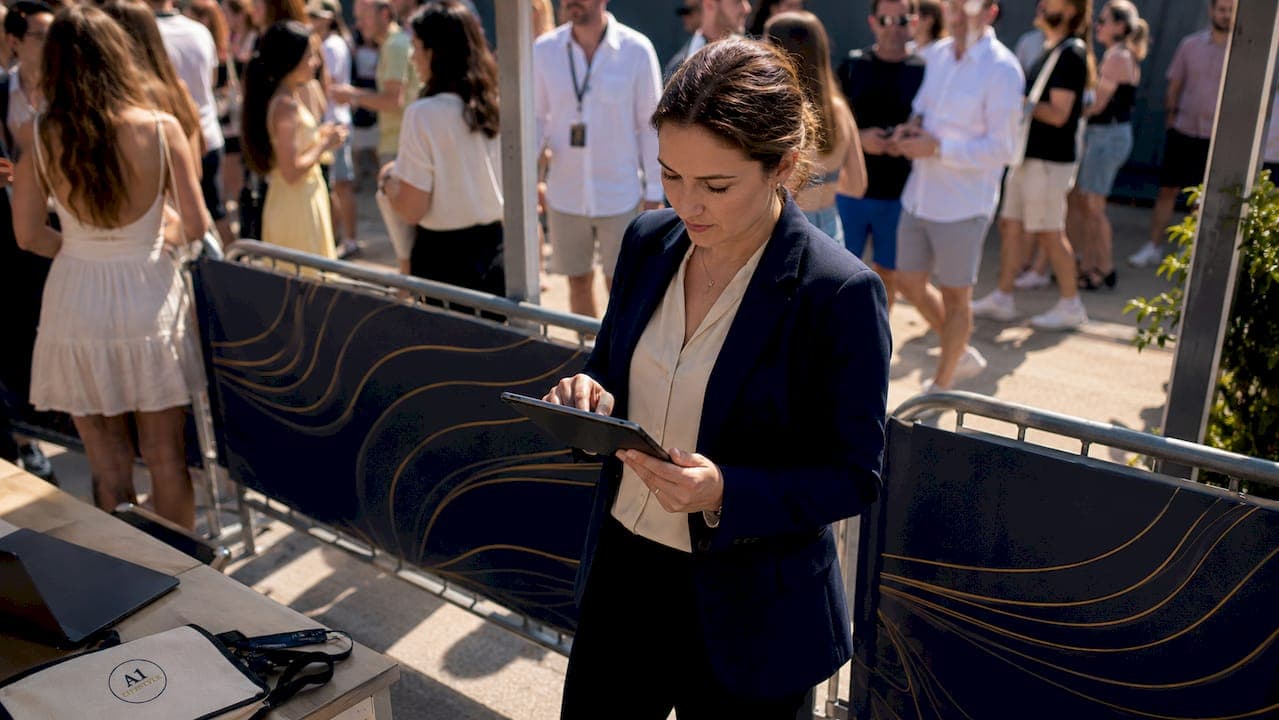
Concert specialists are the professionals who manage fan entry, coordinate access control systems, and arrange tailored services at live music events. The role of concert specialists in fan access covers everything from scanning tickets at the gate to organising British Sign Language interpretation for Deaf attendees. These specialists work across organisations including Access93 and Performance Interpreting, using technology and trained staff to reduce queues, resolve access issues in real time, and make concerts genuinely inclusive. Understanding what they do helps fans prepare better, access more, and get more from every live event.
How do concert specialists use technology to speed up fan entry?
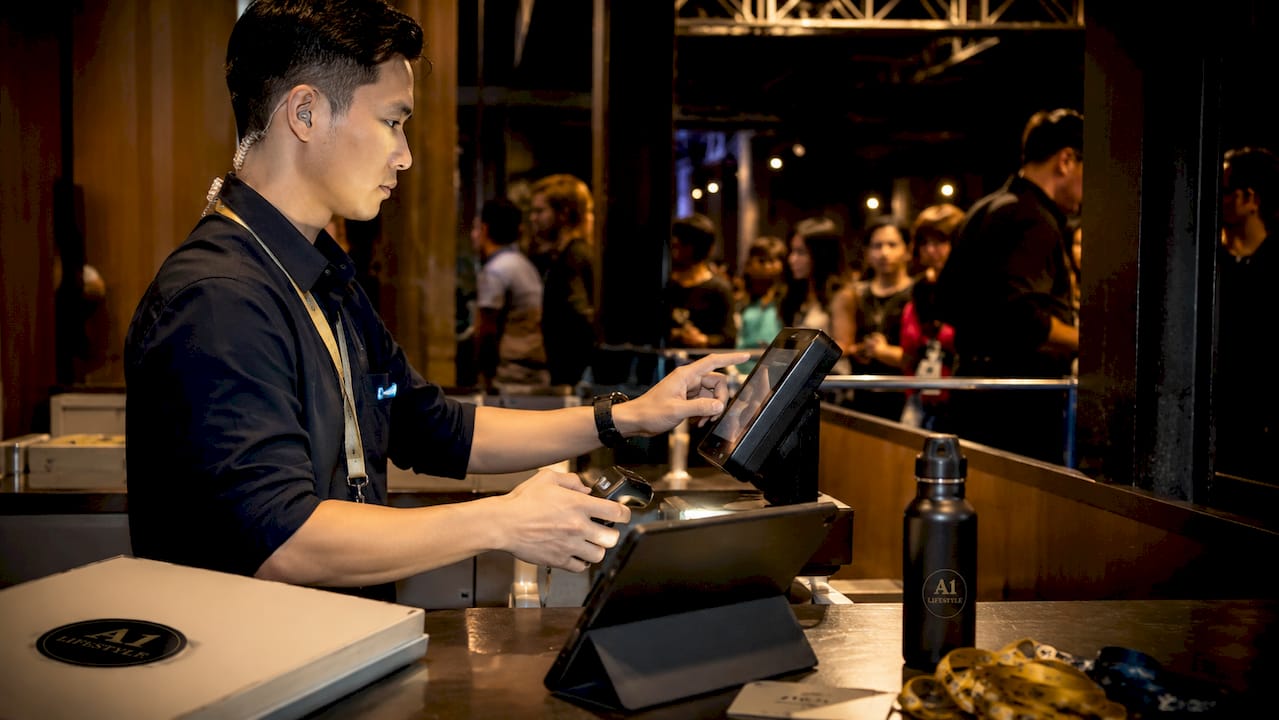
Automated scanning is the foundation of modern concert access management. Implementing self-service scanning can increase entry speed by over 70% compared to traditional staffed lanes. That figure means a festival gate that once processed 500 fans per hour can now handle well over 850, cutting queue times significantly.
Concert access specialists deploy several technologies to achieve this:
- QR code scanning via handheld or fixed readers at turnstiles, processing tickets in under a second per fan.
- RFID and NFC wristbands used at multi-day festivals, allowing fans to tap in without opening a phone or wallet.
- Accreditation software that tracks zone permissions, press passes, and backstage credentials in real time across multiple entry points.
- Fast lane kits such as The Cube from Access93, which combine hardware and software into a portable unit suited to large outdoor festivals.
- Live reporting dashboards that give event control teams real-time flow data, peak entry times, and gate-by-gate throughput figures.
Automated fast lanes reduce staffing needs and generate live logs for event control teams to monitor flow and peak times. This data is used on the day to open additional lanes or redirect crowds before bottlenecks form.
Technology alone does not solve every problem. Human staff remain critical alongside technology for managing access mismatches, real-time zone changes, and maintaining calm at busy gates. A trained scanning team member can override a system error, redirect a fan to the correct entrance, or escalate a credential dispute in seconds. Without that human layer, automated systems create frustration rather than removing it.
Pro Tip: If you are attending a large festival, arrive during the first 20 minutes of gate opening. Specialist teams are fully staffed and systems are freshly calibrated at that point. Queue times typically spike 30–45 minutes after doors open.
What accessibility services do concert specialists provide?
Concert access specialists coordinate a range of services for fans with specific needs. The most structured of these is British Sign Language interpretation, which is not simply a matter of placing an interpreter on stage. BSL integration at live festivals is a legal and production discipline requiring careful planning around lighting, sightlines, and interpreter rotation schedules.
Performance Interpreting coordinates large-scale accessibility programmes for festivals with up to 90,000 attendees, covering sight-line planning and on-site coordination. The scale of that work illustrates how far accessibility planning has moved beyond a token gesture.
Key elements of a specialist accessibility package include:
- Sightline design: Interpreter placement is mapped against stage position, crowd density, and lighting rigs. Fans positioned too far to the side or behind lighting towers may not have a clear view of the interpreter.
- Rotation scheduling: BSL interpreters work in pairs and rotate every 20–30 minutes during performances to maintain accuracy and avoid fatigue.
- Live captioning: Text displayed on screens near the stage or via a dedicated app, covering spoken announcements and song lyrics.
- App integration: Providers like Performance Interpreting use the PI Events App to give Deaf attendees real-time information, interpreter locations, and schedule updates.
- Access audits: Pre-event venue assessments that identify barriers and produce a written report for the production team.
A full access package for festivals includes BSL and ISL interpretation, live captioning, on-site coordination, access audits, and integration with dedicated apps for Deaf attendees. Each element requires months of coordination with festival production teams, not days.
The Equality Act 2010 underpins these services legally. Organisers have a duty to make reasonable adjustments, and specialist providers help them meet that duty in a practical, documented way.
Pro Tip: If you rely on BSL interpretation, contact the event's accessibility team before purchasing tickets. Ask specifically where the interpreter viewing area is located and whether it has a clear sightline to the stage. Maintaining a personal log of accessibility details per venue, including date and room configuration, helps you make faster decisions at future events.
How do concert specialists manage exclusive fan experiences?
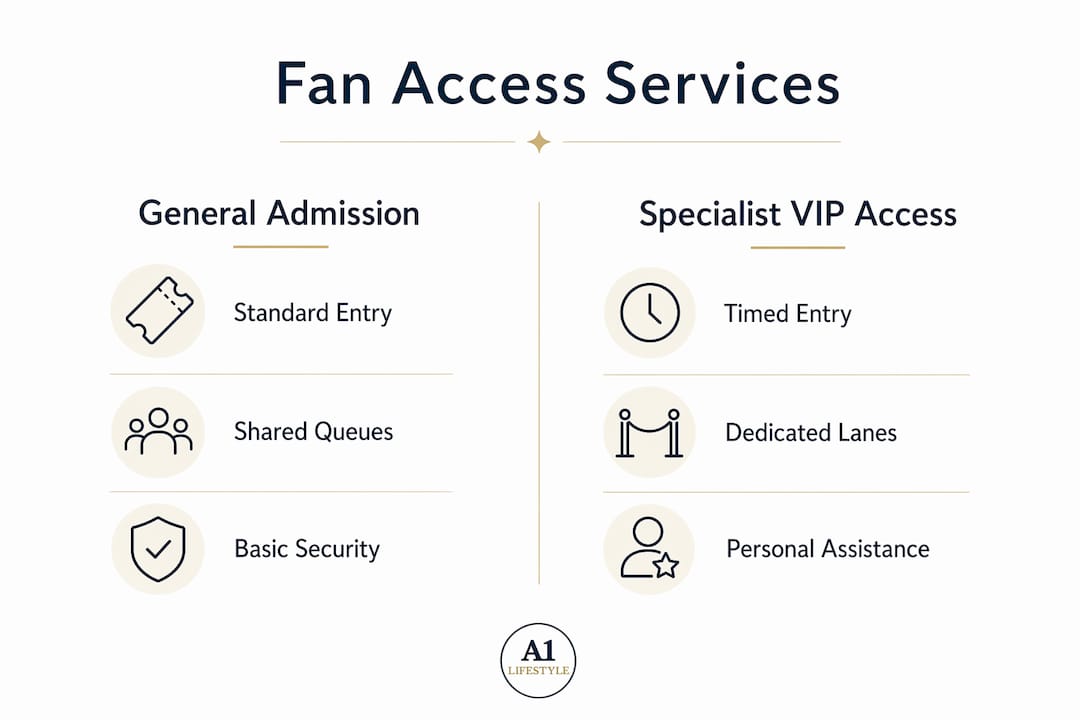
Beyond general admission, concert access specialists coordinate the full range of premium experiences available at live events. This includes VIP queue management, hospitality lounge access, backstage passes, and real-time ticket upgrades at the gate. Understanding how exclusive event access is arranged helps fans make the most of what is available to them.
The table below compares what general admission fans experience versus what specialist-managed VIP access delivers.
| Access type | General admission | Specialist-managed VIP |
|---|---|---|
| Entry queue | Standard lane, shared with all ticket holders | Dedicated fast lane, pre-verified credentials |
| Hospitality | Bar and concession stands | Private lounge with dedicated staff |
| Viewing area | General standing or seated area | Reserved floor section or elevated platform |
| Backstage access | Not available | Coordinated passes with timed entry windows |
| Real-time upgrades | Not possible at gate | Managed by scanning team with live system access |
Specialist scanning teams handle live changes at gates including upgrades and revoked passes, requiring fans to keep digital credentials easily accessible. This matters because a last-minute upgrade, such as a fan being moved from general admission to a VIP area, requires the scanning team to update credentials in the accreditation system in real time. If a fan's phone is out of battery or their ticket is saved only as a screenshot, that process stalls.
Concert specialists also liaise directly with event managers and hospitality providers to coordinate timed entry windows for backstage areas. A backstage pass is not a free pass to wander. It carries a specific time slot, a designated route, and often a staff escort. Specialists manage all of that on the day, adjusting for running order changes or artist schedule shifts. Fans interested in upgrading to a backstage experience benefit most when they understand this structure in advance.
Why does show-specific planning matter for fan access?
A venue may be fully accessible in its architecture but still fail a fan on a specific night. Accessibility is show-specific, not venue-wide, meaning that services like elevator access or accessible seating must be verified for each individual event. A standing show in a room that also hosts seated events will have a completely different access configuration.
Concert specialists address this through several practices:
- Pre-event briefings with security, facilities teams, and event production to confirm which zones are active and which access routes are open on that specific date.
- Communication desks positioned at venue entrances, staffed by specialists who can answer access queries, issue wristbands, and direct fans to the correct area.
- Real-time problem solving for access mismatches, such as a fan with a mobility requirement arriving at a gate that does not have step-free access on that night's layout.
- Digital credential checks at multiple points, not just the main entrance, to catch zone errors before a fan walks to the wrong area.
- Fan-facing information distributed in advance via email or app, covering accessible routes, drop-off points, and on-site contact details.
Fans also carry responsibility in this process. Keeping a personal log of accessibility information per venue, including the date and specific room details, gives fans a reliable reference point when official policies lack that level of detail. A simple note in a phone or a shared spreadsheet is enough. Knowing in advance that a particular venue's accessible toilet is on the second floor, or that the accessible viewing platform requires a separate wristband, removes stress on the night.
Securing tickets for high-demand events is only the first step. Knowing the access configuration for that specific show is what determines whether the night runs smoothly.
Key takeaways
Concert specialists combine technology, trained staff, and show-specific planning to deliver reliable, inclusive fan access at live events.
| Point | Details |
|---|---|
| Technology speeds entry | Automated scanning increases entry speed by over 70%, reducing queues at large events. |
| Human oversight is non-negotiable | Trained staff resolve real-time access issues that automated systems cannot handle alone. |
| Accessibility requires months of planning | BSL interpretation, captioning, and access audits must be coordinated well before the event date. |
| VIP access is actively managed | Specialists handle live upgrades, revoked passes, and timed backstage entry on the day. |
| Show-specific verification matters | Venue-wide accessibility does not guarantee access on a specific night; always confirm event-level details. |
The part most fans never think about
I have spent years watching people arrive at concert gates unprepared, not because they did not care, but because they assumed the system would handle everything. It does not. Concert specialists are doing an enormous amount of work behind the scenes, and the fans who get the most from that work are the ones who meet them halfway.
The technology side of this has improved dramatically. Scanning systems from providers like Access93 are genuinely fast and accurate. But the human layer is what I find most underestimated. A specialist at a gate who can spot a credential mismatch, calm a frustrated fan, and resolve the issue in 30 seconds is worth more than any piece of hardware. That skill takes experience to develop, and it is not visible to most fans.
On accessibility, the gap between what is promised and what is delivered on the night is still too wide at many events. The providers doing this properly, like Performance Interpreting, treat it as a production discipline. They are in contact with festival teams months out. They map sightlines. They brief interpreters on set lists. That level of preparation is what makes the difference between a service that works and one that is merely present.
My view is that fans who understand the role of these specialists get better outcomes. They carry digital credentials. They check show-specific access details. They arrive at the right gate. They contact the accessibility team before the event, not at the door. The specialists are there to help. Knowing what they do makes it easier to work with them.
— Tony
How A1lifestyle can enhance your concert experience
A1lifestyle has over 30 years of experience arranging exclusive access to high-profile concerts, festivals, and live events worldwide. The team coordinates VIP tickets, hospitality lounges, private boxes, and personalised concierge services, handling the specialist coordination that turns a standard night out into something genuinely different. Whether you are looking for VIP concert access or a full hospitality package at a major festival such as Lovebox Festival, A1lifestyle manages every detail. Explore the full range of concierge and specialist services available, and find out what exclusive access actually looks like when it is handled by people who do this at the highest level.
FAQ
What does a concert access specialist actually do?
A concert access specialist manages fan entry, coordinates access control technology, and arranges tailored services such as BSL interpretation and VIP upgrades at live events. They work alongside security, production, and hospitality teams to resolve access issues in real time.
How much faster is automated scanning at concerts?
Automated self-service scanning increases concert entry speed by over 70% compared to traditional staffed lanes. This reduces queue times significantly at large festivals and arena events.
Is accessibility the same at every show in a venue?
No. Venue-wide accessibility does not guarantee show-specific access. Fans should verify accessible seating, viewing platforms, and support services directly with the event organiser for each individual show.
How do specialists manage VIP and backstage access?
Specialists use accreditation software to manage zone permissions, timed entry windows, and real-time credential changes at the gate. Fans should keep digital tickets and passes readily accessible to avoid delays during live updates.
What is included in a full festival accessibility package?
A full accessibility package includes BSL and ISL interpretation, live captioning, on-site coordination, access audits, and integration with dedicated apps for Deaf attendees, all coordinated with the festival production team in advance.