

TL;DR:
- Modern digital tickets use rotating encrypted barcodes that refresh every 20–30 seconds, making screenshots instantly invalid. Device binding links each ticket to a specific phone, preventing copying and transfer, while blockchain-based NFT tickets confirm ownership through cryptographic signatures on a decentralized ledger. Encryption methods like AES-256 and HMAC-SHA256 secure ticket data, ensuring tampering is detected offline and making fraud very difficult.
Ticket authentication is the process by which event organisers confirm that each ticket presented at a venue gate is genuine, valid, and unused. Modern systems rely on technologies including AES-256 encryption, cryptographic signatures, device binding, and blockchain verification to make forgery and duplication effectively impossible. Understanding the ticket authentication process matters for every fan, because it directly affects whether you get through the gate quickly and without dispute.
How does digital ticket authentication work?
Digital ticket authentication uses rotating encrypted barcodes to prevent duplication and speed up entry. The barcode on your ticket is not static. It refreshes every 20–30 seconds, generating a new encrypted code each time. A screenshot of the barcode becomes worthless within seconds of being taken.
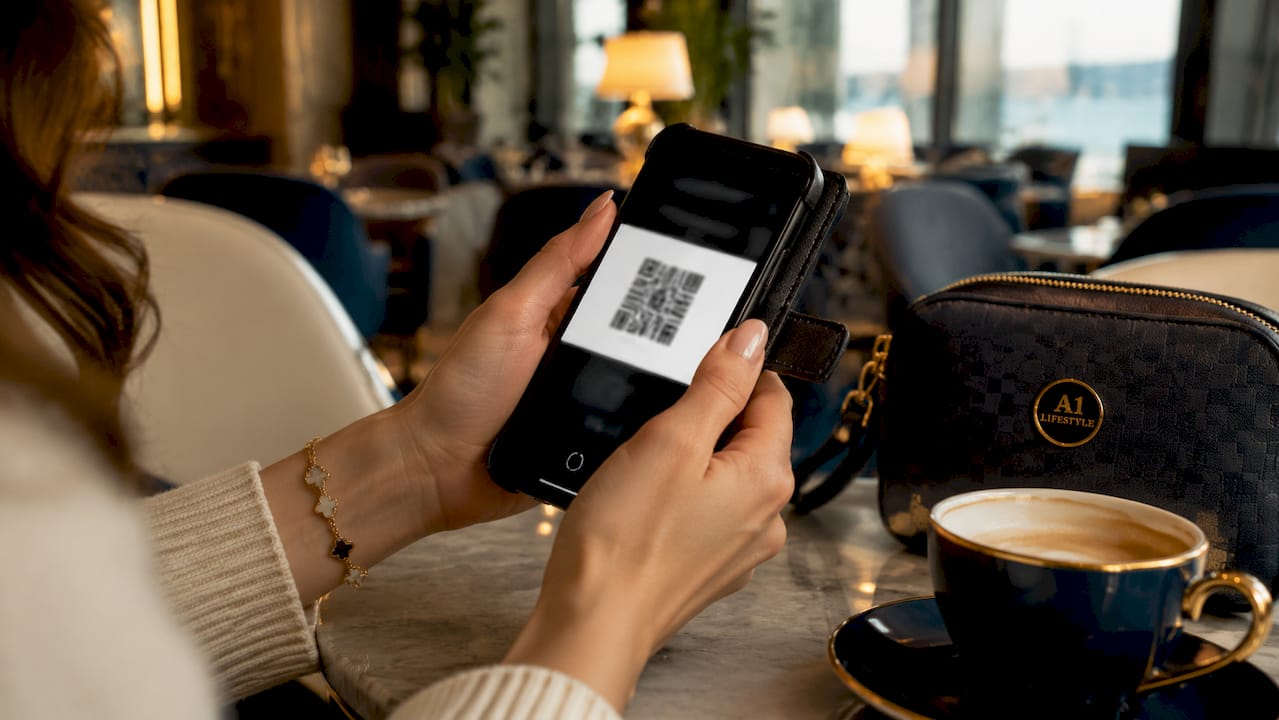
When a gate scanner reads the barcode, verification takes under 2 seconds, checking the encrypted token against a live backend server in real time. That speed matters at large venues where thousands of fans arrive within minutes of each other. The system confirms three things simultaneously: the barcode is cryptographically valid, the ticket belongs to the device presenting it, and the ticket has not already been used.
Device binding links each digital ticket to a specific smartphone, which is the single most effective anti-fraud layer in modern ticketing. A ticket tied to one device cannot be copied and used on another. This is why forwarding a screenshot to a friend does not transfer the ticket. The binding is at the hardware level, not the account level.
Key features of rotating barcode authentication:
- The barcode refreshes every 20–30 seconds using local cryptographic computation inside the official app.
- The encrypted token is tied to both the user account and the specific device hardware.
- Gate scanners verify the token against backend servers in under 2 seconds.
- A used ticket is marked immediately, preventing re-entry at any gate.
- Screenshots and photocopies are invalid because they capture a code that expires almost instantly.
Pro Tip: Download the official event app before leaving home. Rotating encrypted barcodes require native app support for local cryptographic computation. Mobile browsers cannot generate them, and fans without the app face delays at the gate.
How do NFT tickets use blockchain to verify ownership?
NFT-based tickets store ownership records on a public blockchain, making the verification process fundamentally different from standard digital tickets. Each NFT ticket is a unique digital token. No two are identical, and the ownership history is permanently recorded on the blockchain ledger.
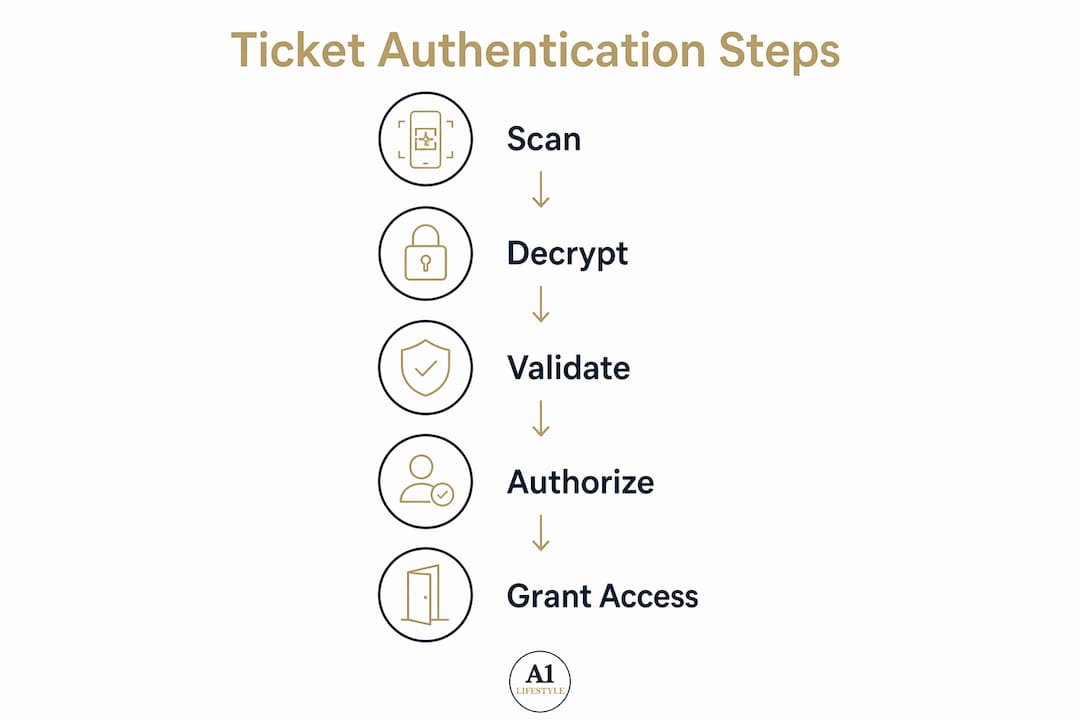
The verification process at an NFT-gated event follows a clear sequence:
- The fan connects their crypto wallet to the venue's scanning system or a dedicated verification app.
- The system sends a cryptographic message that the fan's wallet must sign using their private key.
- The signed message proves the fan controls the wallet without revealing the private key itself.
- The scanner queries the blockchain to confirm the NFT exists, that the presenting wallet owns it, and that the ticket has not already been marked as used.
- A smart contract marks the ticket as used on the blockchain, preventing reuse at any other gate or on any subsequent occasion.
This process gives fans a verifiable proof of ownership that no central authority can revoke or manipulate. The blockchain record is permanent. A fan who purchased a legitimate NFT ticket through a verified marketplace holds proof that is mathematically impossible to forge. The trade-off is that the verification step takes slightly longer than a standard barcode scan, and fans need a compatible wallet app ready before arriving.
For fans interested in event ticket purchasing, understanding which format your ticket uses before the event day removes uncertainty at the gate.
What encryption methods make ticket data tamper-proof?
Secure ticketing systems use AES-256 encryption combined with HMAC-SHA256 signatures to create ticket data that cannot be altered without detection. AES-256 is the same encryption standard used by financial institutions and government agencies. HMAC-SHA256 is a cryptographic signature method that produces a unique fingerprint for each ticket's data payload.
The ticket payload contains the event details, seat information, attendee data, and a timestamp. AES-256 encrypts this payload so the contents cannot be read without the correct key. HMAC-SHA256 then signs the encrypted payload, creating a fingerprint that changes if even a single character of the ticket data is modified.
| Method | Function | Offline capable |
|---|---|---|
| AES-256 encryption | Encrypts ticket payload to prevent reading | Yes, with correct key |
| HMAC-SHA256 signature | Creates tamper-proof fingerprint of ticket data | Yes, using public key |
| Rotating barcode | Generates time-limited encrypted codes | No, requires live computation |
| Blockchain record | Stores ownership on decentralised ledger | No, requires network query |
Any alteration of ticket data invalidates the cryptographic signature instantly upon scanning. This means a forger cannot change the seat number, date, or attendee name without the scanner detecting the tampering. The scanner does not need to contact a server to detect this. It uses the event issuer's public key to verify the signature locally, which is why encrypted tickets can be validated even when internet connectivity is poor.
Timestamping adds another layer. Each ticket carries a timestamp embedded in the encrypted payload. Key rotation, where the issuer periodically changes the encryption keys, limits the window during which a compromised key could be exploited.
Pro Tip: A ticket with a valid-looking barcode but an invalid cryptographic signature will be rejected at the gate. Fraud detection is also zone-specific. A VIP ticket scanned at a general admission gate will be rejected even if the cryptographic signature is correct, because the validation rules check entry zone eligibility.
What is the difference between scanning and validation?
Scanning and validation are two distinct steps in the ticket authentication process, and confusing them leads to misunderstanding how fraud prevention actually works. Scanning captures the ticket data from the barcode or NFC signal. Validation applies the business rules that determine whether entry is permitted.
Validation enforces eligibility rules including the event date, the correct entry gate, and whether the ticket has already been used. A ticket that passes the cryptographic check can still be rejected at the validation stage if it is presented at the wrong gate or on the wrong date. Every validation attempt, whether successful or rejected, is logged in a central ledger. This log is the primary tool for fraud investigation after an event.
Key functions of the validation layer:
- Date and time checks confirm the ticket is being used within the valid entry window.
- Gate and zone checks confirm the ticket grants access to the specific entry point being used.
- Prior-use checks query the ledger to confirm the ticket has not already been scanned successfully.
- Rejection logging records every failed attempt, including the reason, for post-event audit.
High-volume venues use local caching of the ticket database rather than querying a live server for every scan. The local cache syncs periodically with the central backend. This approach reduces entry wait times significantly, but it creates a brief window during which a duplicate ticket could theoretically be used at two different gates before the sync catches the conflict. Venues mitigate this by assigning specific tickets to specific entry zones, so a duplicate would need to be used at the exact same gate within the sync window to succeed.
Understanding ticket types before an event helps fans know which validation rules apply to their specific ticket and entry point.
Key takeaways
Ticket authentication combines encryption, device binding, and real-time validation to make modern event fraud technically very difficult to execute.
| Point | Details |
|---|---|
| Rotating barcodes prevent copying | Barcodes refresh every 20–30 seconds, making screenshots and photocopies invalid almost instantly. |
| Device binding stops duplication | Each digital ticket is tied to one smartphone at the hardware level, blocking unauthorised sharing. |
| AES-256 and HMAC-SHA256 protect data | Encryption and cryptographic signatures make ticket data tamper-proof and detectable offline. |
| Scanning and validation are separate steps | Scanning reads ticket data; validation applies eligibility rules and logs every entry attempt. |
| NFT tickets use blockchain proof | Blockchain queries and wallet signing confirm ownership without relying on a central database. |
Why fans should understand this before the event
The technology behind ticket authentication has outpaced most fans' awareness of it. I have seen fans turned away at gates not because their ticket was fraudulent, but because they did not understand how the system worked. They had a screenshot of a barcode that had already expired, or they arrived at the wrong gate with a zone-specific ticket that the scanner correctly rejected.
Device binding is the layer that surprises fans most. The assumption that a ticket can be forwarded like a file is wrong. Once a ticket is bound to a device, it lives on that device. Transferring it requires going through the official transfer process in the issuing platform's app, not simply sending a screenshot or a PDF.
The offline sync window in high-volume venues is a genuine limitation worth knowing about. It is not a flaw in the system. It is a deliberate trade-off between security and entry speed. Venues accept a small theoretical risk in exchange for faster gates. Fans who arrive early, before the peak entry rush, are less likely to encounter any edge cases from sync delays.
My practical advice is straightforward. Download the official app before leaving home. Check which gate your ticket is assigned to. If your ticket is an NFT, have your wallet app open and connected before you join the queue. These three steps eliminate the vast majority of gate problems I have seen fans experience.
— Tony
Secure event access with A1lifestyle
A1lifestyle has spent over 30 years building access to sold-out events across sport, music, and entertainment. For fans who want certainty that their ticket is genuine and their experience is protected from the moment of purchase, A1lifestyle provides VIP hospitality and concierge services that handle the complexity on your behalf.

Whether the event is a Premier League fixture, a major festival, or a sold-out concert, A1lifestyle sources tickets through verified channels and backs every booking with direct support. Fans gain access to private boxes, exclusive hospitality packages, and insider access that standard ticketing platforms cannot offer. Visit A1lifestyle to see current availability across all event categories.
FAQ
What is ticket authentication?
Ticket authentication is the process of verifying that an event ticket is genuine, valid, and unused. It uses technologies including encrypted barcodes, cryptographic signatures, device binding, and blockchain verification.
Why do digital ticket barcodes change?
Rotating barcodes refresh every 20–30 seconds using encrypted computation inside the official app. This makes screenshots and photocopies invalid almost immediately after they are taken.
Can a ticket be used more than once?
No. Validation systems log every successful scan in a central ledger, and NFT tickets are marked as used on the blockchain smart contract. Any attempt to reuse a ticket is detected and rejected.
Does ticket validation work without internet?
Scanners using AES-256 and HMAC-SHA256 can verify cryptographic signatures offline using the issuer's public key. However, prior-use checks and rotating barcode validation require either a live connection or a recently synced local cache.
What happens if I arrive at the wrong gate?
A ticket with a valid cryptographic signature will still be rejected if it is presented at the wrong entry zone. Validation rules are gate-specific, so always check your assigned entry point before joining the queue.