

TL;DR:
- Event ticket types vary from general admission, which offers open-floor access at the lowest cost, to reserved seating that guarantees specific seats for structured events. VIP tickets provide exclusive perks like early entry, private lounges, and premium seats, while Platinum tickets are dynamically priced standard seats without additional benefits. Selecting the right ticket depends on event format, budget, and experience preferences, with early-bird purchases offering significant savings before dynamic pricing and fees increase overall costs.
Event ticket types are distinct categories that define access, seating, pricing, and perks for any live event. From general admission at a standing concert to a VIP box at a Premier League fixture, the ticket you choose determines your entire experience. Platforms like TicketSource, Tickts, and Galaxy Shows each recognise at least a dozen separate ticket categories. Understanding event tickets before you buy means fewer surprises at the gate and better value for your money.
1. Types of event tickets explained: general admission
General admission (GA) is the most common ticket type, providing access to a venue without an assigned seat or standing position. You enter, find your spot, and the experience is yours to shape. GA tickets are standard at music festivals, standing gigs, and club nights where open-floor access is part of the atmosphere.
The main benefit is cost. GA tickets are almost always the cheapest option at any event. The trade-off is that prime spots near the stage go to those who arrive earliest, so late arrivals may find themselves at the back.
- No assigned seat or position
- Lower price point than reserved or VIP options
- Common at festivals, standing concerts, and club events
- First-come, first-served access to the best spots
Pro Tip: Arrive at least 30 minutes before doors open for a GA ticket at a standing concert. The difference between the front third and the back third of a crowd is significant.
2. Reserved seating tickets

Reserved seating guarantees a specific seat identified by row and seat number. This is the standard format for theatres, arenas, and seated concert venues. You know exactly where you will sit before you arrive, which removes the pressure of early arrival.
The cost is higher than GA, and the seat quality varies considerably by location within the venue. Row A at the front of a stall section commands a premium over Row Z at the rear. Many venues publish seating maps so buyers can assess sightlines before purchasing. For sports events, premium seating options at major arenas add further tiers above standard reserved seats.
Reserved seating suits events where the programme is structured, such as theatre productions, classical concerts, or award ceremonies, where wandering the floor is not appropriate.
3. VIP tickets and what they actually include
VIP tickets offer exclusive perks beyond a seat or standing position. These typically include premium seating locations, access to private lounges, early entry, dedicated bars, merchandise packages, or meet-and-greet opportunities. VIP ticket perks vary significantly by event and organiser, so reading the specific inclusions before purchase is necessary.
VIP tiers and price banding achieve the highest profit margins for event organisers, as attendees pay a premium for exclusivity and superior views. This means organisers invest in making VIP packages genuinely attractive, which generally benefits the buyer.
"Organisers prioritise VIP tiers and price banding for maximising revenue, meaning the VIP experience is usually well-resourced and worth the premium for the right event." — TicketSource
Common VIP inclusions at major concerts and sports events:
- Priority or early entry to the venue
- Access to a private lounge or hospitality area
- Premium seat location (front rows, raised platforms, private boxes)
- Dedicated food and drink service
- Exclusive merchandise or programmes
- Meet-and-greet or backstage access at select events
For VIP concerts specifically, the gap between a standard ticket and a VIP package can be the difference between watching a show and being part of it.
4. Price banding and Platinum tickets
Price banding creates multiple pricing tiers within the same ticket category based on seat quality or location. A seated arena might offer four price bands, with Band A covering the front stalls and Band D covering the upper tier rear. The seat type is the same; the price reflects the view.
Platinum tickets are frequently misunderstood. They are not VIP tickets. Platinum tickets are standard seats sold at a dynamically increased price based on real-time demand. A Platinum ticket for a sold-out show may cost three times the face value of an identical seat purchased earlier, with no additional perks included. Buyers should check whether a Platinum listing includes any extras before assuming it represents an upgrade.
Dynamic pricing adjusts ticket prices upward as demand increases, reflecting real-time market conditions. This is now common practice at major concerts and sports fixtures. Buying early is the most reliable way to avoid dynamic price increases.
5. Early-bird tickets
Early-bird tickets offer a discounted price for buyers who commit to an event well in advance. The discount incentivises early purchase and helps organisers confirm audience interest before the event date. For buyers, the saving can be substantial, particularly at multi-day festivals where early-bird pricing may represent a 20 to 30 per cent reduction on standard rates.
Early-bird allocations are limited. Once the early-bird tier sells out, the price moves to the standard rate. Buyers who follow events on social media or sign up to mailing lists are typically the first to know when early-bird tickets go on sale. For concert-goers looking to reduce costs, concert ticket discounts in 2026 are most accessible through early-bird and pre-sale channels.
Pro Tip: Set a calendar reminder for the announced on-sale date of any event you plan to attend. Early-bird tiers often sell out within hours of release.
6. Concession, group, and discount tickets
Concession tickets are reduced-price tickets for specific eligible groups. Students, senior citizens, children, and people with disabilities are the most common concession categories. Eligibility is verified at the gate, so carry relevant identification when attending on a concession ticket.
Group tickets offer discounts for bulk purchases, typically for parties of ten or more. Group discounts and discount codes also function as marketing tools, rewarding loyal customers and tracking the success of promotional campaigns. For organisers, group sales increase reach because each buyer brings multiple attendees.
Discount codes work differently from automatic discounts. A discount code requires the buyer to enter a specific code at checkout. Automatic discounts apply without any action from the buyer, triggered by conditions such as purchasing a minimum number of tickets. Pay-what-you-can tickets represent a further category, used primarily by community events and arts organisations to maximise accessibility.
- Check eligibility requirements before selecting a concession ticket
- Confirm group minimum numbers before purchasing group tickets
- Apply discount codes at checkout before completing payment
- Verify that pay-what-you-can events have a stated minimum contribution
7. Digital and flexible ticket formats
Electronic tickets (e-tickets) are the standard delivery format for most events in 2026. They are delivered digitally as QR codes or PDF files, scanned at the gate for entry. E-tickets reduce printing costs, speed up entry queues, and are harder to counterfeit than physical tickets.
Flexi-exchange tickets allow the holder to change the date or session of their attendance before the event. These are common at multi-day festivals, theatre runs, and exhibitions where the same programme repeats across several dates. Time-slot tickets allocate a specific entry window, managing crowd flow and reducing congestion at popular attractions.
| Ticket format | Key feature | Typical use |
|---|---|---|
| E-ticket (QR code) | Digital delivery, fast scanning | Concerts, sports, theatre |
| Flexi-exchange | Date or session change permitted | Festivals, theatre runs |
| Time-slot | Allocated entry window | Museums, exhibitions, attractions |
| Resale ticket | Secondary market purchase | Sold-out events |
Resale tickets are tickets sold by the original buyer to a third party. Prices on the resale market reflect demand and can exceed face value considerably. Buyers should use regulated resale platforms to reduce the risk of fraudulent tickets.
Booking fees add £2 to over £10 per ticket on prices between £30 and £80, funding platform services and marketing separately from the face value. This means the checkout total is often noticeably higher than the advertised price. Some platforms use all-in pricing to show the full cost upfront, which is a more transparent approach for buyers.
8. How to choose the right ticket type
Choosing between different types of tickets starts with the event format and venue. A standing festival calls for GA. A theatre production requires reserved seating. A major sports fixture at a Premier League ground offers multiple tiers from standard reserved to premium hospitality.
Budget is the second factor. GA and early-bird tickets offer the lowest entry cost. VIP and Platinum tickets carry the highest price but deliver the most controlled and comfortable experience. The question is whether the additional cost translates to additional value for the specific event.
Limiting ticket choices to 3 or 4 main tiers maximises clarity for buyers and reduces decision fatigue. The recommended tiers are General Admission, Reserved Seating, VIP, and Early-bird or Concession. Buyers who find themselves choosing between eight or nine ticket options at checkout are likely dealing with an organiser who has over-complicated their pricing structure.
| Event type | Recommended ticket | Reason |
|---|---|---|
| Standing concert | General admission | Open floor suits the format |
| Theatre production | Reserved seating | Structured programme, fixed seating |
| Major sports fixture | Reserved or VIP | Sightlines and comfort matter |
| Multi-day festival | Early-bird or GA | Cost saving on advance purchase |
| Sold-out event | Regulated resale | Only safe secondary market option |
Key takeaways
The most effective approach to choosing event tickets is to match the ticket category to the event format, budget, and experience priority before purchasing.
| Point | Details |
|---|---|
| GA suits open-floor events | General admission is the lowest-cost option and standard for festivals and standing gigs. |
| VIP delivers measurable perks | VIP tickets include specific inclusions; always verify what is covered before paying the premium. |
| Platinum is not VIP | Platinum tickets are dynamically priced standard seats, not upgraded experiences. |
| Early-bird saves money | Buying early is the most reliable way to reduce ticket cost before dynamic pricing applies. |
| Booking fees affect final cost | Add £2 to over £10 per ticket to any advertised price when budgeting for an event. |
Tony's view on picking the right ticket
The single most common mistake I see is buyers treating Platinum as a synonym for VIP. They are not the same thing. A Platinum ticket at a major concert is a standard seat with a price inflated by demand. There are no extra perks, no lounge access, and no early entry. The label is a pricing mechanism, not a quality indicator.
My consistent recommendation is to buy early and buy deliberately. Early-bird tickets at festivals and major concerts represent genuine savings, often 20 to 30 per cent below the standard rate. VIP tickets at the right event, particularly a Premier League fixture or a headline concert, deliver a materially different experience. The hospitality, the sightlines, and the service are worth the cost when the event matters to you.
The area where buyers consistently lose money is booking fees. The advertised price is rarely the checkout price. A £50 ticket can become £62 by the time platform fees, booking charges, and delivery costs are added. Check the all-in total before you commit, not after.
— Tony
Explore premium event tickets with A1lifestyle
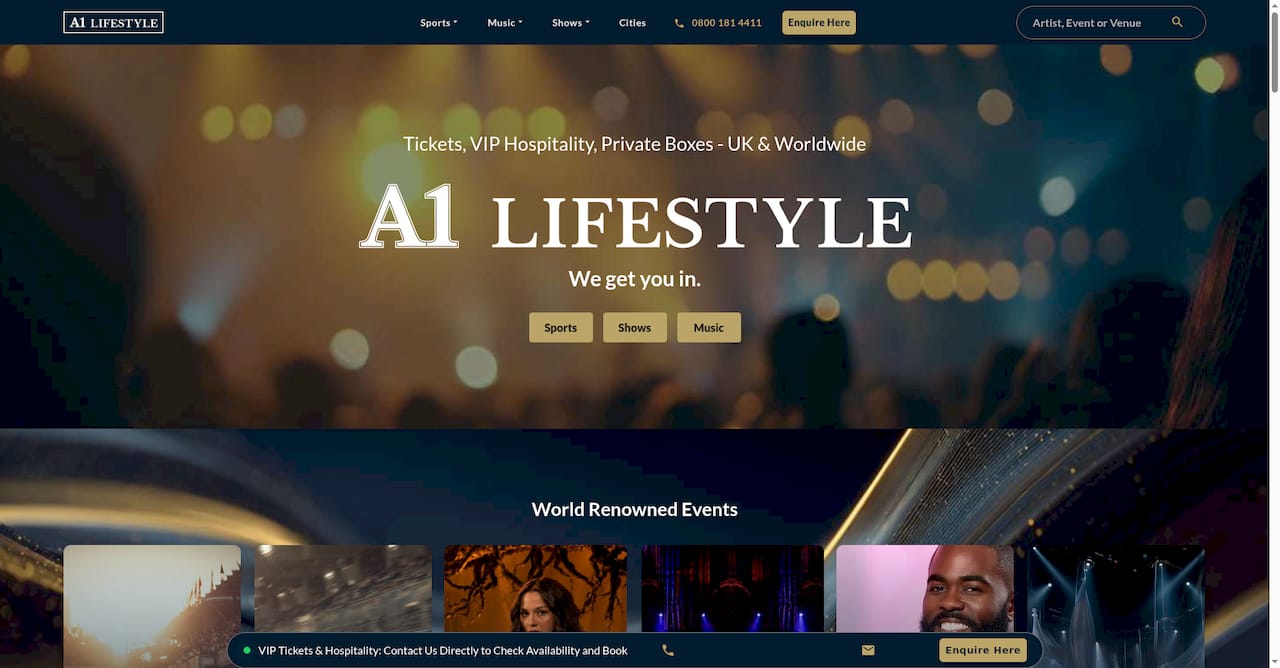
A1lifestyle has over 30 years of experience securing exclusive access to sold-out events worldwide. Whether you are looking for VIP concert tickets with hospitality packages or premium seats at a Premier League fixture, A1lifestyle provides access to events that are otherwise unavailable through standard channels. The service includes personalised concierge support, private boxes, and VIP hospitality tailored to each client. For events where ticket type and experience quality genuinely matter, A1lifestyle is the direct route to guaranteed access and exceptional service.
FAQ
What is the difference between GA and reserved seating?
General admission provides access without an assigned seat, while reserved seating guarantees a specific seat by row and number. GA is standard for standing concerts and festivals; reserved seating is standard for theatres and arenas.
Are Platinum tickets the same as VIP tickets?
No. Platinum tickets are standard seats sold at a dynamically increased price based on demand, with no additional perks. VIP tickets include specific extras such as lounge access, early entry, or premium positioning.
How much do booking fees add to a ticket price?
Booking fees add £2 to over £10 per ticket on prices between £30 and £80, depending on the platform and whether fees are flat or percentage-based. Always check the all-in total before completing a purchase.
When should you buy an early-bird ticket?
Buy an early-bird ticket as soon as the sale opens, as allocations are limited and sell out quickly. Early-bird pricing offers the lowest available rate before standard and dynamic pricing applies.
What are concession tickets and who qualifies?
Concession tickets are reduced-price tickets for eligible groups including students, senior citizens, children, and people with disabilities. Proof of eligibility is required at the venue gate.