

TL;DR:
- Choosing the right sports hospitality provider is crucial for creating a memorable spectator experience at major events. The best providers offer private suites, bespoke catering, and exclusive networking opportunities that go beyond basic ticketing. Planning well in advance and verifying official partnerships ensure premium access and a tailored, high-quality experience.
Choosing the best sports hospitality provider is the single most important decision you make before a major event. The right provider shapes everything: your seating, your food, your access, and the impression you leave on corporate guests. The industry standard for premium sports hospitality now includes private suites, bespoke catering, and official partnership programmes that deliver multi-phase match-day experiences. A1lifestyle has built over 30 years of expertise in this space, giving planners and attendees a reliable benchmark for what genuine premium service looks like.
What core services define top sports hospitality providers?
Top sports hospitality providers offer a specific set of features that separate them from basic ticket resellers. Knowing what to look for saves time and prevents costly mistakes.
The non-negotiable features of a genuine premium provider include:
- Private suites with pitch-facing views. Private suites with climate control and unobstructed sightlines are a hallmark of top-tier hospitality. They give corporate guests a controlled, comfortable environment away from general crowds.
- In-suite catering. Food quality signals overall service quality. Providers that incorporate locally inspired gourmet cuisine and exclusive branded merchandise create deeper connections with guests.
- Premium seating options. The best providers offer a range of premium seating choices beyond a single tier, letting planners match the seat to the guest.
- Exclusive merchandise. Branded, event-specific items add a tangible memory that guests take home.
- Networking access. Networking with sports legends and ambassadors is a standard feature in elite tournament packages. That access adds value that no ticket alone can provide.
Data-backed customisation separates the best providers from the rest. Providers that use real-time guest insights and predictive modelling can tailor programmes to specific demographics and interests. That means a corporate group of finance professionals gets a different experience from a group of lifelong football supporters, even at the same event.
Pro Tip: Ask any provider directly whether they use guest data to personalise the programme. A provider that cannot answer this question clearly is unlikely to deliver a truly bespoke experience.

How to assess and compare sports hospitality providers effectively
Assessing providers requires a structured approach. Without one, planners often default to price, which is the least reliable indicator of quality.
Follow this step-by-step framework:
- Check official partnerships. Providers with official licences from governing bodies or venues have guaranteed access and legal standing. Unofficial resellers may offer lower prices but carry significant risk.
- Read client testimonials carefully. Generic praise means little. Look for testimonials that name specific events, describe specific services, and mention the provider's responsiveness when things went wrong.
- Request a sample package. Any credible provider will share a detailed breakdown of what a package includes, from arrival time to post-event arrangements. Vague descriptions are a warning sign.
- Review the event schedule. Official hospitality programmes for major tournaments feature multi-phase events including pre-match receptions, private suite access, and post-match networking. Confirm your provider delivers all three phases, not just the match itself.
- Confirm exclusivity. Ask how many guests share each suite or hospitality area. Overcrowded spaces undermine the premium experience entirely.
- Assess pricing transparency. A trustworthy provider lists what is included and what costs extra. Hidden charges for catering, parking, or merchandise indicate poor practice.
When comparing packages across providers, use these three criteria as your primary filters:
| Criteria | What to look for |
|---|---|
| Service range | Pre-match, in-match, and post-match coverage |
| Flexibility | Ability to customise guest numbers and dietary requirements |
| Networking value | Access to industry figures, ambassadors, or exclusive areas |
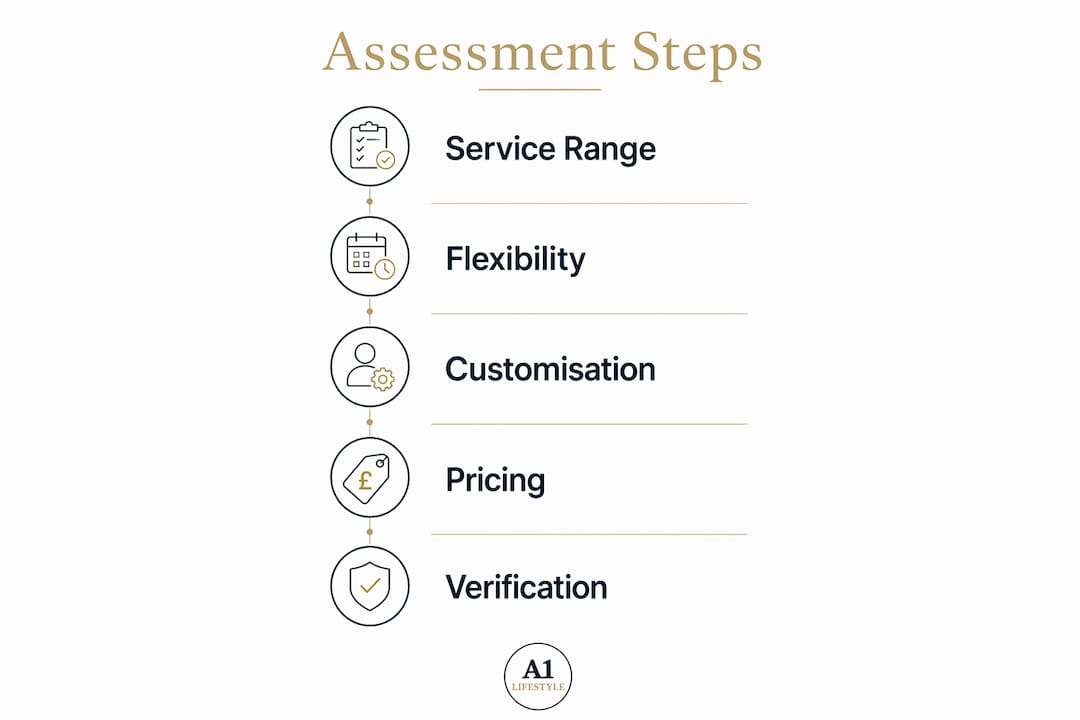
Understanding the types of hospitality packages available before you contact a provider puts you in a stronger negotiating position. Planners who know the difference between a private suite package and a premium lounge package ask better questions and get better answers.
Pro Tip: Always request a written confirmation of every included element before signing. Verbal assurances carry no weight if a dispute arises on event day.
Common mistakes when choosing sports hospitality services
Most errors in selecting sports hospitality services come down to rushing the process or focusing on the wrong variables. These mistakes are avoidable.
- Booking too late. Premium packages at major events sell out months in advance. Advance booking is not a preference; it is a requirement for securing the best options.
- Choosing on price alone. A lower price almost always reflects a reduction in service quality, access level, or both. The cheapest package rarely delivers the experience corporate guests expect.
- Ignoring the contract details. Cancellation terms, force majeure clauses, and substitution policies matter enormously. Read every clause before committing.
- Overlooking the provider's track record. A provider with no verifiable history at the specific venue or event type is a risk. Ask for references from comparable events.
- Skipping the site visit. For large corporate groups, visiting the hospitality area before the event day removes uncertainty and allows you to brief guests accurately.
"Providers that blend operational efficiency with creative culinary and entertainment activations deliver superior guest satisfaction and repeat business. The experience does not begin when the match kicks off. It begins the moment a guest arrives."
That principle defines the difference between a forgettable afternoon and an event guests discuss for years. Planners who treat hospitality as a logistical task rather than an experience design challenge consistently underdeliver.
How to maximise your sports hospitality experience
Selecting a provider is only the first step. Getting full value from a hospitality package requires preparation before the event and active engagement on the day.
- Understand the event flow in advance. Ask your provider for a detailed schedule covering arrival, reception, match access, and any post-match activities. Knowing the timeline lets you brief guests and avoid confusion.
- Use the networking opportunities. Elite hospitality packages include access to sports legends and industry ambassadors. Prepare a short introduction for your corporate guests so they make the most of those moments.
- Leverage bespoke dining. Providers that offer curated menus tied to the event or venue create a stronger sense of occasion. Brief your guests on the food offering in advance so they arrive with the right expectations.
- Maintain contact with your provider before the event. Confirm guest numbers, dietary requirements, and any special requests at least two weeks out. Last-minute changes are harder to accommodate and may incur additional costs.
- Collect feedback after the event. Ask guests what worked and what did not. That information directly improves your next booking and gives you leverage when negotiating with providers.
Engaging providers early allows for more customised packages, including exclusive experiences and memorabilia tailored to corporate guests. Planners who contact providers three to six months before a major event consistently secure better options than those who enquire in the final weeks.
Key takeaways
The best sports hospitality provider combines official access, bespoke service, and transparent pricing to deliver an experience that exceeds guest expectations at every stage of the event day.
| Point | Details |
|---|---|
| Verify official partnerships | Only providers with official licences guarantee access and legal standing at major events. |
| Prioritise bespoke service | Providers using guest data to personalise programmes deliver measurably better experiences. |
| Book well in advance | Premium packages sell out months ahead; early booking secures the best options. |
| Read contracts carefully | Cancellation terms and substitution policies must be confirmed in writing before committing. |
| Maximise networking access | Elite packages include access to ambassadors and legends; prepare guests to use that access. |
What I have learned from years of watching planners get this wrong
The most common mistake I see is treating sports hospitality as a procurement exercise rather than an experience design decision. Planners spend hours comparing line-item prices and almost no time asking whether the provider has actually delivered at that specific venue before.
The second mistake is underestimating how much the pre-match period matters. Guests form their impression of the event before a single ball is kicked. A chaotic arrival, a cold reception, or a generic buffet sets a tone that the match itself rarely recovers. The providers worth working with understand this and invest as much attention in the first hour as they do in the main event.
My honest advice: prioritise providers with verifiable testimonials from events you can name. Generic five-star reviews tell you nothing. A client who says "A1lifestyle delivered private suite access at Wembley for our group of 40 and handled every dietary requirement without a single complaint" tells you everything. That specificity is the only reliable signal of genuine capability.
— Tony
A1lifestyle's sports hospitality packages
A1lifestyle offers curated hospitality packages for some of the most sought-after events in sport. With over 30 years of industry experience and a global network of official partnerships, the team secures access that standard ticket channels cannot match.
For Premier League events, A1lifestyle provides exclusive hospitality packages covering private suite access, gourmet catering, and concierge support from arrival to departure. Corporate planners can also access bespoke concierge services to handle every detail, from guest transport to post-match arrangements. For a full view of available events, the A1lifestyle events calendar covers major sports, concerts, and exclusive experiences worldwide.
FAQ
What does a premium sports hospitality package include?
A premium package typically covers private suite access, in-suite catering, premium seating, and post-match networking. Official programmes at major tournaments also include pre-match receptions and access to sports ambassadors.
How far in advance should I book sports hospitality?
Book at least three to six months before a major event. Premium packages at high-profile fixtures sell out well ahead of the event date, and early booking gives providers time to customise your experience.
How do I verify a sports hospitality provider is legitimate?
Check for official partnerships with the venue or governing body, request client references from comparable events, and confirm that all inclusions are listed in a written contract before payment.
What is the difference between a private suite and a premium lounge?
A private suite offers an enclosed, exclusive space with dedicated catering and a fixed guest list. A premium lounge is a shared hospitality area with higher-quality amenities than standard seating but without the privacy of a suite.
Why does bespoke service matter in sports hospitality?
Bespoke service, including locally inspired cuisine and personalised guest engagement, creates a stronger event impression and drives repeat business. Generic packages rarely meet the expectations of corporate guests attending high-profile events.