

TL;DR:
- Fan-to-fan resale platforms are the safest first option for sold-out tickets because they cap prices and ensure fraud protection. Resales on official platforms can appear late and offer prime seats at face value, often up to an hour before the event. Comparing all-in prices across multiple verified marketplaces helps fans avoid overpaying and fake tickets.
Sold out concert ticket options are the verified routes fans use to secure seats after primary sales close, covering fan-to-fan resale, official late releases, and secondary marketplaces. The industry term for this category is the secondary ticket market, and understanding how it works is the difference between paying face value and paying three times over. A tiered approach, starting with official sources, moving to fan-to-fan platforms, and then comparing secondary marketplaces, consistently produces the best results. Each route carries different price risks, fraud risks, and availability windows, all of which are worth knowing before you spend a penny.
1. Why fan-to-fan resale is the best first option for sold out tickets
Fan-to-fan resale platforms are the most buyer-friendly entry point into the secondary ticket market. They cap ticket prices at the original face value, which directly prevents scalping and keeps costs fair. Over 90% of tickets on these platforms sell within four days of listing, which shows how quickly inventory moves.
The security model on these platforms is also worth noting. Many withhold seller payment until 30 minutes after the event starts, confirming the ticket was valid before releasing funds. That mechanism protects buyers from fake listings far more reliably than a simple refund policy.
- Prices are capped at face value, so you will never pay above the original ticket cost
- Fraud protection is built into the payment structure, not bolted on afterwards
- Inventory turns over quickly, so checking daily is worthwhile
- Alerts and notifications let you act the moment a ticket becomes available
Pro Tip: Set up instant alerts on fan-to-fan platforms as soon as a show sells out. Tickets often appear and sell within hours, so waiting until the day before the event puts you at a disadvantage.
2. How official late releases create new availability after sell-out

A sold-out status on the primary sale does not mean every seat in the venue is gone. Production holds are seats blocked for technical and production use, such as camera positions, sound equipment, and crew access, that are often released back into general availability once the production plan is finalised.
Official platforms also operate their own resale programmes. Ticketmaster's Face Value Exchange limits resale listings to the original ticket price and allows sellers to list right up until the event starts. That means tickets can appear as late as one hour before doors open.
- Production hold releases frequently include prime seating at face value
- Official resale programmes restrict prices, unlike open secondary markets
- Listings can appear up to an hour before the event, so checking on the day is worthwhile
- Enabling notifications on the primary platform is the most reliable way to catch these releases
Pro Tip: Check the primary ticketing platform on the morning of the show. Production hold releases and last-minute returns often appear in the final hours, and they go fast.
3. Using secondary marketplaces securely and effectively
Secondary marketplaces offer the widest range of tickets for sold out events, but they require more care than fan-to-fan platforms. Prices vary significantly between platforms for identical seats. Failing to compare across multiple sites leads to paying 20–40% more for the same ticket.
The main reason for that gap is hidden service fees. Most platforms display a base ticket price and add fees at checkout. Using the 'all-in' pricing toggle on resale sites shows the true total cost upfront, making genuine comparisons possible. Without it, a ticket that looks cheaper can end up costing significantly more.
Buyer guarantees and verified resale badges matter here. Platforms that act as intermediaries, holding payments until ticket validity is confirmed, offer stronger protection than those that simply connect buyer and seller. Look for that feature before committing.
- Enable 'all-in' pricing on every platform before comparing prices
- Check for a buyer guarantee or verified resale badge on each listing
- Use seat maps and 3D venue views to assess seat quality before purchasing
- Compare at least two or three platforms before buying to avoid overpaying
Pro Tip: Always compare the final checkout total, not the listed ticket price. Service fees on secondary marketplaces vary widely, and the cheapest-looking ticket rarely stays cheapest once fees are added.
4. Alternative strategies for securing sold out concert tickets
When the primary routes do not produce results, several additional methods are worth trying. These are not shortcuts, but they do expand the pool of options available to you.
Presale codes are one of the most underused tools in how to get concert tickets before they sell out entirely. Fan clubs, credit card companies, and venue mailing lists all distribute presale codes before general sale opens. Signing up for these in advance of any tour announcement puts you ahead of the general queue.
Ticket waiting lists are another practical option. Many primary platforms allow fans to register interest after a sell-out, and a ticket waiting list can trigger automatic purchase if a return becomes available. This removes the need to monitor platforms manually.
- Register for artist fan clubs and venue newsletters to receive presale codes
- Join official waiting lists on primary platforms for automatic purchase on returns
- Consider alternate tour dates in nearby cities, which often have better availability
- Look at festivals featuring the same artist as a lower-cost alternative to headline shows
- Avoid unofficial sellers on social media or outside venues, as fake tickets are common and buyer protection is absent
The risk of buying outside verified platforms is real. Unofficial sellers on social media and at venue entrances operate without any buyer protection, and fake tickets are a frequent outcome. The saving is rarely worth the risk.
Key takeaways
A tiered approach to the secondary ticket market, starting with fan-to-fan platforms and ending with careful secondary marketplace comparisons, produces the best results at the fairest price.
| Point | Details |
|---|---|
| Start with fan-to-fan platforms | Prices are capped at face value and fraud protection is built into the payment model. |
| Check official sources on event day | Production holds and last-minute returns can appear up to one hour before doors open. |
| Always use 'all-in' pricing | Failing to compare true totals leads to overpaying by 20–40% on secondary marketplaces. |
| Avoid unofficial sellers | Buying outside verified platforms exposes you to fake tickets with no recourse. |
| Set alerts early | Ticket inventory moves fast; notifications give you the best chance of acting in time. |
My experience: sold out rarely means gone for good
The phrase "sold out" stops a lot of fans from looking further. That is a mistake I have seen repeated constantly. Ticket inventory is not static. It circulates continuously, and availability often returns in the days and hours before an event as plans change, production holds clear, and resellers adjust their listings.
The fans who consistently get tickets to sold-out shows are not lucky. They are patient and methodical. They set alerts, check official platforms on the day, and compare secondary marketplaces properly using all-in pricing. They do not panic-buy at the first listing they see.
The biggest mistake I observe is impulsive purchasing. Paying three times face value in the first week after a sell-out is almost always avoidable. The same seat will frequently appear closer to the event at a fraction of that price, because sellers would rather recoup something than hold an unsold ticket. Patience, combined with the right platforms, is the most effective tool available to any concert fan.
— Tony
A1lifestyle: access to events when availability is scarce
For fans who want guaranteed access without the uncertainty of monitoring multiple platforms, A1lifestyle offers a direct route. With over 30 years of industry expertise and a global network of contacts, A1lifestyle specialises in securing tickets and VIP hospitality for high-demand concerts, festivals, and live events.
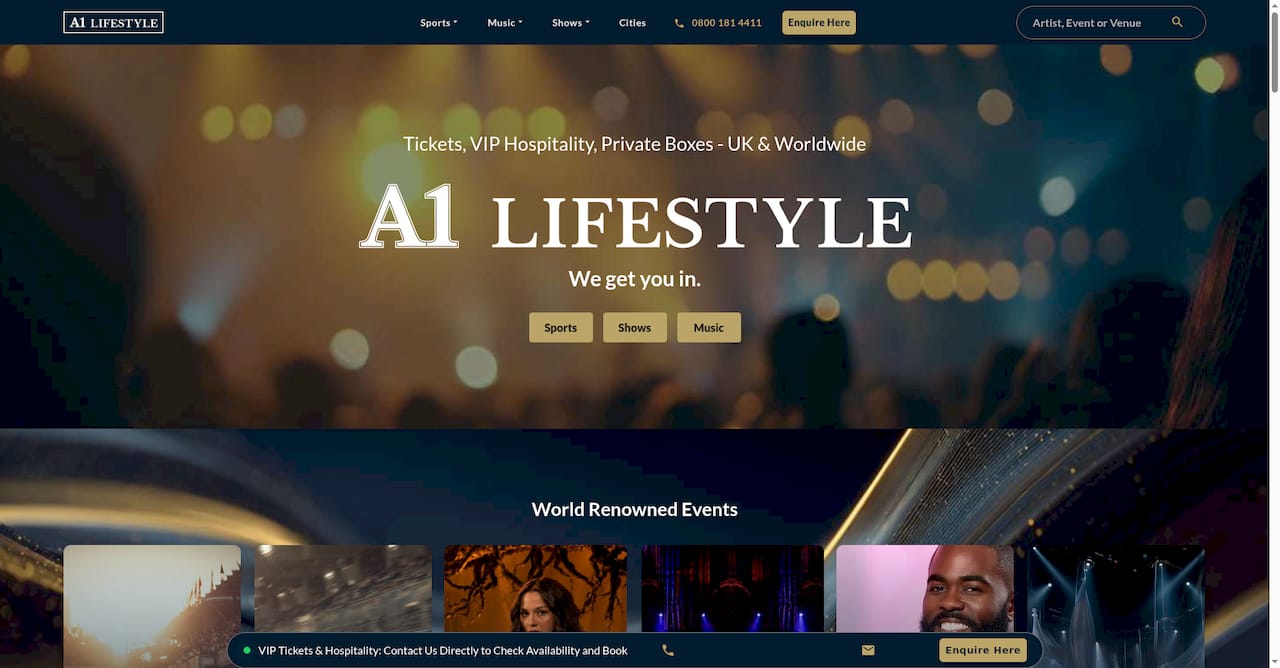
A1lifestyle's concierge services cover everything from ticket sourcing to private boxes and personalised event experiences. For live music fans, the platform also lists access to Lovebox Festival and a range of other events where standard availability has long since closed. If you want access without the wait, A1lifestyle is worth exploring.
FAQ
What are the safest sold out concert ticket options?
Fan-to-fan resale platforms with built-in fraud protection are the safest option, as they cap prices at face value and withhold seller payment until ticket validity is confirmed. Official platform resale programmes are the next safest route.
How late can tickets appear for a sold out show?
Tickets can appear on official resale programmes and fan-to-fan platforms right up to the event start time. Production hold releases and last-minute returns frequently appear on the morning of the show.
Why do prices vary so much between resale platforms?
Service fees differ significantly between secondary marketplaces, and most platforms display a base price before adding fees at checkout. Using the 'all-in' pricing toggle on each site reveals the true total and makes genuine comparisons possible.
Is it safe to buy concert tickets from social media sellers?
Buying from unofficial sellers on social media carries a high risk of receiving fake or invalid tickets, with no buyer protection or recourse. Verified platforms with buyer guarantees are always the safer choice.
What is a production hold and how does it help fans?
A production hold is a block of seats reserved for technical and crew use during a show. Once the production plan is confirmed, these seats are often released back to the public at face value, sometimes providing prime locations after a sell-out.