

TL;DR:
- Backstage concert passes are categorized hierarchically, providing different access levels from full venue privileges to limited post-show areas. Fans can obtain passes through official VIP packages, fan clubs, or industry roles, with verification primarily based on verified guest lists and credential design. Knowing each pass type's scope and behavior expectations enhances the concert experience and maintains backstage professionalism.
Backstage concert passes are credentials that grant access to restricted areas at live music events, ranging from full artist-level entry to limited post-show lounges. The standard credential system in 2026 includes distinct pass categories such as Access All Areas, VIP, After Show, Meet & Greet, Working, Local Crew, and Photo passes, each with its own access level. Passes are colour-coded and labelled clearly so security teams can verify credentials at a glance. Understanding which pass does what is the difference between standing in the wrong queue and walking straight through.
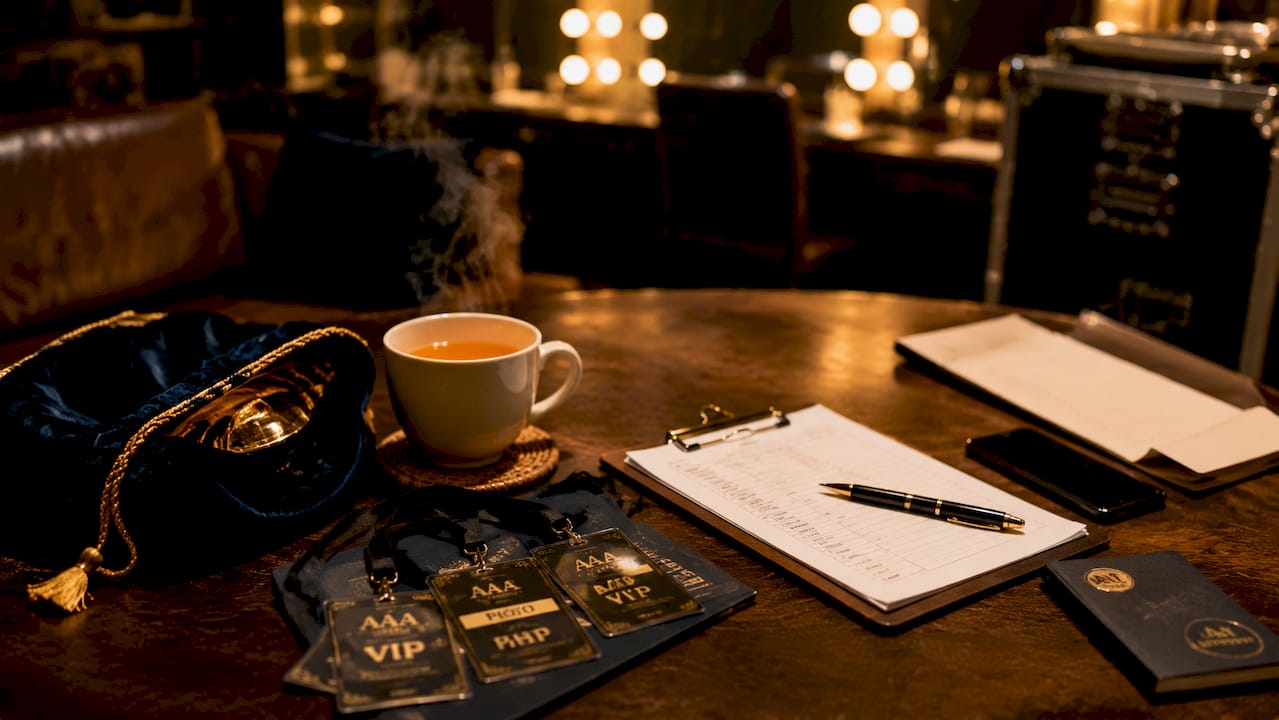
1. What are the main types of backstage concert passes?
The types of backstage concert passes in active use today follow a clear hierarchy, from unrestricted access down to single-zone entry. Knowing each category helps fans set realistic expectations and target the right credential.
Access All Areas (AAA) AAA is the highest credential issued at any concert. It grants unrestricted movement across the entire venue, including dressing rooms, production areas, and the stage itself. Artists, senior management, and tour directors typically hold AAA passes. Fans rarely receive one.
VIP and guest passes VIP passes grant access to hospitality suites, premium viewing areas, and selected backstage zones. They do not include dressing rooms or production areas. These are the most common concert access passes available to fans through premium ticket packages.
After Show passes After Show credentials activate only once the main performance ends. They permit entry to post-event gatherings, artist lounges, or designated meet-up areas. They are often distributed at the discretion of tour management on the night.
Working passes Production staff, riggers, sound engineers, and lighting technicians carry Working passes. These grant access to technical areas and the stage but exclude performer dressing rooms. They are issued through the production office, not through ticket sales.
Local Crew passes Local Crew credentials go to venue staff hired for load-in and load-out duties. Access is limited to specific areas during set-up and breakdown. These passes expire once the show begins.
Photo passes Photo passes enforce a three-song rule for pit access and require advance media credential approval. They do not grant full backstage access. Photographers must leave the pit after the third song and are not permitted in dressing rooms or production zones.
Meet & Greet passes Meet & Greet credentials offer a short, scheduled interaction with performers, usually before the show. Fans obtain them through premium ticket packages, fan club memberships, or contest wins. The session is time-limited and supervised.
Specialist employee passes Catering, security, and merchandising staff carry passes specific to their work zones. A catering pass does not grant access to the stage. Each credential is scoped tightly to the role it supports.
Pro Tip: Always check which specific zones your pass covers before the event. "Backstage" printed on a pass does not mean unrestricted access. Ask the issuing party for a written list of permitted areas.
2. How are backstage passes issued and verified at concerts?
Concert credential management uses layered physical and digital systems to control access across multiple restricted zones.
- Laminated passes are the standard for touring productions. They display the pass type, date, and access zone in large, colour-coded text. Security staff read them at a glance without needing to scan.
- Wristbands are common at festivals and smaller venues. They are colour-coded by access tier and difficult to transfer once fitted.
- Sticky passes are adhesive credentials worn on clothing. They are single-use and date-stamped to prevent reuse across multiple shows.
- RFID credentials are used at large-scale tours and festivals. RFID systems monitor multiple security zones simultaneously, logging entry and exit in real time.
Consistent visual hierarchy across credential design reduces unauthorised entries and speeds up security checks at high-attendance events. Security teams rely on colour and label placement rather than reading every word on a pass. This is why credential design is standardised across major touring productions.
Distribution follows a clear chain. The tour manager holds the master credential list. Production office staff issue passes to crew and approved guests. Artists approve their own guest lists directly. Final access authority rests on verified guest lists, not on the pass alone. A genuine laminate will not get a fan through the door if their name is absent from the list.
Not all laminates grant functional access. Some are souvenir items sold through merchandise channels with no backend system registration. Fans should confirm whether a laminate is an active credential or a keepsake before the event.
Pro Tip: Contact the VIP coordinator or tour management office at least 48 hours before the show to confirm your name appears on the correct guest list. Do not wait until arrival.
3. How can fans legitimately obtain backstage or VIP passes?
Two main paths lead to backstage access: the financial route and the professional route. Both are legitimate. Both require preparation.
- Buy premium VIP packages. Official ticket vendors sell packages that include Meet & Greet access, on-stage viewing, early entry, and signed merchandise. These packages are the most reliable route for fans. Prices vary widely by artist and venue.
- Contact VIP coordinators close to the event date. Cancellations release passes back into the system. Catching last-minute cancellations requires timing and persistence, but it is a real opportunity.
- Work in the industry. Stagehands, brand ambassadors, and production assistants receive Working or Local Crew passes as part of their role. This is the professional path and requires relevant skills or contacts.
- Join official fan clubs. Many artists reserve Meet & Greet and After Show passes for verified fan club members. Membership fees are typically low relative to the access they can unlock.
- Engage with social media campaigns. Artists and promoters run contests that award backstage access. Consistent, genuine engagement increases the chance of selection.
- Avoid unofficial pass purchases. Passes sold through unverified third parties are frequently souvenir items with no active access. Security will not honour them.
Specifying exact perks when requesting VIP access significantly improves success rates. A request for "early entry and a signed poster" reads as informed and specific. A general request for "backstage access" signals a lack of knowledge and is routinely declined.
Fans who communicate specific backstage desires to venues or tour management have a measurably higher success rate in receiving VIP upgrades. Knowing what you want, and naming it precisely, is the single most effective tactic available to fans without industry connections.
A1lifestyle has over 30 years of experience arranging exclusive concert access for fans at high-profile events worldwide. Their concierge team handles the coordination so fans do not need to navigate the production office themselves.
4. How do different backstage pass types compare?
| Pass type | Access areas | Typical holder | Fan availability |
|---|---|---|---|
| Access All Areas (AAA) | Entire venue, all zones | Artists, senior management | Extremely rare |
| VIP / Guest | Hospitality, selected backstage zones | Premium ticket buyers, guests | Available via packages |
| Meet & Greet | Supervised artist interaction area | Fan club members, contest winners | Available via packages |
| After Show | Post-event lounges and gatherings | Tour guests, selected fans | Limited, discretionary |
| Photo | Photo pit, first three songs only | Accredited press photographers | Media credential required |
| Working | Technical and production areas | Crew, engineers, riggers | Industry roles only |
| Local Crew | Load-in and load-out zones | Venue staff | Venue employment only |
VIP and Guest passes offer the best balance of access and fan availability. They grant entry to hospitality lounges and selected backstage areas without requiring industry employment. Meet & Greet passes deliver the most memorable experience per minute of access, though the time with artists is tightly controlled. After Show passes are the most unpredictable. They depend on artist mood and tour management discretion on the night. Photo passes are the most restricted in terms of movement and timing, despite appearing to offer close proximity to the stage.
Understanding the how exclusive event access is arranged behind the scenes helps fans set accurate expectations for each pass category.
5. Insider tips to maximise your backstage pass experience
Getting the pass is only part of the process. How a fan behaves once inside determines whether future access is possible.
- Confirm your guest list placement in advance. Security enforces guest lists strictly. Arriving without confirmation wastes time and risks missing the event entirely.
- Dress and behave professionally. Backstage areas are workplaces. Staff and artists respond better to fans who treat the space with respect.
- Arrive at hospitality areas early. Artists and their teams move through these spaces before the show, not after. Early arrival increases the chance of a genuine interaction.
- Do not photograph without permission. Even with a photo pass, pointing a camera at an artist in a non-designated area is a fast route to credential removal.
- Respect the credential rules. Fans who follow the rules are remembered positively by tour management. That reputation can translate into future access at subsequent shows.
Upgrading a standard ticket to include backstage perks is often possible through official channels closer to the event date. Checking with the venue box office or VIP coordinator 24 to 48 hours before the show is worth the effort.
Pro Tip: Ask the VIP coordinator whether your package includes early venue entry. Early entry is often the most underrated perk in a VIP package, giving fans access to hospitality areas before the crowds arrive.
Key takeaways
Backstage concert passes follow a strict hierarchy, and knowing which pass grants which access is the most effective way to plan a premium concert experience.
| Point | Details |
|---|---|
| Pass types define access | AAA, VIP, Meet & Greet, After Show, Photo, Working, and Local Crew each cover distinct zones. |
| Guest lists override passes | Security verifies names on guest lists first; a pass alone does not guarantee entry. |
| Specificity improves success | Naming exact perks when requesting VIP access produces better results than general requests. |
| Not all laminates are active | Some laminates are souvenirs with no backend registration; confirm status before the event. |
| Professional behaviour matters | Respectful conduct backstage builds a reputation that can unlock future access opportunities. |
What I have learned about backstage passes after years of watching fans get it wrong
The credential system at major concerts is genuinely well designed. Colour coding, zone labelling, and layered verification work together to keep thousands of people moving through the right areas without chaos. What the system cannot fix is the gap between what fans expect and what their pass actually covers.
The most common mistake I see is fans treating a VIP package as an AAA pass. A hospitality lounge is not a dressing room. A Meet & Greet is not an open invitation to spend the evening with an artist. The experience is real and worth having, but it is bounded. Fans who understand those boundaries enjoy the experience far more than those who arrive expecting something else.
Backstage culture also varies enormously by artist. Some performers are genuinely warm during Meet & Greets. Others treat it as an obligation. The pass does not control the quality of the interaction. Behaviour, timing, and a realistic mindset do.
The advice I give consistently is this: get the right pass for what you actually want, confirm your guest list placement before you arrive, and treat every person backstage as a professional doing their job. That combination produces better experiences than any credential alone.
— Tony
VIP concert access packages with A1lifestyle
A1lifestyle arranges VIP tickets and hospitality packages for high-profile concerts, festivals, and live events worldwide. Their team handles credential coordination, early entry arrangements, and premium seating so fans receive confirmed access without navigating production offices directly.
Packages available through A1lifestyle include Meet & Greet access, on-stage viewing, signed merchandise, and hospitality lounge entry. The Lovebox Festival is one of the events where premium access packages are available through their platform. With over 30 years of industry experience, A1lifestyle sources access through official channels, removing the risk of souvenir laminates or unverified third-party passes. Browse current concert packages directly on the A1lifestyle website.
FAQ
What are the main types of backstage concert passes?
The main types are Access All Areas, VIP, After Show, Meet & Greet, Working, Local Crew, and Photo passes. Each covers a distinct set of zones and is issued to a specific category of holder.
How are backstage passes obtained by fans?
Fans obtain backstage passes primarily through premium VIP ticket packages, official fan club memberships, or contest wins. Contacting VIP coordinators close to the event date can also surface last-minute availability from cancellations.
Do all backstage laminates grant actual access?
No. Some laminates sold through merchandise channels are souvenir items with no backend system registration. Fans should confirm with the issuing party whether a laminate is an active credential before the event.
What is the three-song rule for photo passes?
Photo passes restrict photographers to the pit area for the first three songs only. After the third song, photographers must leave the pit and are not permitted in other backstage zones.
Can a backstage pass get a fan in without being on the guest list?
No. Security at large venues verifies names on guest lists as the final authority. A genuine pass will not grant entry if the holder's name is absent from the list.