
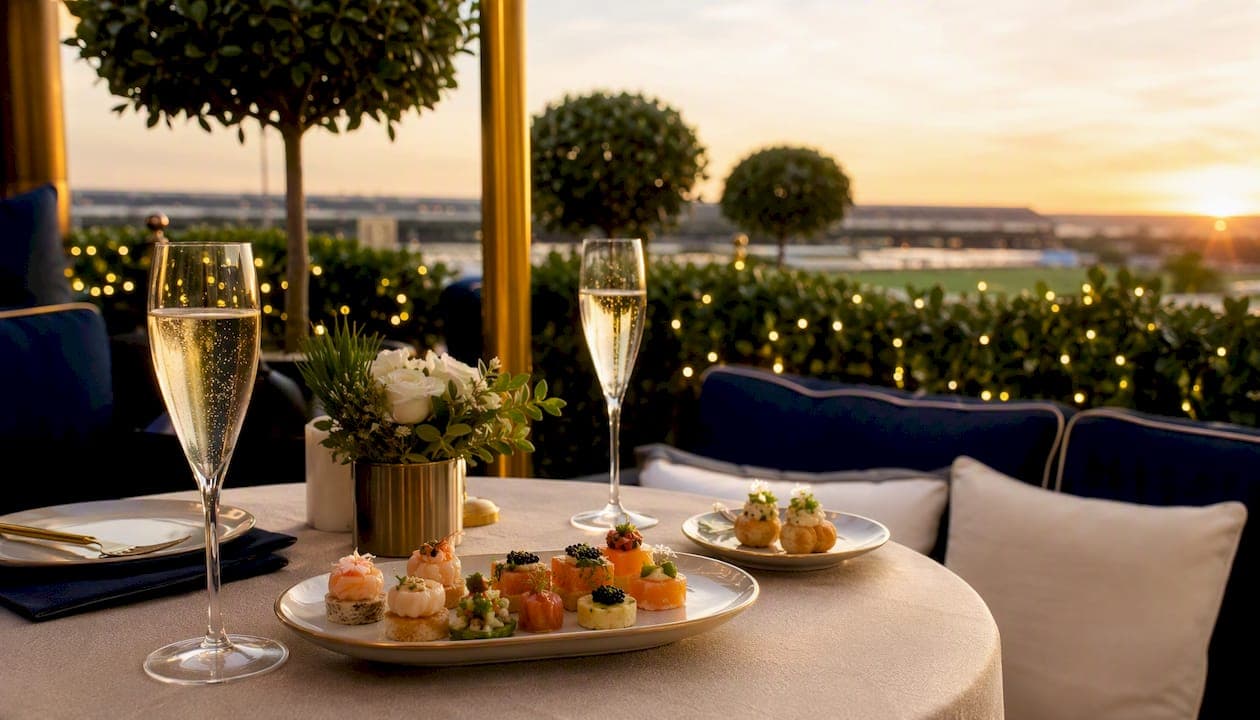
VIP lounge etiquette means representing your host with discreet, considerate behaviour and following venue rules at all times. Whether you are in a private box at a Premier League fixture, a hospitality suite at a concert, or a backstage lounge at a major show, the same core rules apply.
Immediate checklist:
- Arrive early, greet your host on arrival, and thank them on departure
- Follow the venue dress code without exception
- Keep your phone on silent and screen brightness low
- Respect sight-lines and keep conversation quiet during the event
- Moderate your alcohol intake
- Send a thank-you note within 24–48 hours
The guest who follows these rules is the guest who gets invited back.
Key takeaways
Correct VIP lounge etiquette means representing your host with discreet, considerate behaviour, following venue rules, and acknowledging the host's investment before and after the event.
| Point | Details |
|---|---|
| Arrive early | Aim for 45–90 minutes before the start to settle and enjoy pre-show hospitality. |
| Follow venue rules | Dress codes, phone policies, and staff instructions are not optional in VIP settings. |
| Moderate alcohol | Overindulgence reflects on the host; accept staff decisions on service without argument. |
| Phone discretion | Silent mode, low brightness, no flash, and no posting images of others without permission. |
| A1lifestyle | Manages arrival logistics, guest lists, and venue briefings for VIP events across the UK. |
Table of Contents
- What does VIP hospitality actually include?
- How should you arrive at a VIP entrance?
- How should you behave during the event?
- What are the phone and photography rules in VIP areas?
- How should you manage alcohol in a VIP setting?
- How should you treat staff, security, and performers?
- What are the rules for bringing guests and plus-ones?
- What should you do after the event?
- Quick do's and don'ts checklist
- What hosts actually notice
- A1lifestyle handles the logistics so you can focus on the event
- Sources
- FAQ
What does VIP hospitality actually include?
VIP packages typically combine premium seating, private lounges, curated catering, and a dedicated concierge — all designed to ease logistics and create networking opportunities. Understanding what each element involves helps you behave appropriately within it.
Stadium clubs and private suites offer dedicated entrances, private restrooms, and separation from the general crowd. Luxury suites provide full privacy and a dedicated attendant; club seats give access to shared club lounges with upscale dining. The distinction matters because your conduct in a shared lounge affects more people than your conduct in a private suite.
| Hospitality element | What to expect | What is expected of you |
|---|---|---|
| Private suite | Dedicated attendant, full catering, private restrooms | Follow attendant's guidance; do not direct staff you are not paying |
| Club lounge | Shared upscale dining, bar, lounge seating | Keep noise moderate; use the lounge for conversation, not the box |
| Dedicated VIP entrance | Faster entry, security check, accreditation | Have credentials ready; do not hold up the queue for others |
| Curated catering | Pre-ordered or buffet food and drink | Serve yourself considerately; do not monopolise shared items |
| Concierge support | Logistics, guest list management, event briefing | Follow concierge instructions; raise queries before the event |
Dress codes vary by event type. Formula 1 and tennis hospitality (Wimbledon in particular) lean towards business formal or cocktail attire. Football and rugby hospitality generally accepts smart casual. When in doubt, dress one level above what you think is required.
How should you arrive at a VIP entrance?
Arrival timing sets the tone for the entire event. Guests in private suites benefit from arriving well before the start; those with club seats should arrive slightly later but still early enough to settle comfortably. Arriving early lets you settle, order food, and enjoy the pre-show hospitality without rushing.
- Confirm logistics in advance. Check the dedicated VIP entrance location, parking arrangements, and accreditation requirements before the day.
- Have credentials ready. Tickets, wristbands, or digital passes should be accessible before you reach the security point.
- Greet your host immediately. On entering the suite or lounge, locate the host and introduce yourself or re-introduce any guests you have brought.
- Introduce yourself to other guests. A brief, polite introduction to those already present avoids awkwardness later.
Pro Tip: Ask your concierge or host for the exact entrance name and any pre-registration steps at least 48 hours before the event. VIP entrances at large venues are not always signposted clearly from the main approach.
How should you behave during the event?
Conduct inside a private box or lounge is where most guests make avoidable mistakes. The core rule: the event is the reason everyone is there, and your behaviour should not diminish it for others.
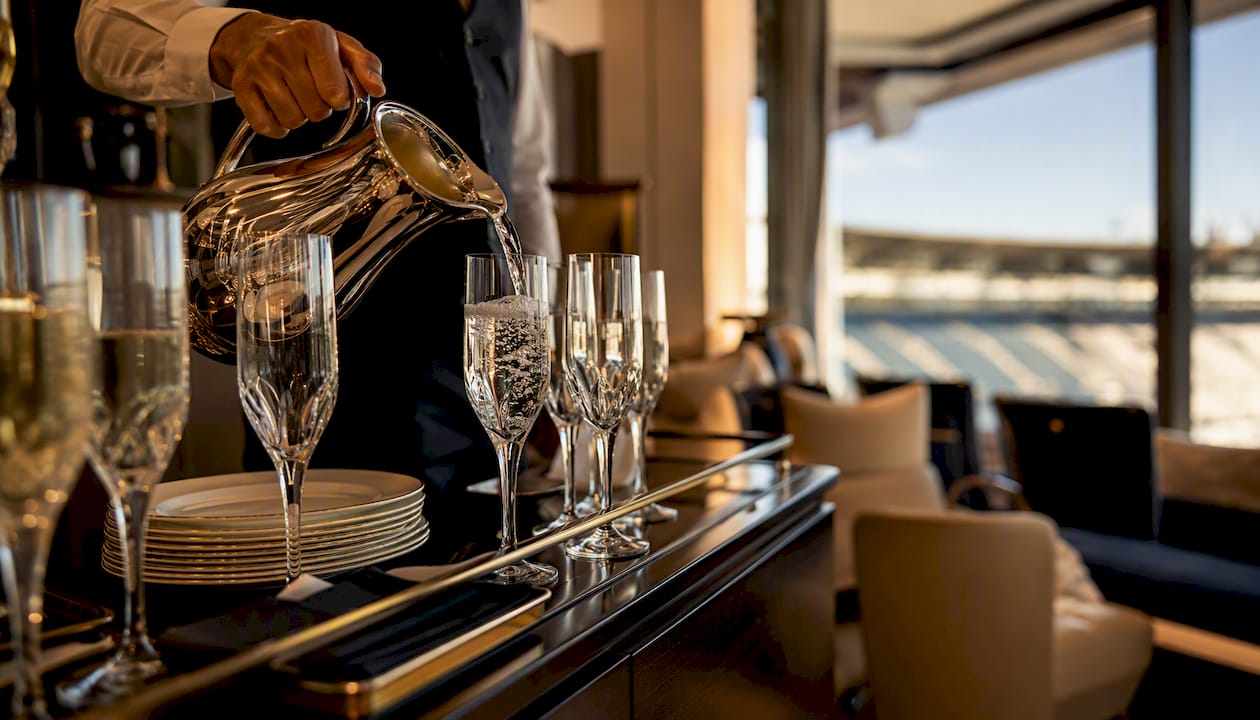
Keep conversation quiet during live play, performance, or key moments. If you need to have a longer discussion, move to the lounge area rather than talking over the action in the box. Rolling Stone's concert etiquette guidance is direct on this point: low chatter, no bright screens, and limited filming are the baseline expectations at any live event, including VIP areas.
Sight-lines in private boxes are a shared resource. Standing is often acceptable during high-energy moments, but sustained standing that blocks seated guests behind you is not. Check whether the box has a standing area at the front and use it.
When a performer or official visits the box, keep greetings brief and respectful. Do not ask for photographs unless the host or a member of staff indicates it is appropriate. Follow any security instructions immediately and without debate.
Venue house rules govern everything from re-entry to noise levels. Follow them. Staff are there to enforce policy, not to negotiate it.
What are the phone and photography rules in VIP areas?
Device use is one of the most common sources of friction in VIP settings. The rules are straightforward.
Do:
- Keep your phone on silent throughout
- Lower screen brightness to the minimum needed
- Step into the lounge area to take calls
- Ask the host before photographing other guests or performers
Do not:
- Use flash photography at any point
- Film extended clips of the performance
- Post images of other guests on social media without their permission
- Mention the host or other VIPs by name in public posts without asking first
Confidentiality matters in corporate hospitality. Other guests may be clients, competitors, or public figures who have not consented to being identified. When in doubt, keep your phone away.
How should you manage alcohol in a VIP setting?
The host typically manages catering and bar billing in a corporate box. Guests should not attempt to settle the account or discuss invoice details in the suite. Your role is to enjoy the hospitality, not to audit it.
Moderation is straightforward: overindulgence reflects poorly on you and on the host who invited you. Pace yourself, eat before drinking, and be aware of how much you have consumed relative to the length of the event.
If a member of staff declines to serve further alcohol to you or another guest, accept the decision without argument. Staff are following venue policy and, in many cases, legal obligations. Arguing with them creates a scene that damages everyone's experience.
- Plan your transport home before the event, not after
- Look out for fellow guests who may need assistance leaving
- If a guest becomes visibly intoxicated, alert the host or a member of staff discreetly
How should you treat staff, security, and performers?
Polite, direct interaction is the standard. Use an attendant's name if they have introduced themselves. Do not give instructions to staff who are not assigned to your box or suite. Avoid involving yourself in operational matters such as catering logistics or security decisions.
The role of a dedicated host in sports hospitality is to manage the experience on your behalf. Follow their direction. If something is not working, raise it with them quietly rather than escalating directly to venue operations.
Tipping is appropriate for exceptional personalised service from a suite attendant. Keep it discreet and in cash. In many corporate hospitality settings, the host handles gratuities as part of the overall account; if you are unsure, ask the host privately rather than tipping in a way that creates awkwardness.
Pro Tip: A brief, genuine word of thanks to an attendant at the end of the event costs nothing and is remembered. It also reflects well on the host who brought you.
- Be polite to security staff at all times, even during checks
- Do not attempt to access areas beyond your accreditation
- If you encounter a performer, keep any interaction brief and respectful
What are the rules for bringing guests and plus-ones?
Guest list management is handled before the event, not on the day. Assumptions about plus-one privileges cause more problems than almost any other etiquette failure.
- Confirm with the host or operator whether you may bring a guest before making any commitment to that person.
- RSVP promptly and supply full names for security accreditation when requested.
- Do not swap guests without notifying the host; accreditation is usually name-specific.
- If a guest must leave early, ensure they know the departure protocol and have transport arranged.
- Introduce any guests you bring to the host and to other guests in the box
- Brief your guests on the dress code and phone policy before they arrive
- Do not bring guests who are unfamiliar with formal hospitality settings without preparing them
What should you do after the event?
Departing well is as important as arriving well. Thank the host directly before you leave. Do not slip away without acknowledgement.
A follow-up note sent within 24–48 hours is standard practice in corporate hospitality and is one of the behaviours hosts most notice. Email is acceptable; a handwritten note is better for a significant occasion.
Pro Tip: Reference one specific detail from the event in your note. A generic thank-you reads as an obligation; a specific one reads as genuine appreciation.
Quick do's and don'ts checklist
Do:
- Arrive 45–90 minutes before the start
- Follow the venue dress code
- Greet the host on arrival and thank them on departure
- Keep your phone on silent with brightness low
- Use the lounge for calls and extended conversations
- Moderate your alcohol intake
- Send a thank-you note within 48 hours
- Follow all venue house rules and staff instructions
Do not:
- Assume plus-one privileges without confirming
- Use flash photography or film extended clips
- Post images of other guests without permission
- Attempt to settle the host's catering account
- Argue with staff over service decisions
- Leave without thanking the host
Check the A1lifestyle VIP concerts listings for event-specific house rules and arrival guidance before attending.
What hosts actually notice
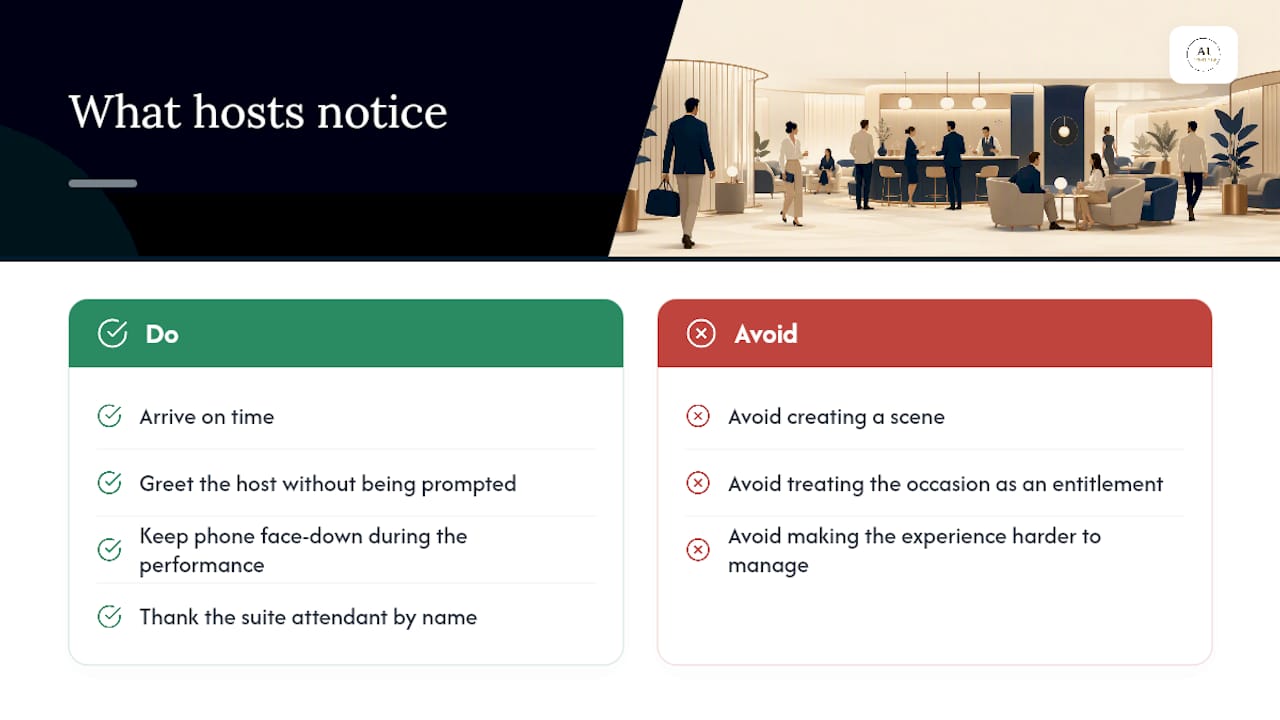
The behaviours that secure repeat invitations are rarely the grand gestures. They are the small, consistent ones: arriving on time, greeting the host without being prompted, keeping a phone face-down during the performance, and sending a note the following morning.
What hosts notice most is whether a guest made the experience easier or harder to manage. A guest who briefs their own plus-one, introduces themselves to others in the box, and leaves without creating a scene is a guest worth inviting again. After more than 30 years working in VIP hospitality, the pattern is consistent: the guests who treat the occasion as a privilege rather than an entitlement are the ones who keep receiving invitations.
One concrete example: a guest who, on leaving, thanks not just the host but also the suite attendant by name. It takes ten seconds. Hosts notice it every time.
A1lifestyle handles the logistics so you can focus on the event
A1lifestyle has over 30 years of experience arranging VIP hospitality, private boxes, and backstage access at concerts, sports events, and shows across the UK and worldwide. The concierge team manages arrival logistics, guest list accreditation, venue house rules, and event-specific briefings so clients arrive prepared and relaxed.
Whether you are booking Premier League hospitality, a VIP concert package, or a bespoke corporate entertainment event, A1lifestyle handles the details that matter. Browse current VIP concert packages or contact the concierge team directly to discuss your requirements.
Sources
Always check the specific venue's house rules before attending. Event-specific guidance is available on the A1lifestyle event listings pages.
FAQ
What is the dress code for VIP lounges in the UK?
Dress codes vary by event type. Wimbledon and Formula 1 hospitality typically require business formal or cocktail attire; football and rugby hospitality generally accepts smart casual. Check the specific venue's policy before attending.
How early should you arrive for VIP hospitality?
Private suite guests should aim to arrive 60–90 minutes before the start; club seat guests should allow 45–60 minutes. Arriving early lets you settle, meet the host, and enjoy pre-show catering.
Can you take photos in a VIP lounge or private box?
Photography of the event is often permitted, but flash and extended filming are not. Always ask before photographing other guests or performers, and seek permission before posting images that identify other VIPs.
Do you tip staff in a VIP hospitality suite?
A discreet cash gratuity for a suite attendant is appropriate for exceptional service. In corporate settings, the host often handles gratuities as part of the overall account; if unsure, ask the host privately.
How do you follow up after a VIP hospitality event?
Send a brief thank-you note by email or by hand within 24–48 hours. Reference a specific detail from the event to make the note personal. This is one of the behaviours hosts most notice and is closely linked to receiving future invitations.