

TL;DR:
- Verified resale platforms provide fans with reliable access to sold-out events and consumer protections. Most resale transactions occur below original prices, offering significant savings and reducing fraud risks. UK law enforces transparency, and verified services ensure safe, fair ticket exchanges for buyers.
Ticket resale services give fans access to events that have already sold out through official channels, with verified platforms offering consumer protections that informal channels do not. The secondary ticket market, also called the secondary market, operates as a marketplace where original ticket holders sell to other buyers. A study tracking over 186,000 resale transactions found that 62% of tickets were priced below the original box office cost, saving fans $414 million in 2024. That figure alone answers the question of whether resale is worth it for many buyers.
The core reasons to use a ticket resale service are:
- Access to sold-out or unavailable events that cannot be purchased through official box offices
- Pricing flexibility, with tickets available both above and below face value depending on demand
- Consumer protection through verified platforms that guarantee ticket validity
- The ability to recover costs when plans change by reselling tickets rather than losing the purchase price
- Reduced fraud risk compared to buying from individuals through social media or classified sites
Buying sold-out event tickets through a verified resale service is the most reliable route when official sales are closed. The sections below cover how the secondary market works, what the risks are, the UK legal position, and how to use resale services safely.
What is secondary ticket resale and how does it work?
Secondary ticket resale is the process by which a person who holds a ticket sells it to another buyer, rather than returning it to the original seller. The original sale is the primary market. Everything after that is the secondary market.
Resale platforms operate as online marketplaces. Sellers list tickets, set a price, and the platform handles payment and ticket transfer. The buyer receives the ticket digitally or by post. Platforms such as Viagogo, StubHub, Skiddle, and those monitored by the FanFair Alliance all operate within this model, though their policies and protections differ.

People resell tickets for straightforward reasons: plans change, extra tickets were purchased speculatively, or the event date conflicts with something else. The secondary market exists because tickets redistribute to buyers who value them most at the time of the event, which is a function no primary market can perform after the initial sale closes.
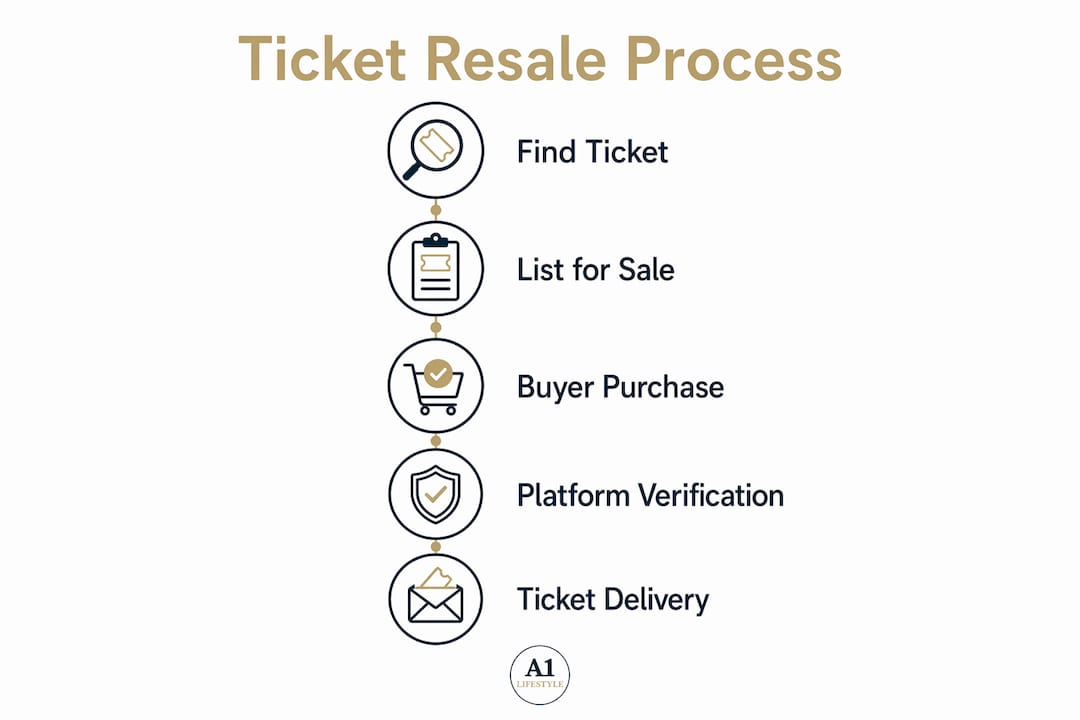
Pricing on resale platforms is dynamic. Supply and demand determine the final price, and resale prices fluctuate based on how close the event is, how many tickets remain, and how urgently sellers need to offload them. A ticket listed weeks before an event may drop in price as the date approaches and sellers become more motivated.
| Platform type | How it works | Key feature |
|---|---|---|
| Verified resale marketplace | Sellers list tickets; platform verifies and transfers | Buyer guarantee against invalid tickets |
| Peer-to-peer listing site | Sellers post listings; buyers contact directly | Lower fees, less protection |
| Official artist/venue resale | Managed by the original ticket issuer | Face value or capped resale price |
| Concierge ticket service | Specialist sourcing on behalf of the buyer | VIP access, hospitality packages |
The main distinction between platform types is the level of protection offered. Verified marketplaces carry the most consumer safeguards. Peer-to-peer listings carry the least.
Why is secondary ticket resale controversial and what are the risks?
The secondary ticket market attracts criticism because a portion of it operates unfairly. Scalping, the practice of buying large quantities of tickets at face value and reselling them at inflated prices, is the central complaint. Automated bots purchase tickets the moment they go on sale, faster than any individual can, leaving genuine fans locked out of the primary market entirely.
The consequences for buyers are real. Tickets to high-demand events can appear on resale platforms within minutes of the primary sale opening, already priced well above face value. Fans who could not secure tickets through official channels face a choice between paying a premium or missing the event.
Fraud is a separate risk. Unverified platforms and informal channels carry a genuine risk of counterfeit or duplicated tickets. A buyer may pay and receive a PDF that looks legitimate but has already been used or cancelled.
Key risks on unverified resale channels include:
- Counterfeit tickets that are rejected at the venue
- Duplicate tickets sold to multiple buyers, with only one gaining entry
- No recourse if the seller disappears after payment
- Prices that bear no relation to the ticket's actual value
- No refund if the event is cancelled or rescheduled
The tension between free markets and fan fairness is genuine. Secondary markets provide liquidity and redistribute tickets to those who value them most, which has economic merit. At the same time, when bots and professional touts dominate the supply, the market stops functioning fairly for ordinary fans.
Over 80% of consumers in one poll backed free ticket transferability, reflecting broad support for the right to resell, even while opposing the abuses that unregulated scalping enables.
Is ticket resale legal in the UK and what regulations apply?
Ticket resale is legal in the UK. There is no blanket prohibition on buying and reselling event tickets. However, the law imposes specific conditions on how resale can operate, and those conditions have tightened considerably since 2015.
The Consumer Rights Act 2015 requires resale platforms to display the face value of a ticket, the original seat or standing area, and any restrictions the original seller placed on the ticket. Platforms that fail to disclose this information breach the Act. The Consumer Contracts Regulations 2013 also apply to online ticket transactions, giving buyers a right to clear pre-contractual information.
The Competition and Markets Authority (CMA) has taken direct enforcement action against resale platforms. The CMA secured a court order against Viagogo after finding it failed to provide legally required information to consumers, and later pursued further action when compliance remained incomplete. StubHub and other platforms operating in the UK have also entered into formal undertakings with the CMA.
Key legal points for UK buyers and sellers:
- Resale above face value is not automatically illegal, but specific venues and events may prohibit it in their terms and conditions
- Platforms must display the face value of every ticket listed
- Sellers must disclose seat location and any restrictions on the ticket
- The CMA actively monitors and enforces against non-compliant platforms
- The Digital Markets, Competition and Consumers Act 2024 strengthens consumer protections further
"Consumers choosing to buy tickets through secondary ticketing websites should be able to do so with confidence that they are getting the information they need to make an informed decision." — Competition and Markets Authority
The FanFair Alliance, a UK campaign group backed by the music industry, advocates for stricter enforcement of existing laws and greater transparency from resale platforms. Its work has contributed to the CMA's ongoing scrutiny of the sector.
How do verified ticket resale platforms work and what benefits do they offer?
Verified resale platforms operate differently from informal channels. The defining feature is a guarantee: if a ticket is invalid, the buyer receives a replacement or a refund. That guarantee is backed by the platform's financial relationship with the seller.

StubHub introduced its FanProtect Guarantee in 2006, establishing the model that other verified platforms have since adopted. Under this model, sellers are paid only after the buyer successfully enters the event. That financial structure gives sellers a direct incentive to list only valid tickets, and it deters speculative listings where a seller does not actually hold the ticket at the time of listing.
Verified platforms also enforce zero-tolerance policies against speculative ticketing. A seller who lists a ticket they do not yet own risks losing payment entirely if the ticket cannot be delivered. This policy protects buyers from purchasing tickets that never materialise.
Benefits of using a verified resale platform include:
- Buyer guarantees covering invalid, cancelled, or undelivered tickets
- Transparent pricing showing the face value alongside the resale price
- Secure payment processing with fraud protection
- Digital ticket transfer that reduces the risk of physical ticket loss
- Access to sold-out inventory that is no longer available through official channels
Pro Tip: Check whether a platform is listed on the Society of Ticket Agents and Retailers (STAR) register before purchasing. STAR membership requires platforms to meet minimum standards for consumer protection and dispute resolution.
Skiddle operates a resale function called Resale, which allows buyers to list tickets they can no longer use. The platform verifies the original purchase before listing, reducing the risk of fraudulent listings. This model keeps the transaction within a controlled environment rather than pushing sellers towards unverified channels.
For buyers seeking verified ticket access, the key distinction is whether the platform holds the seller accountable after the sale. Platforms that do not enforce seller accountability offer no meaningful protection.
What can fans do to avoid risks and protect themselves when using resale services?
The most effective protection is choosing the right platform before making any purchase. Verified platforms with published guarantee policies carry far less risk than informal channels, regardless of the price difference.
Practical steps for safe resale purchases:
- Use only platforms that display the original face value alongside the resale price
- Check the platform's refund and guarantee policy before paying
- Avoid tickets priced suspiciously below face value, as these are often fraudulent
- Confirm that the ticket includes the specific seat or standing area you expect
- Purchase as close to the event date as possible if price is a concern, since sellers often reduce prices as the date approaches
- Use a credit card where possible, as Section 75 of the Consumer Credit Act 1974 provides additional protection for purchases between £100 and £30,000
Pro Tip: For high-demand events, check resale prices in the final 48 hours before the event. Sellers who have not found a buyer often drop prices sharply rather than attend alone or lose the ticket entirely.
Sellers using resale platforms should also take precautions. List only through verified platforms, set a realistic price based on current market listings, and transfer tickets digitally rather than by post where possible. Keeping a record of the original purchase confirmation protects against disputes.
Sold-out concert ticket options are not limited to resale platforms. Specialist concierge services, such as those offered by A1lifestyle, source tickets through established industry networks, providing an alternative route that bypasses the secondary market entirely for certain events.
How A1lifestyle approaches ticket access and resale
A1lifestyle has operated in the events and ticketing sector for over 30 years. That experience covers high-profile concerts, Premier League football, Formula 1, and major festivals across the UK and internationally.
The approach A1lifestyle takes differs from standard resale platforms. Rather than operating a marketplace where any seller can list, A1lifestyle sources tickets through a global network of verified contacts, ensuring availability for events that have sold out through official channels. The service includes VIP hospitality, private boxes, and concierge support, which means clients receive more than a ticket.
Key aspects of A1lifestyle's service:
- Direct sourcing through industry contacts rather than open marketplace listings
- Access to Arsenal fixtures and other Premier League events with hospitality packages
- Coverage of major festivals including Lovebox Festival and other sold-out events
- Personalised concierge services that handle logistics beyond the ticket itself
- Transparent communication about availability and pricing before any commitment
The distinction between a concierge ticket service and a resale marketplace is accountability. A1lifestyle takes responsibility for the entire experience, not just the transaction. For buyers navigating the secondary market, that level of accountability removes the uncertainty that comes with standard resale platforms.
Impact of ticket touting and how to avoid fraud
Ticket touting causes direct harm to fans and to the events industry. Professional touts use automated bots to purchase large volumes of tickets at face value, then list them on secondary platforms at inflated prices. The fan who wanted to attend pays more, or cannot afford to attend at all.
The FanFair Alliance has documented the scale of this problem in the UK music market, identifying events where the majority of available resale tickets were listed by a small number of professional sellers rather than genuine fans. This concentration of supply in the hands of touts distorts the market and undermines the original seller's pricing decisions.
Fraud is a distinct but related problem. The most common fraud types in ticket resale are:
- Counterfeit tickets generated using legitimate ticket images as templates
- Duplicate tickets where the same barcode is sold to multiple buyers
- Phantom tickets listed before the seller actually holds them
- Social media scams where payment is taken and no ticket is delivered
Avoiding fraud starts with the platform choice. Verified platforms with seller accountability mechanisms, as described in the section above, eliminate most of these risks by design. Buying from individuals on social media or classified sites offers no such protection. The UK CMA's guidance on secondary ticketing specifically highlights the consumer protection gap between verified platforms and informal channels.
How do resale prices compare to original ticket prices?
Resale prices vary considerably depending on the event, the timing of the purchase, and the level of demand. The relationship between resale and face value is not fixed.
For high-demand events, resale prices frequently exceed face value. Artists and venues often set face value prices below the market-clearing level, partly to maintain goodwill with fans and partly to ensure full venues. That gap between face value and what fans are willing to pay creates the conditions for above-face-value resale.
For lower-demand events, or for tickets purchased close to the event date, resale prices often fall below face value. The study tracking over 186,000 transactions found that 62% of resale tickets sold below the original box office price, saving fans $414 million in 2024. Sellers motivated by urgency accept less than they paid rather than hold an unused ticket.
Dynamic pricing on resale platforms reflects these conditions in real time. A ticket listed at twice face value three months before an event may drop to below face value in the final week if demand has not materialised. Buyers who can wait benefit from this pattern. Buyers who need certainty pay a premium for early purchase.
The comparison is not always straightforward. Resale prices include platform fees, which can add a meaningful amount to the headline price. Buyers should check the total cost, including all fees, before comparing resale prices to face value.
Effects of ticket resale on event attendance and availability
Ticket resale increases overall event attendance by redistributing tickets from buyers who cannot attend to buyers who can. Research into performing arts markets found that licensing regulations for resellers led to increases in theatre attendance, suggesting that a regulated secondary market serves attendance better than an unregulated one.
The attendance effect works in both directions. Resale platforms fill seats that would otherwise remain empty. Approximately 20% of sports tickets and nearly half of concert tickets go unused each year. Resale platforms convert a portion of those unused tickets into occupied seats, which benefits venues, performers, and the wider event economy.
The availability effect is more complex. Resale platforms increase the supply of tickets available to buyers after the primary sale closes, which is straightforwardly positive for access. However, when professional touts dominate the secondary supply, availability at reasonable prices decreases even as the total number of listed tickets increases.
Verified resale platforms address this by enforcing policies that favour genuine sellers over professional touts. Platforms that require sellers to hold the ticket at the time of listing, and that pay sellers only after successful entry, create conditions where genuine fans reselling unwanted tickets compete on equal terms with professional sellers.
Key takeaways
Verified ticket resale services give fans access to sold-out events, pricing flexibility, and consumer protections that informal channels cannot match.
| Point | Details |
|---|---|
| Access to sold-out events | Resale platforms list tickets unavailable through official channels, covering concerts, sport, and festivals. |
| Pricing can favour buyers | 62% of tracked resale transactions were priced below the original box office cost, saving fans $414 million in 2024. |
| Verified platforms reduce fraud | Platforms that pay sellers only after buyer entry deter counterfeit and speculative listings. |
| UK law protects buyers | The Consumer Rights Act 2015 requires platforms to display face value, seat location, and ticket restrictions. |
| Concierge services offer an alternative | Services like A1lifestyle source tickets through verified industry networks, bypassing open marketplace risks. |
FAQ
Is ticket resale illegal in the UK?
Ticket resale is legal in the UK. The Consumer Rights Act 2015 regulates how platforms must present ticket information, and the CMA enforces compliance, but resale itself is permitted.
What are the risks of using ticket resellers?
The main risks are counterfeit tickets, duplicate barcodes sold to multiple buyers, and no refund if the seller disappears. Using a verified platform with a published buyer guarantee removes most of these risks.
Why are resale tickets a thing?
Resale tickets exist because original buyers cannot always attend, and because primary market prices are often set below what the market will bear. The secondary market redistributes tickets to buyers who want them at the time of the event.
Can you trust ticket resale sites?
Verified platforms with buyer guarantees, such as those that comply with CMA undertakings and display face value information, are generally trustworthy. Informal channels and unverified listing sites carry significantly higher fraud risk.
How do you identify a trustworthy ticket resale platform?
Check whether the platform displays the original face value, has a published buyer guarantee, and appears on the STAR register. Platforms that have entered into formal undertakings with the CMA have also demonstrated a baseline level of compliance with UK consumer law.