
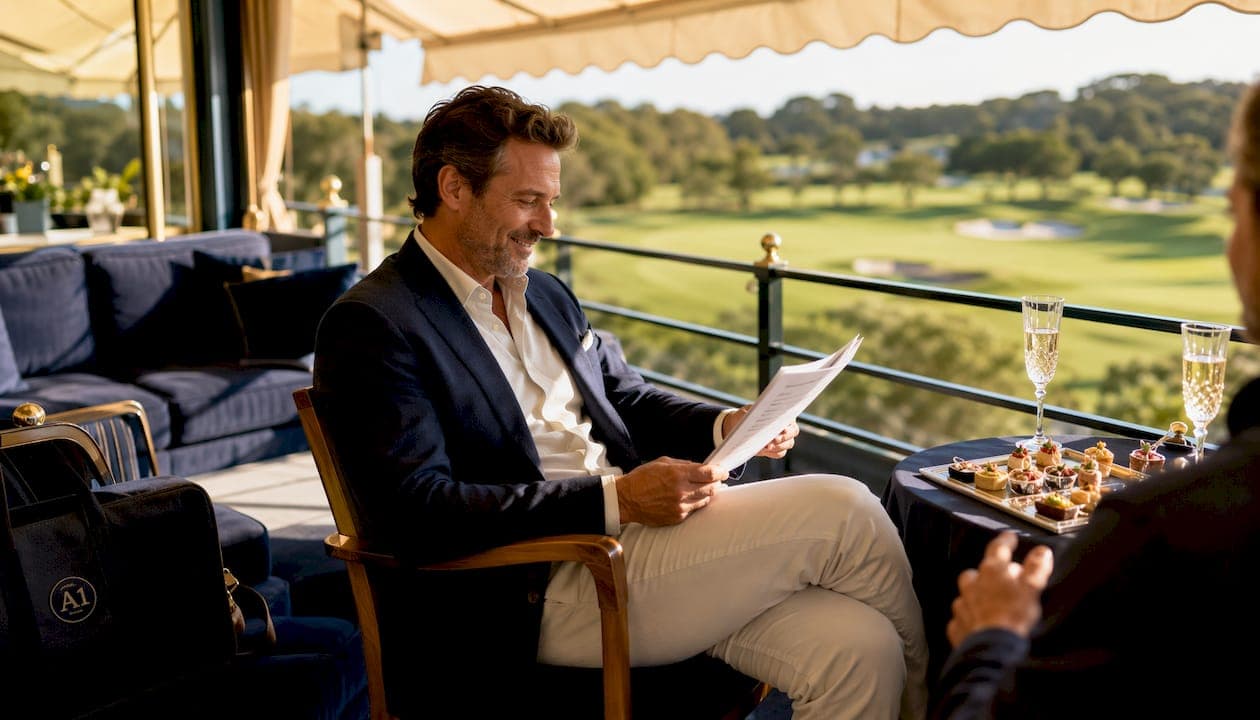
The clearest examples of world-class sports hospitality are Royal Ascot, Wimbledon, the British Grand Prix at Silverstone, the Cheltenham Festival, and premium Premier League matchday packages. Each delivers the five features that separate genuine luxury from a standard VIP ticket: exclusivity, hyper-personalisation, unrivalled access, five-star service, and logistics that remove every point of friction.
Five features to look for in any package claiming the world-class standard:
- Exclusivity: limited guest numbers, private entrances, and controlled environments
- Hyper-personalisation: bespoke menus, tailored itineraries, and individual concierge attention
- Unrivalled access: tunnel walks, pitchside positions, athlete interactions, or trackside suites
- Five-star service: trained host teams, sommelier-led F&B, and curated entertainment
- Seamless logistics: private transfers, expedited security, and post-event follow-up
Book early and use a specialist operator. The best inventory at the events above sells out months in advance, and the most memorable elements — meet-and-greets, bespoke mementos, private transfers — require lead time to arrange.
Table of Contents
- What 'world-class' sports hospitality actually means
- Why premium hospitality matters to organisers, sponsors, and guests
- What the guest journey looks like from start to finish
- Five UK events that set the standard for sports hospitality
- How to buy a hospitality package without getting it wrong
- How organisers build hospitality that works commercially
- How A1lifestyle sources and delivers this standard
- Key takeaways
- Why curation and supplier relationships define the result
- A1lifestyle can secure the experience you are looking for
- Useful sources and further reading
- FAQ
What 'world-class' sports hospitality actually means
World-class sports hospitality is not simply a better seat. It is a managed, end-to-end experience in which every variable — transport, food, access, atmosphere, and follow-up — is controlled to a standard the guest could not replicate independently.
The operational criteria that define the standard:
- Private entrances and dedicated hosts who meet guests by name on arrival
- Concierge availability before, during, and after the event
- Bespoke transport: chauffeured transfers, private aviation, or curated rail arrangements
- Accommodation standard: four- or five-star hotel allotments, often pre-selected and pre-checked
- Access levels: beyond the public areas — tunnel access, pitchside, paddock, or members' enclosures
- Curated F&B: chef-led menus, named wines, and dietary preferences confirmed in advance
- Collectible mementos: signed items, bespoke equipment, or personalised keepsakes
A quick checklist for testing any 'luxury' claim: ask the operator to name the chef or catering partner, describe the exact access level in writing, confirm the guest-to-host ratio, and specify what happens if the event is cancelled. Vague answers to any of those questions indicate the package does not meet the standard. For a deeper look at hospitality package tiers, the differences between levels are more significant than most buyers expect.
Why premium hospitality matters to organisers, sponsors, and guests
Hospitality suites and private enclosures generate some of the highest-margin revenue at any major sporting event. Organisers can charge multiples of the standard ticket price for a fraction of the capacity, and sponsors use curated guest access to activate relationships that no advertising placement can replicate.
Key commercial and reputational benefits:
- High-margin revenue: hospitality packages typically carry far higher margins than general admission
- Sponsor activation: private suites give sponsors a controlled environment to host clients and demonstrate brand values
- Retention: guests who attend premium hospitality are significantly more likely to rebook the following year
- Brand signal: the quality of hospitality reflects directly on the event's overall reputation
For guests, the value is different. Premium hospitality experiences save time, protect privacy, and create memories that standard attendance cannot. A guest in a private suite at Wimbledon does not queue, does not navigate crowds, and does not compromise on food or drink. That convenience is itself a significant part of what is being purchased.
A useful price signal: at the FIFA World Cup, ultra-luxury suite pricing has been reported at roughly $75,000 per person for experiences including panoramic views, unlimited champagne, and a gourmet multi-cuisine buffet. Mid-tier VIP areas at comparable international matches have been commercially priced around $6,000 per guest. The range illustrates how tiered the market is, and why knowing exactly which tier a package occupies matters before committing.
What the guest journey looks like from start to finish
The guest journey at a world-class event begins well before match day. Premium packages increasingly cover the entire ecosystem: private travel, pre-event concierge, in-venue experience, and post-event follow-up.
Pre-event
- Personalised itinerary sent in advance, covering transport times, dress code, and programme
- Bespoke travel arrangements: chauffeured car, private rail carriage, or private aviation
- Kit or wardrobe guidance for dress-code events such as Royal Ascot or Wimbledon
Arrival and entry
- Private entrance, bypassing public queues entirely
- Named host waiting at the gate; no searching for a contact on arrival
- Expedited or dedicated security lane
In-venue experience
- Private suite or exclusive enclosure with unobstructed sightlines
- Chef-led F&B with pre-confirmed dietary requirements
- Live access elements: tunnel walk, pitchside visit, paddock pass, or athlete interaction
- Curated entertainment between play or during intervals
Post-event
- Private transport arranged and waiting, no kerb-side wait
- Curated souvenir or bespoke asset: signed memorabilia, personalised print, or in some cases a custom-built piece of equipment retained by the guest
- Follow-up from the concierge team confirming satisfaction and noting preferences for future events
Sotheby's illustrated the upper end of this with a Tour de France package that included private aviation, accommodation at the Hôtel de Crillon in Paris, and a custom Canyon Aeroad CFR race bicycle built to the guest's measurements and kept by them afterwards. That last element — a retainable, bespoke asset — converts a one-off experience into something the guest owns permanently.
| Package tier | Typical inclusions | Price signal |
|---|---|---|
| Mid-tier VIP | Dedicated lounge, standard F&B, good sightlines | — |
| Premium suite | Private suite, chef-led menu, named host, some access | — |
| Money-can't-buy | Private aviation, athlete interaction, bespoke memento | — |
Pro Tip: Request bespoke elements — meet-and-greets, custom mementos, or personalised itineraries — at the point of booking, not as an afterthought. Operators need lead time to arrange athlete access and commission bespoke assets, and these elements are the first to sell out.
Five UK events that set the standard for sports hospitality
These are the events most frequently cited when discussing the best sports hospitality examples in the UK. Each has a distinct character, and each demonstrates a different dimension of what world-class looks like in practice.
Royal Ascot
Royal Ascot's Royal Enclosure and private boxes represent some of the most recognisable premium hospitality in British sport. Guests receive a curated dress-code briefing, access to a private enclosure with dedicated catering, and a programme that includes paddock access and parade ring proximity. The combination of social ritual, sporting spectacle, and controlled environment is difficult to replicate. Packages typically sell through official channels and specialist operators months before the June meeting; late availability is rare and usually reflects cancellations rather than genuine stock.
Wimbledon
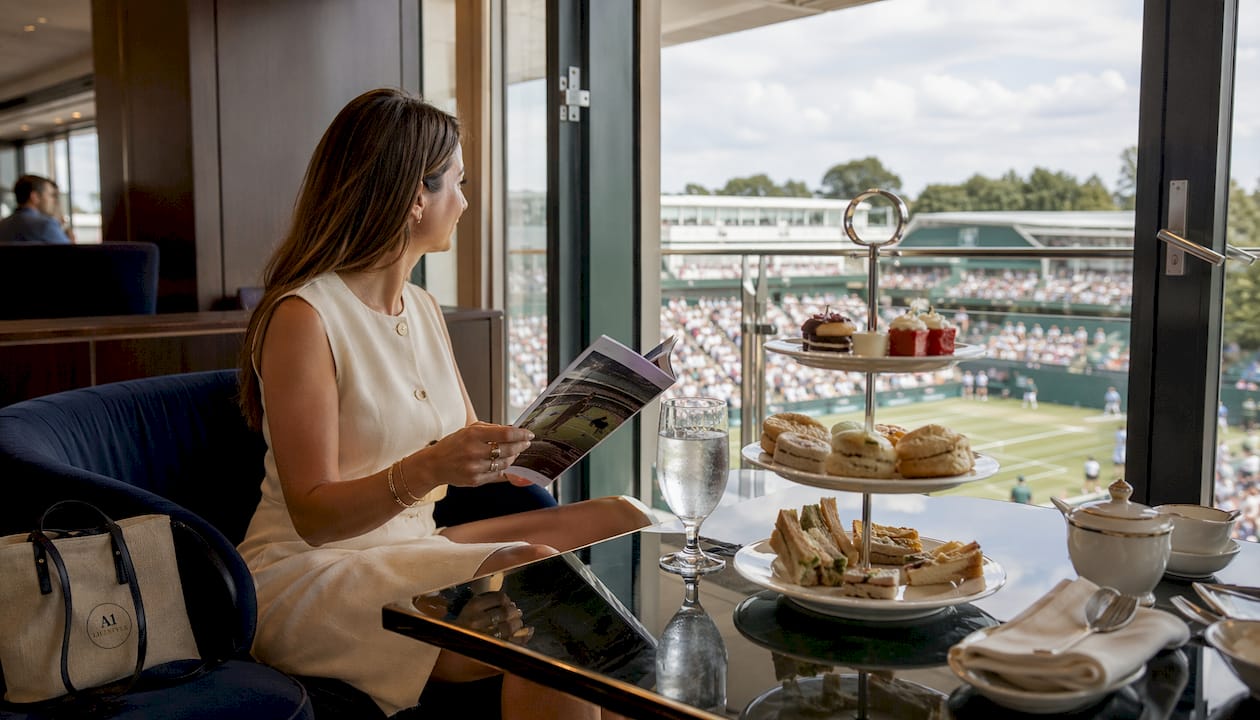
Wimbledon's debenture seats and private hospitality suites on Centre Court and Court One are among the most sought-after in world sport. The All England Club's own hospitality programme includes fine dining, champagne, and guaranteed seating, but the most exclusive experiences — private boxes with in-suite catering and dedicated hosts — are typically arranged through specialist operators. The two-week tournament structure means packages are available across multiple days, which allows corporate buyers to host different client groups across the fortnight.
British Grand Prix at Silverstone
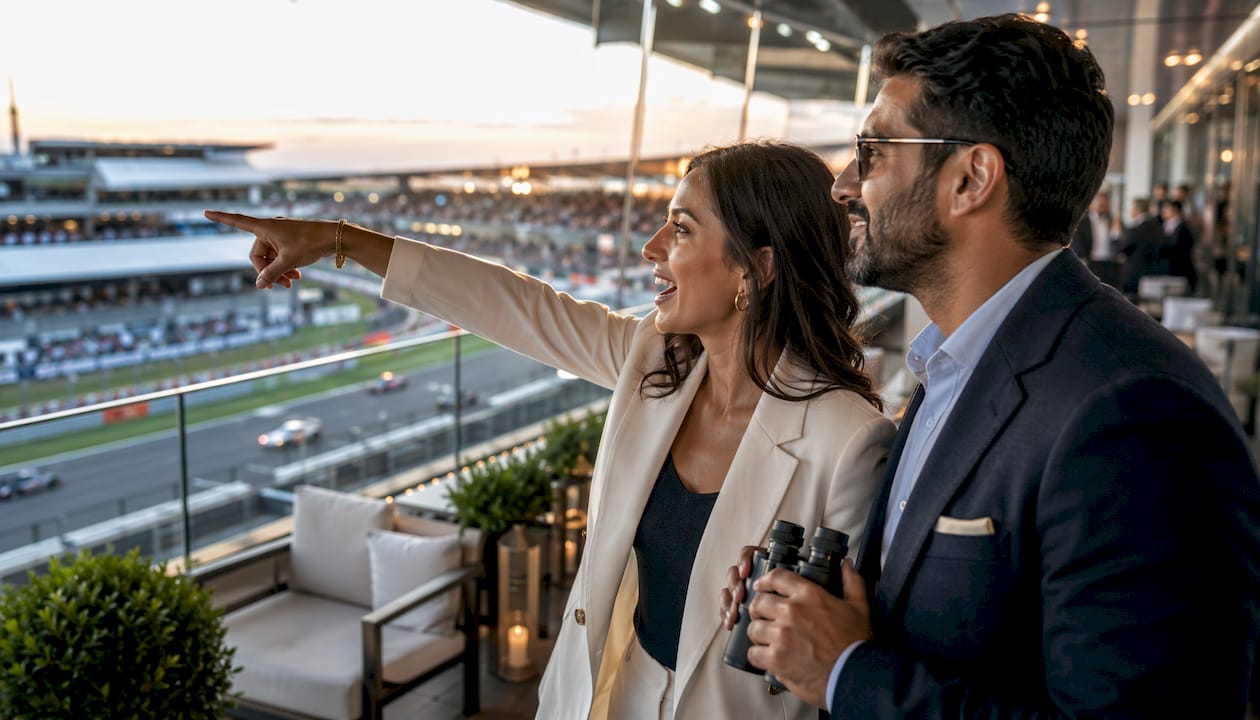
The British Grand Prix at Silverstone offers trackside hospitality that ranges from the Paddock Club — the Formula 1 global standard for circuit hospitality — to bespoke team experiences arranged through official partners. Paddock Club guests receive access to the pit lane walk, team garages (subject to team approval), and a dedicated catering facility above the pit straight. The event sells out consistently; Paddock Club allocation is limited and typically secured six to twelve months in advance.
Cheltenham Festival
The Cheltenham Festival's private boxes and the Panoramic restaurant offer a combination of racing proximity and social atmosphere that defines the British jump-racing calendar. Corporate boxes at the Festival include dedicated catering, private betting facilities, and views directly over the finishing straight. The four-day structure gives buyers flexibility, and the Gold Cup day on Friday commands the highest demand. Specialist operators often hold allocations that are not available through the racecourse directly.
Premier League matchday hospitality
Premier League stadium suites and executive boxes represent the most accessible entry point into regular premium sports hospitality in the UK. Clubs including Arsenal offer matchday packages that include pre-match dining, in-seat service, and post-match access to player areas at selected fixtures. Everton's new stadium introduced an immersive hospitality area described as a "superstar aquarium" — a glass-fronted private sanctuary engineered to give guests direct sightlines to tunnel activity and player warm-ups. That kind of architectural investment in the guest's sense of access and intimacy is increasingly the benchmark for new stadium design.
Marriott Bonvoy and Visa demonstrated a comparable concept at the FIFA World Cup, converting a luxury suite into an overnight hotel room complete with a private chef, bartender, and backstage access — a format that shows how far the category has moved beyond a comfortable seat and a three-course meal.
How to buy a hospitality package without getting it wrong
The market for premium sports hospitality includes official channels, specialist operators, and secondary resellers. The quality gap between them is significant.
Step-by-step checklist before committing:
- Confirm the exact access level in writing — 'VIP' is not a defined standard
- Ask for the name of the catering partner or chef
- Verify the guest-to-host ratio (one host per eight to ten guests is a reasonable benchmark)
- Check what is included in F&B — 'drinks included' can mean a cash bar with a token allowance
- Confirm transport logistics: is transfer included, or is it a recommendation?
- Read the cancellation and transfer policy before paying a deposit
- Ask whether bespoke elements (meet-and-greets, custom mementos) are available and at what lead time
Red flags to avoid:
- Vague access descriptions ("great views", "VIP area") with no specific location named
- No named catering supplier or chef
- Last-minute availability for sold-out events with no explanation of the source
- Unclear or absent cancellation terms
- No dedicated point of contact named before the event
Timing matters. For Royal Ascot, Wimbledon, and the British Grand Prix, the best packages typically release six to twelve months before the event. Cheltenham Festival corporate boxes often sell by October for the following March. Choosing the right operator early is as important as choosing the right package.
Pro Tip: When booking through a specialist operator, ask specifically whether they hold an official allocation or are sourcing on the secondary market. Official allocations carry better cancellation protection and are more likely to include the access elements — paddock passes, tunnel walks — that make the experience genuinely different.
How organisers build hospitality that works commercially
Organisers construct premium hospitality around a tiered model: each tier offers a defined access level, a defined content package, and a defined price point. The commercial logic is straightforward — a small number of high-value guests generate disproportionate revenue per head compared to general admission.
The main levers organisers use:
- Tiered access: public, premium, and exclusive tiers with clearly differentiated benefits
- Sponsor-led activations: branded suites, product placements, and curated guest lists managed by sponsors
- Bespoke add-ons: athlete appearances, custom merchandise, and private tours sold as upgrades
- Supply partnerships: pre-negotiated hotel allotments, transport contracts, and F&B supplier agreements that allow consistent delivery at scale
Organisers track a defined set of metrics to judge whether the hospitality programme is working:
| Metric | What it measures |
|---|---|
| Revenue per guest | Total hospitality revenue divided by guest count |
| Sponsor impression value | Estimated media and relationship value generated per sponsor suite |
| Net Promoter Score (NPS) | Guest likelihood to recommend and rebook |
| Repeat-booking rate | Percentage of guests who return the following year |
The commercial rationale for investing in 'money-can't-buy' offerings is that they create a category of experience that cannot be price-compared. When a guest can say they rode a stage of the Tour de France on a custom-built professional bicycle and kept it, no competitor can offer the same thing at a lower price. That exclusivity is itself a commercial asset.
How A1lifestyle sources and delivers this standard
A1lifestyle has operated in the premium events and hospitality market for over 30 years. The service covers the full guest journey: ticket and hospitality procurement, concierge services, private box arrangements, bespoke travel, and post-event follow-up.
What the operational model includes:
- Access to official hospitality allocations at major UK events including Premier League fixtures, Wimbledon, Royal Ascot, and Silverstone
- Private box sourcing and management, including catering coordination and host staffing
- Bespoke travel arrangements: chauffeured transfers and private aviation where required
- Concierge support before, during, and after the event
- Procurement of exclusive access elements: athlete interactions, tunnel access, and custom mementos
The network built over three decades means A1lifestyle can source inventory and access that is not publicly listed. For sold-out events — which describes most of the major UK fixtures discussed in this article — that network is the difference between attending and not attending.
Key takeaways
World-class sports hospitality is defined by five measurable features: exclusivity, hyper-personalisation, unrivalled access, five-star service, and logistics that remove every point of friction for the guest.
| Point | Details |
|---|---|
| Book early | Major UK events — Ascot, Wimbledon, Silverstone, Cheltenham — sell premium packages six to twelve months in advance. |
| Verify access in writing | 'VIP' is not a defined standard; ask for the exact location and access level before paying. |
| Bespoke elements need lead time | Meet-and-greets, custom mementos, and athlete interactions must be requested at booking, not on the day. |
| Price signals the tier | Mid-tier VIP runs from around $6,000 per guest; money-can't-buy experiences start at £10,000 and above. |
| Use A1lifestyle for sold-out events | A1lifestyle's 30-year network provides access to official allocations and exclusive elements not available through public channels. |
Why curation and supplier relationships define the result
Most buyers focus on the headline — the event, the suite, the menu. The detail that actually determines whether an experience is world-class is the quality of the supplier relationships behind it.
A hospitality operator who has worked with the same hotel, the same transport provider, and the same catering team for years delivers a different product from one assembling those elements for the first time. The hotel knows the guest's preferences before they check in. The driver knows the route and the timing. The catering team has already handled the dietary requirements. None of that is visible to the guest, but all of it is felt.
The other factor buyers underestimate is advance planning. The best elements — athlete access, bespoke mementos, private enclosure upgrades — are not available on request the week before an event. They are negotiated months earlier, often as part of a broader relationship between the operator and the rights holder. That is what 30 years of operating in this market actually means in practice: not a longer list of events, but a deeper set of relationships that produce better outcomes for the guest.
A1lifestyle can secure the experience you are looking for
A1lifestyle provides access to premium and sold-out sports hospitality across the UK's major events. The service covers Premier League matchday packages, F1 and Silverstone hospitality, and bespoke arrangements for Royal Ascot, Wimbledon, and Cheltenham. Every booking is managed by a dedicated concierge team that handles transport, access, F&B preferences, and post-event follow-up.
For buyers who want a specific experience — a private box, a tunnel walk, a custom memento, or simply guaranteed access to a sold-out fixture — A1lifestyle's concierge services are the starting point. Contact the team directly to check availability and discuss what is possible for your chosen event.
Useful sources and further reading
- Sotheby's: Tour de France Movistar Team hospitality package
- Robb Report: Marriott Bonvoy World Cup suite sleepover
- Liverpool Echo: Everton's immersive stadium hospitality
- Free Press Journal: FIFA World Cup VIP suite pricing
- Dallas Morning News: World Cup VIP experience, England vs Croatia
- Sodexo Live: World-class hospitality for sports events
- Sport Five: Hospitality at major events
- A1lifestyle: Types of sports hospitality packages
- A1lifestyle: How to choose the best sports hospitality provider
FAQ
What are the best examples of world-class sports hospitality in the UK?
Royal Ascot, Wimbledon, the British Grand Prix at Silverstone, the Cheltenham Festival, and premium Premier League matchday suites are the most widely cited examples. Each combines exclusive access, curated F&B, and managed logistics that go well beyond a standard VIP ticket.
What is the best football hospitality in the UK?
Premier League clubs offer the most consistent premium matchday hospitality in UK football. Arsenal, for example, provides pre-match dining, in-seat service, and selected post-match access; Everton's new stadium features an immersive glass-fronted hospitality area with direct sightlines to tunnel activity.
What is sport tourism, and how does hospitality fit in?
Sport tourism covers travel specifically motivated by attending or participating in a sporting event. Premium hospitality packages are a high-value segment of sport tourism, combining event access with curated travel, accommodation, and experiences that extend the visit beyond the fixture itself.
How far in advance should hospitality packages be booked?
For major UK events — Royal Ascot, Wimbledon, the British Grand Prix, and the Cheltenham Festival — the best packages typically sell six to twelve months before the event. Cheltenham corporate boxes often go by October for the following March meeting.
Can a specialist operator access packages that are not publicly listed?
Yes. Operators with long-standing relationships with rights holders and official hospitality suppliers often hold allocations that are not available through public booking channels. A1lifestyle's network, built over more than 30 years, provides access to official inventory and bespoke elements — including athlete interactions and custom mementos — at sold-out events.