

Dynamic ticket pricing is a system where ticket prices change automatically in response to demand, time, and other market signals. In the UK, it is legal and widely used by major ticketing platforms, though the Competition and Markets Authority (CMA) has intervened to require greater transparency following high-profile controversies.
Common synonyms you will see used interchangeably:
- Surge pricing, variable pricing, algorithmic pricing — all describe the same core mechanism
- Demand-based pricing — the term promoters and platforms often use in official communications
A quick example: when Oasis tickets went on sale in 2024, some listings reportedly moved significantly within the same sale window, a price swing the CMA investigated directly.
Table of Contents
- How does dynamic pricing actually work at a concert?
- UK rollout and high-profile cases: what happened and when
- How does dynamic pricing affect fans?
- Is dynamic pricing legal in the UK?
- Practical steps to avoid unwanted price swings
- How VIP and hospitality packages differ from dynamic retail tickets
- Key takeaways
- Is dynamic pricing as controversial as it looks?
- Guaranteed access without the price uncertainty
- Useful sources
- FAQ
How does dynamic pricing actually work at a concert?
The ticket lifecycle for a major UK tour typically runs through four stages, each with its own pricing behaviour.
- Presale window — Fan club, credit card, and artist presales often carry fixed prices set before general sale. These are the most stable prices in the cycle and frequently the lowest available.
- General sale opens — Dynamic pricing activates. The algorithm monitors sell-through velocity: how quickly seats are moving in the first minutes and hours. A fast-selling show triggers upward price adjustments almost immediately.
- Ongoing repricing — Over days or weeks, prices continue to adjust. Promoters and platforms watch three primary inputs: historical sales data for comparable shows, real-time velocity (how many tickets are selling per hour), and external demand signals such as social media momentum and search volume. These feed a pricing curve that drives each repricing decision.
- Day-of adjustments — Unsold inventory close to the event date can trigger downward repricing. This is a common but often overlooked use case: dynamic pricing works in reverse for soft shows, automatically discounting seats that would otherwise go empty.
Platforms like Ticketmaster describe their approach as a composite model combining demand signals, time-based buckets, and segmentation, with the stated aim of pricing tickets closer to their market value. Whether rule-based triggers or machine-learning models drive the adjustments depends on the ticketing software in use.
Pro Tip: When buying on a primary platform, check whether the listing is labelled "in demand" or carries a price that differs from the face value shown in pre-sale communications. That gap is the clearest signal that dynamic pricing is active. If the listing is on a secondary marketplace, the price reflects resale markup, not platform dynamic pricing — a meaningfully different situation with different consumer protections.
Understanding the difference between a primary listing and a resale listing matters for ticket economics and for knowing which regulations apply to your purchase.
UK rollout and high-profile cases: what happened and when
Dynamic pricing has been used in UK live music for several years, but public awareness accelerated sharply in 2024. Ticketmaster and Live Nation, which operate as affiliated companies, have applied demand-based pricing across a range of UK tours. The practice became front-page news when Oasis announced their reunion tour and tickets went on general sale.
Reports from that sale documented prices moving significantly within the sale window. The CMA opened an investigation and ultimately secured changes from Ticketmaster regarding how dynamic pricing was disclosed to buyers.
| Event / Case | Reported price movement | Key issue | Outcome |
|---|---|---|---|
| Oasis reunion tour (2024) | £148.50 → £355.20 on some listings | Prices rose during the sale without clear prior disclosure | CMA investigation; Ticketmaster agreed to changes |
| General UK rollout | Variable; upward moves reported on multiple high-demand tours | Lack of consistent labelling and disclosure | CMA guidance issued; government tips for businesses published |
The Oasis case is significant not just for the scale of the price movement but because it prompted the CMA to act publicly and quickly. Ticketmaster's agreement to make changes signals that the regulator views transparency as non-negotiable, even when the pricing mechanism itself remains lawful. Live Nation, as Ticketmaster's parent company, operates across the UK venue and promotion market, which means its pricing practices affect a large share of major tours.
How does dynamic pricing affect fans?
The impact on buyers is uneven. Some fans benefit; many do not.
Consumer benefits:
- Early buyers and presale members often access tickets at lower prices before demand signals push prices up
- Soft shows may see prices fall closer to the event, offering late buyers genuine value
- Seats that might otherwise go to scalpers remain available on the primary market, at least in theory
Consumer harms:
- Price volatility during a sale creates a rushed, high-pressure buying environment
- Opacity: buyers may not know a price has changed since they first saw it, or that the "in demand" label means a price increase has already occurred
- Fee compounding: as the base ticket price rises, booking fees (typically a percentage of face value) rise with it, amplifying the total cost increase
A concrete example of fee compounding: a ticket repriced from £80 to £120 carries a booking fee that might move from £12 to £18 at a 15% rate. The buyer pays £40 more on the base price but £46 more in total. On a pair of tickets, that difference reaches £92 before any delivery charge. Understanding why tickets cost more than their advertised face value is a practical skill for any regular event-goer.
The secondary market interaction adds another layer. When primary prices rise to near-market levels, the resale premium shrinks but does not disappear. Buyers who miss the primary sale and turn to resale platforms face a combined effect: a higher starting price and a resale markup on top of it.
Is dynamic pricing legal in the UK?
Dynamic pricing is not banned in the UK. No specific legislation prohibits a business from changing its prices in response to demand. The legal framework that governs it is the Consumer Protection from Unfair Trading Regulations 2008, which prohibits misleading commercial practices, including presenting a price in a way that creates a false impression.
The CMA's focus is on transparency, not prohibition. Its investigation into the Oasis ticket sale resulted in Ticketmaster agreeing to changes, establishing a practical standard for what disclosure looks like in practice.
What a transparent ticket page should disclose:
- A clear statement that prices are subject to change based on demand, shown before the buyer enters the purchase flow
- The current price at the moment of purchase, not the price shown in advertising or at sale open
- An explanation of what "in demand" or equivalent labels mean in practice
- The total price including all booking fees, delivery charges, and any other mandatory costs, displayed before payment is confirmed
- Whether the listing is a primary sale or a resale, since consumer protections differ between the two
The Brookings analysis of consumer protections notes that regulators in multiple jurisdictions are moving toward disclosure-based frameworks rather than outright bans, a direction consistent with the CMA's approach in the UK.
Practical steps to avoid unwanted price swings
Buyers in the UK have more options than they often realise. The key is acting before the general sale, not during it.
Before the sale:
- Register for artist presales — most major tours offer fan club or newsletter presales 24–48 hours before general sale. Prices at this stage are typically fixed and lower.
- Check credit card presales — Ticketmaster and Live Nation partner with specific card issuers for presale access. American Express and Barclaycard have both run presale programmes for UK events.
- Join official fan clubs or memberships — some artists offer verified fan programmes that allocate tickets by ballot, bypassing dynamic pricing entirely.
During the sale:
- Use a single browser session and avoid refreshing repeatedly. Each refresh can trigger a new price check, and some platforms update prices between page loads.
- Compare the total cost at checkout, not the headline price. The final figure including all fees is the only number that matters.
- Set a firm spending limit before you open the sale page. Dynamic pricing creates urgency; a pre-set limit removes the in-the-moment decision.
After the sale:
- Monitor the primary platform for price drops closer to the event date. Downward repricing on soft shows is real and worth checking.
- Be cautious on secondary platforms. A listing priced above face value may reflect resale markup rather than primary dynamic pricing, and consumer protections are different. Understanding when to use a resale service and when to avoid it is worth knowing before you need it.
Pro Tip: At checkout, scroll past the ticket price to the order summary before entering payment details. The total cost including all mandatory fees must be shown at this stage under UK consumer law. If the total is materially higher than the price you saw on the listing page, you are entitled to abandon the purchase without obligation.
How VIP and hospitality packages differ from dynamic retail tickets
VIP hospitality and concierge packages operate on a fundamentally different commercial model. The price is agreed at the point of booking and does not change based on demand signals after that point. What the buyer receives is also defined in advance: a specific seat or suite, catering, access arrangements, and any additional inclusions are set out before payment is confirmed.
This is the structural difference that matters. A retail ticket bought through a primary platform is subject to repricing until the moment of purchase. A hospitality package is a fixed contract: the price, the seat, and the service level are all locked at booking.
A1lifestyle has operated in the VIP and concierge access market for over 30 years, working across concerts, sports, and premium shows. That depth of experience means access to inventory and relationships that are not available through standard retail channels.
Questions to ask any VIP or concierge provider before you book:
- Is the price fixed from the point of booking, or can it change before the event?
- What exactly is included: seat location, catering, hospitality access, transport?
- What is the cancellation and refund policy if the event is postponed or cancelled?
- Is the ticket a primary allocation or sourced from a secondary market?
- Who is the named ticket holder, and what ID will be required at the venue?
The hospitality package model also tends to sell earlier than general admission. Demand for premium packages at major events is high, and availability closes well before the event date. Waiting for a price drop on a hospitality package is rarely a viable strategy.
Key takeaways
Dynamic ticket pricing is legal in the UK, widely used by Ticketmaster and Live Nation, and subject to CMA transparency requirements following the Oasis investigation — buyers who act early and understand the fee structure are best placed to manage its effects.
| Point | Details |
|---|---|
| Definition | Dynamic ticket pricing adjusts prices automatically based on demand, time, and market signals. |
| UK legal status | Legal under current UK law; the CMA requires clear disclosure and has secured changes from Ticketmaster. |
| Price volatility | Oasis tickets reportedly experienced large price swings during a single sale window, illustrating the scale of possible fluctuations. |
| Buyer protection steps | Presales, fan clubs, and firm spending limits reduce exposure to in-sale price increases. |
| A1lifestyle alternative | A1lifestyle offers fixed-price VIP and hospitality packages where the price, seat, and inclusions are confirmed at booking. |
Is dynamic pricing as controversial as it looks?
The debate around dynamic ticket pricing often generates more heat than light. Critics frame it as exploitation; platforms frame it as market efficiency. Both positions miss something.
The real problem is not that prices change. Prices change in every market. The problem is that the change happens during the purchase, under time pressure, without clear prior disclosure. A buyer who opens a sale page expecting to pay £80 and finds the price has moved to £140 by the time they reach checkout has not been given a fair chance to make an informed decision. That is the harm the CMA identified, and it is a process failure, not an inherent feature of variable pricing.
What is genuinely underappreciated is the reverse case. Dynamic pricing fills empty seats on soft shows. It keeps tickets on the primary market that would otherwise go straight to scalpers. Used with proper guardrails and honest disclosure, it can work in fans' interests as well as promoters'. The Oasis case was damaging precisely because those guardrails were absent and disclosure was inadequate, not because the underlying mechanism is irredeemably unfair.
The more interesting question is whether artists will start using their contractual leverage to shape how the model operates, rather than simply accepting platform defaults. A few have. Most have not. Until that changes, the practical advice remains the same: buy early, use presales, read the checkout total, and know what you are paying before you confirm.
Guaranteed access without the price uncertainty
Dynamic pricing creates a specific problem for buyers who need to plan: the cost is unknown until the moment of purchase, and by then the pressure to commit is high. A1lifestyle offers a different route.
A1lifestyle provides fixed-price VIP hospitality and concierge access to concerts, sports events, and premium shows across the UK and worldwide. The price is agreed at booking. The seat, the hospitality level, and the inclusions are confirmed before payment. There is no repricing after you commit, and no booking-fee surprise at checkout.
For music events, Premier League fixtures, and a full range of premium experiences, A1lifestyle draws on over 30 years of industry relationships to secure access that is not available through standard retail channels. The concierge service handles the full booking process, from seat selection to travel and hospitality arrangements.
To find out what is available for a specific event, contact A1lifestyle directly through the services page or browse the current event listings to check availability.
Useful sources
- CMA secures changes from Ticketmaster following Oasis tickets investigation
- Dynamic pricing: tips for businesses
- What is dynamic pricing? | HBS Online
- What is dynamic pricing, and why do consumers need better protections? | Brookings
- Dynamic pricing — Wikipedia
- Dynamic ticket pricing—pros, cons & best practices | Loopyah
FAQ
What is dynamic ticket pricing?
Dynamic ticket pricing is a system where ticket prices adjust automatically based on demand, time remaining before the event, and other market signals. Prices can rise or fall multiple times between the initial sale and the event date.
Is dynamic pricing legal in the UK?
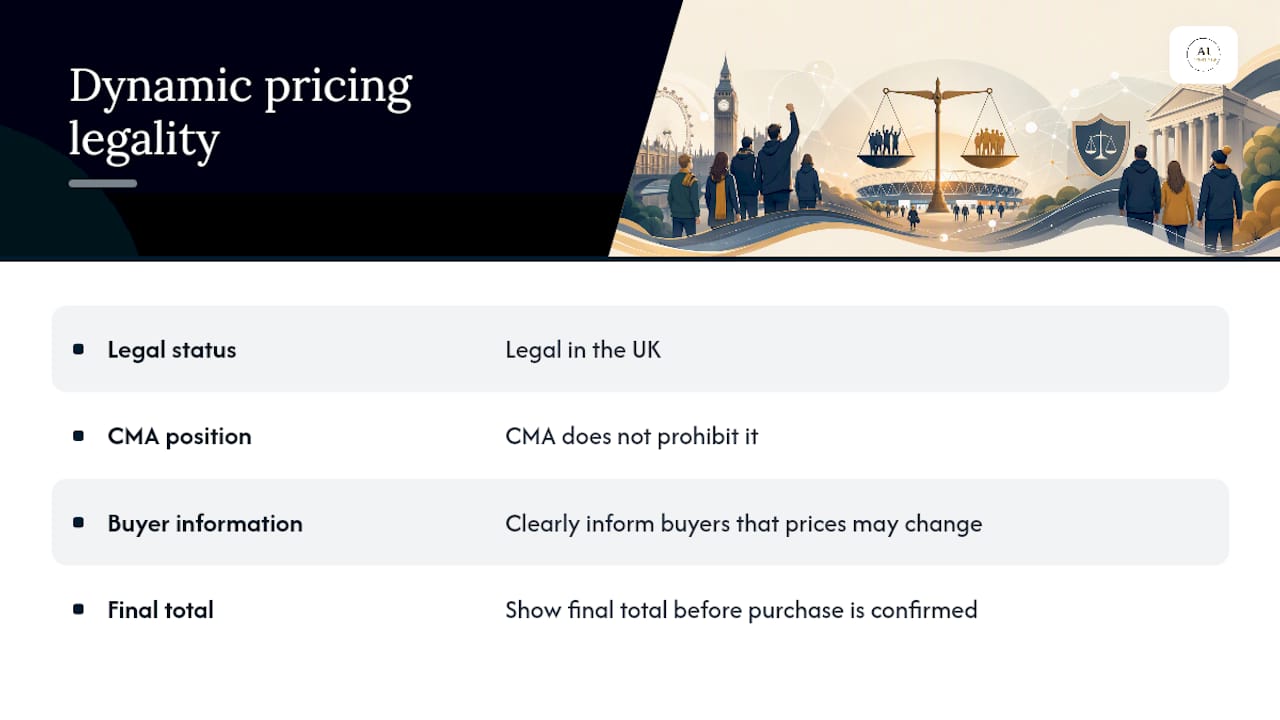
Dynamic pricing is legal in the UK. The CMA does not prohibit it but requires that buyers are clearly informed prices may change and that the final total price is shown before purchase is confirmed.
Did Oasis tickets use dynamic pricing?
Yes. When Oasis reunion tour tickets went on sale in 2024, some listings reportedly moved from £148.50 to £355.20 within the same sale window. The CMA investigated and secured changes from Ticketmaster regarding how the pricing was disclosed.
Did Taylor Swift's tours use dynamic pricing?
Ticketmaster applied demand-based pricing to some Taylor Swift tour on-sales in the United States, contributing to significant fan frustration and scrutiny of the platform's market position. UK-specific pricing arrangements for those tours were not publicly confirmed in the same detail.
What is an example of dynamic pricing in everyday life?
Airline tickets are the most familiar example: the same seat on the same flight can cost significantly more or less depending on when you book and how full the flight is. In live events, the same principle applies to concert and sports tickets on major primary platforms.