

TL;DR:
- Ticket prices mainly reflect production costs, demand fluctuations, seating choices, and service fees. Demand-based dynamic pricing causes prices to change rapidly, influenced by supply, scarcity, and resale pressures. Fees add a significant and often opaque extra cost, sometimes doubling the ticket's base price.
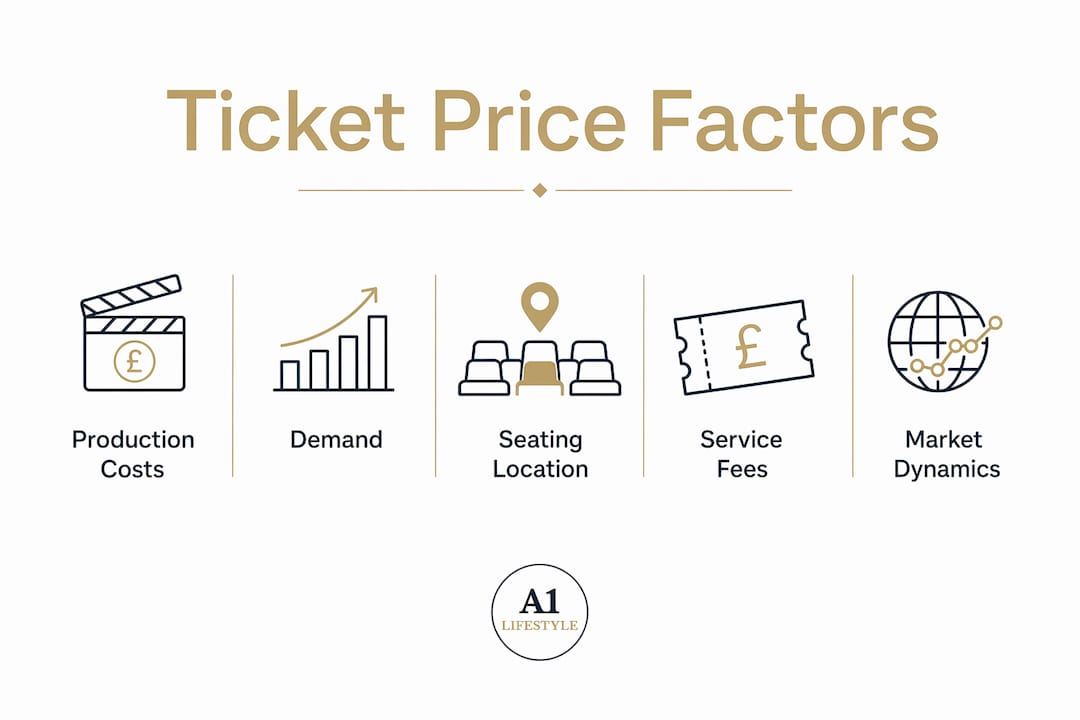
Ticket pricing is defined by a combination of production costs, demand levels, seating location, and dynamic market strategies. These factors directly explain why some tickets cost more than others for the same type of event. The average concert ticket price rose to around £132 in 2026, up from £96.17 in 2019. That 38% increase reflects real cost pressures across the entire live events industry, not simply greed from promoters or artists.
Why some tickets cost more: production costs explained
Every ticket price starts with a cost calculation. Artists, venues, and promoters must cover a wide range of expenses before a single seat is sold.

According to Live Nation president Omar Al-joulani, ticket prices must cover artist profit requirements alongside staffing, production, commissions, and a working margin. Those costs have risen sharply since 2020. A world tour today involves lighting rigs, sound systems, stage construction, security teams, and advertising campaigns that each carry a significant price tag.
Venue costs add another layer. Rent, insurance, stagehands, and local authority fees all feed into the final ticket price. Larger venues require more complex infrastructure, which means higher overheads spread across more seats. A stadium show costs far more to produce than a club night, and that difference shows up directly in what buyers pay.
The key production cost drivers include:
- Artist fees and profit margin: The headline act takes the largest share of revenue, and their fee reflects their commercial value.
- Crew and staffing: Touring crews, local stagehands, security personnel, and front-of-house staff all require payment.
- Production equipment: Sound, lighting, staging, and special effects are hired or purchased for each tour leg.
- Venue hire and logistics: Larger venues charge more in rent and require more complex logistical planning.
- Marketing and advertising: Promoters spend heavily on campaigns to fill seats, and that cost is built into the ticket price.
Pro Tip: If you want to understand why a ticket for a stadium show costs three times more than a club gig, compare the stage setups. The production scale alone accounts for most of the difference.
How does demand affect ticket prices?
Demand is the single most volatile factor in ticket pricing. When more people want a ticket than there are tickets available, prices rise. This is the basic principle behind dynamic pricing, the industry term for real-time price adjustments based on demand signals.
Dynamic pricing is now standard practice across major live events. World Cup ticket prices swung by as much as +34% or fell by 26% within days in july 2026. That kind of volatility shows how quickly prices can move when demand shifts around a high-profile fixture.
Several demand-related factors drive price differences:
- Peak buying windows: Prices spike immediately after a ticket sale opens, when demand is highest and supply is still perceived as limited.
- Event scarcity: Sold-out shows or one-off events command higher prices because buyers know there is no alternative date.
- Staggered releases: Promoters use slow ticketing strategies to release batches of tickets over time, creating repeated urgency and keeping prices elevated across multiple release windows.
- Resale market pressure: When resale prices far exceed face value, primary sellers adjust future pricing upward to capture that revenue directly.
- Fan identity and emotional connection: Fans' emotional investment in major artists or events increases their willingness to pay, which promoters factor into pricing models.
Staggered releases deserve particular attention. Releasing tickets in waves is a deliberate psychological strategy. Each new batch feels scarce, which encourages buyers to purchase quickly at whatever price is listed rather than waiting for prices to fall. Understanding how event capacity limits interact with these release strategies helps explain why tickets feel expensive even before resale markets get involved.
Why does seating location change the ticket cost?
Seating location is one of the clearest and most predictable factors affecting ticket prices. Venues and promoters set a portfolio of prices across all sections simultaneously, balancing revenue targets with the need to fill every seat.
University of Miami research confirms that event pricing is a complex science. Flat percentage increases across all sections damage both revenue and perceived fairness. Instead, promoters price each section based on its sightlines, proximity to the stage, and historical demand data from previous tours.
The main seating tiers typically work as follows:
- Premium floor and front sections: Closest to the action, highest demand, and highest price. These often sell out first and feed the resale market.
- Standard mid-tier seats: The bulk of the venue, priced to balance volume and revenue. Most buyers end up here.
- Restricted-view and upper-tier seats: Lower prices reflect reduced sightlines or greater distance from the stage.
- VIP packages: These bundle the ticket with early access, hospitality, merchandise, or meet-and-greet options. The add-ons justify a significant price premium above the base ticket cost.
Artists and their management teams also study resale market data from previous tour dates to set face-value prices closer to what the secondary market would charge. This reduces the profit available to scalpers and keeps more revenue with the artist and promoter. Understanding how premium concert viewing areas work helps buyers assess whether a VIP upgrade is worth the additional cost.
What role do service fees play in high ticket prices?
Service fees are one of the least transparent factors affecting ticket costs. They are added at checkout, often after a buyer has already committed emotionally to the purchase.
Service fees range from 20% to 65% of the base ticket price, according to a Competition Bureau review. That means a £50 ticket can cost between £60 and £82.50 by the time fees are added. The variation is wide and often unexplained.
Platform and device differences add further complexity. Testing across desktop, mobile browser, and app shows that the same ticket can carry different fees depending on how and where a buyer accesses the platform. This is not accidental. Ticketing companies test consumer price sensitivity anonymously across different access points, adjusting fees based on what each segment will tolerate.
Key points on fees and market structure:
- Booking fees: Applied per ticket, these cover platform costs and generate profit for the ticketing company.
- Facility fees: Charged by the venue, these cover operational costs and are passed through to the buyer.
- Order processing fees: A flat charge per transaction, regardless of how many tickets are purchased.
- Delivery fees: Applied for physical tickets or express digital delivery options.
The concentration of market power in the ticketing industry also plays a role. When a small number of large firms control both venue ownership and ticketing platforms, competition that would otherwise reduce fees is limited. Regulatory bodies in several countries are examining this structure, though meaningful reform takes time. Buyers who want to understand why concert tickets disappear so quickly will find that fee structures and platform dynamics are closely connected to availability problems.
Pro Tip: Always check the total price including all fees before comparing tickets across platforms. The base price is rarely what you actually pay.
Key takeaways
Ticket prices are determined by production costs, demand dynamics, seating location, and service fees, all of which interact to produce the final price a buyer sees at checkout.
| Point | Details |
|---|---|
| Production costs set the floor | Artist fees, venue hire, and crew costs establish the minimum viable ticket price before any profit is added. |
| Dynamic pricing drives volatility | Real-time demand adjustments can move prices by 30% or more within days of a major event. |
| Seating tier determines value | Premium sections command higher prices based on proximity, sightlines, and historical demand data. |
| Service fees add 20%–65% | Fees applied at checkout can nearly double the base ticket price, and vary by platform and device. |
| Staggered releases create urgency | Releasing tickets in waves is a deliberate strategy to sustain demand and keep prices elevated. |
My honest view on ticket pricing in 2026
The pricing conversation has shifted significantly over the past few years. Fans are more aware of dynamic pricing than ever, and that awareness has not made the experience less frustrating. It has made it more complicated.
The production cost argument is legitimate. Touring costs have risen sharply, and artists genuinely need higher ticket revenues to fund the kind of spectacle that audiences now expect. A flat-rate ticket price that does not reflect real demand is also, in its own way, unfair. It simply transfers money from fans to scalpers rather than to the people who created the event.
What I find harder to defend is the opacity around service fees. A buyer who sees a £60 ticket and ends up paying £90 at checkout has not been treated fairly. The Competition Bureau's finding that fees can reach 65% of the base price is not a quirk. It is a structural feature of a market with limited competition.
Dynamic pricing, applied transparently, is a reasonable tool. Prices that shift based on demand are normal in almost every other industry. The problem in live events is that the rules are not clearly communicated, and buyers often do not know whether the price they see will be the price they pay. Regulatory pressure is building, and I expect greater fee transparency requirements within the next two to three years. Until then, the best approach is to buy early, compare total prices across platforms, and understand that the listed price is rarely the final one.
— Tony
Access premium events without the pricing guesswork
Navigating ticket pricing is complex enough without the added stress of sold-out pages and inflated resale costs. A1lifestyle has spent over 30 years building the access and expertise needed to secure tickets for the events that matter most.

Whether you are looking for Premier League tickets or access to major music events, A1lifestyle provides confirmed availability, transparent pricing, and VIP hospitality options that standard platforms simply cannot match. The service covers everything from private boxes to concierge support, so the experience starts well before the event itself. For buyers who want certainty rather than a lottery, A1lifestyle is the direct route to the seats worth having.
FAQ
Why are concert ticket prices so much higher than before?
The average concert ticket now costs around £132, up 38% since 2019. Rising production costs, artist fees, and venue expenses all contribute to the increase.
What is dynamic pricing in ticketing?
Dynamic pricing is a real-time pricing model that adjusts ticket costs based on current demand. Prices can rise or fall significantly within hours, as seen with World Cup fixtures in 2026.
How much do service fees add to a ticket price?
Service fees typically add between 20% and 65% on top of the base ticket price. The exact amount varies by platform, device, and event type.
Why do front-row tickets cost more than upper-tier seats?
Proximity to the stage, better sightlines, and higher historical demand all justify premium pricing for front sections. Promoters use portfolio pricing across all seating sections to balance revenue and fill rates.
Does the platform I use affect how much I pay for a ticket?
Yes. Testing across devices shows that fees can differ between desktop, mobile browser, and app purchases for the same ticket. Comparing total prices across access points before buying is the most reliable way to find the lowest final cost.