

TL;DR:
- Automated bots, presale windows, and urgency marketing cause concert tickets to sell out instantly. Buyers can improve chances by registering for presales, monitoring primary and secondary markets, and practicing patience. Working with trusted access services offers the best chance to secure tickets to high-demand events.
Concert tickets disappear instantly because automated bots and reserved presale windows lock up large blocks of inventory before the general public ever gets a chance. Macro-driven purchases can complete in under 10 seconds after a sale goes live. That speed is simply impossible for a human buyer to match. Add in promoter holds, streaming platform presales, and psychological urgency tactics, and the picture becomes clear: the system is not designed to give everyone a fair shot. Understanding each factor is the first step to buying concert tickets more effectively.
Why concert tickets disappear instantly: bots, presales, and psychology
Three forces drive instant sellouts. Automated bots claim tickets in milliseconds. Reserved presale windows drain inventory before general sale begins. Psychological marketing then pressures the remaining buyers into panicked, rushed decisions. Each force compounds the others, which is why concert ticket availability collapses so quickly and so completely.
Touring revenue now surpasses streaming income for most artists. That economic reality makes every ticket more valuable, which in turn makes every ticket a target for automated resale operations. The financial stakes have never been higher, and the technology available to scalpers has never been more advanced.
How automated bots dominate early ticket buying
Automated macro programs are the primary reason tickets sell out in seconds. Scalpers deploy sophisticated infrastructure months before a sale goes live, monitoring inventory and configuring proxy networks, CAPTCHA bypass tools, and autofill payment methods. When the sale opens, their systems execute purchases in milliseconds. A human buyer refreshing a page simply cannot compete.

The speed advantage is not marginal. Macro programs secure tickets in as little as 10 seconds after release. That means an entire allocation can be gone before most buyers have finished loading the page. Cybersecurity experts note that the months of preparation scalpers invest makes them nearly impossible to beat on speed alone.
The scalper ecosystem also operates as a service. Unauthorised reselling services charge clients to use the same bot technology to bypass queues, creating a parallel market that ordinary buyers never see. This underground layer further reduces the tickets available through legitimate channels.
Ticketing platforms have introduced countermeasures including virtual queues, identity verification, and purchase limits. These measures slow bots but do not eliminate them. The technology arms race between platforms and scalpers is ongoing, and scalpers currently hold the advantage.
- Bots use rotating proxy networks to avoid IP bans.
- CAPTCHA bypass tools defeat standard bot detection.
- Autofill payment data removes the final human step from the purchase.
- Purchase limits are circumvented by running multiple bot instances simultaneously.
- Virtual queues can be gamed by bots that join before the queue officially opens.
Pro Tip: If a sale goes live and tickets appear sold out within seconds, check back after 10–15 minutes. Bots sometimes fail at payment, and those tickets return to the pool.
How presales and exclusive access tiers limit public availability
Reserved presale windows reduce the number of tickets that ever reach general sale. Streaming platforms like Spotify offer Reserved ticket access windows of approximately 24 hours for eligible premium subscribers. Those subscribers can purchase before the general public, which means a portion of the allocation is already gone by the time most buyers even know the sale has opened.
Artist fan club presales, credit card presales, and venue member presales each carve out further blocks. The result is that general sale inventory is a fraction of the total tickets printed. Buyers who arrive at the general sale expecting full availability are already working with a depleted pool.
Promoters also retain ticket blocks for artists, venues, and industry partners. These are released only weeks or months before the show, after final production planning is complete. This practice is standard across the industry, and it means public availability increases closer to the event date. Buyers who assume a show is permanently sold out may find tickets appearing weeks later.
Understanding how exclusive access is arranged helps buyers plan around these windows rather than being caught off guard by them.
| Presale type | Typical window | Who qualifies |
|---|---|---|
| Streaming platform (e.g. Spotify Reserved) | 24 hours before general sale | Premium subscribers |
| Artist fan club | 24–48 hours before general sale | Registered fan club members |
| Credit card presale | 24–48 hours before general sale | Cardholders of partner banks |
| Venue member presale | 24 hours before general sale | Venue loyalty members |
| Promoter/industry hold | Released weeks before show | Artists, venues, industry partners |
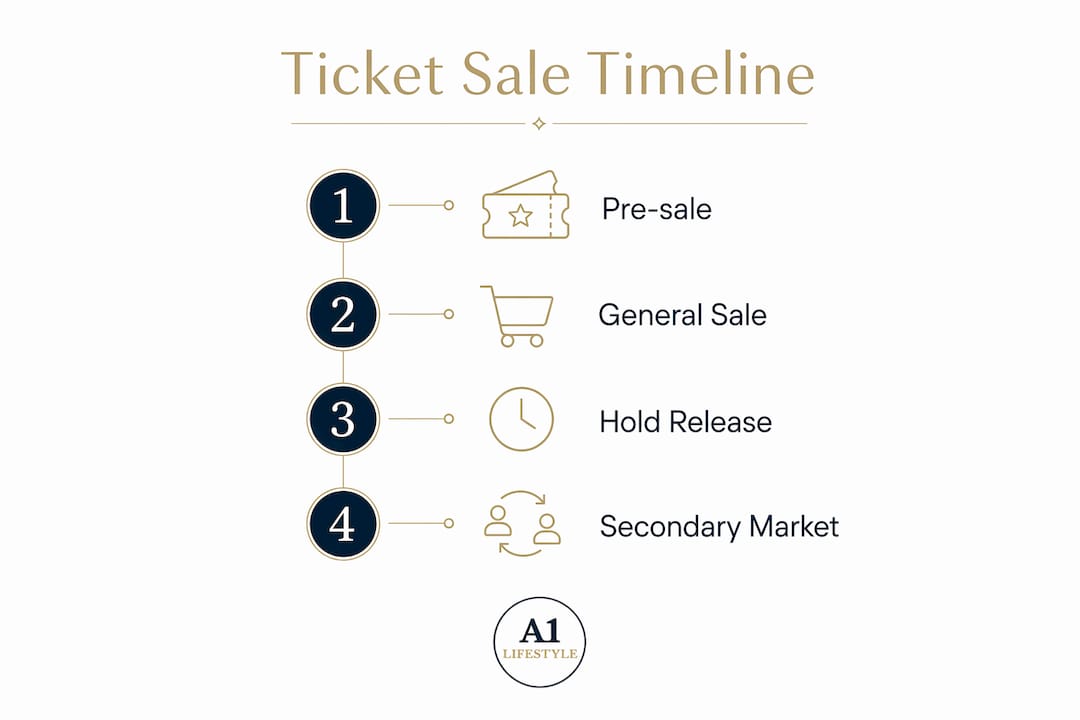
Signing up for every available presale channel is the single most effective step a buyer can take before a major sale. Each registration costs nothing and can make the difference between securing a ticket and missing out entirely.
Psychological tactics that make tickets feel scarcer than they are
Loss aversion is the core mechanism behind urgency marketing. Ticket marketers use countdowns and scarcity messages to push buyers into rapid purchase decisions. The fear of missing out overrides careful thinking, and buyers commit to purchases they might otherwise reconsider. This is not accidental. It is a deliberate design choice built into the buying experience.
Messages such as "only 3 tickets left" or "this offer expires in 2:00" trigger loss aversion responses. Loss aversion is the psychological tendency to feel the pain of a loss more acutely than the pleasure of an equivalent gain. Applied to ticket sales, it means buyers feel the prospect of missing a concert more intensely than they feel the benefit of saving money by waiting. The result is faster purchases and fewer abandoned baskets.
These tactics also affect perceived concert ticket availability. A buyer who sees a countdown timer assumes scarcity is real. In many cases, the scarcity is real. In others, it is a display choice by the platform. Buyers cannot easily tell the difference in the moment, which is exactly why the tactic works.
- Countdown timers create a deadline that did not previously exist in the buyer's mind.
- "Only X tickets left" messages are sometimes triggered at thresholds set by the platform, not by actual remaining stock.
- Basket timers of 10–15 minutes add pressure to complete payment before the ticket is released back to the pool.
- Confirmation bias means buyers who expect scarcity interpret every signal as confirmation that they must act immediately.
Pro Tip: Before a major sale, decide your maximum price and seat preference in advance. Having a clear plan prevents loss aversion from pushing you into a purchase you will regret.
The psychology behind why events sell out fast is well documented, and recognising these tactics in real time gives buyers a measurable advantage.
Secondary market dynamics and when tickets reappear
The secondary market is not simply a place where scalpers profit. It is also where genuine savings occur. Concertgoers saved $202 million in 2024 by purchasing tickets below face value on resale platforms when demand cooled or circumstances changed. That figure shows the secondary market moves in both directions, not only upward.
Tickets also reappear on primary platforms after apparent sellouts. Held-in-basket tickets are held for 10–15 minutes before purchase is completed. If a buyer abandons the basket or a payment fails, those tickets return to the available pool. Persistent buyers who refresh the page after an apparent sellout regularly find tickets becoming available again within minutes.
Dynamic pricing adds another layer of complexity. Ticket prices on both primary and secondary platforms fluctuate with demand. A ticket priced at £150 at launch may drop to £80 three weeks before the show if demand softens, or rise to £300 if the artist announces additional dates that increase interest in the remaining shows. Monitoring prices over time is a legitimate strategy for buyers with flexibility on timing.
For sold-out concert ticket options, official resale channels are the safest route. They offer buyer guarantees that unofficial sources do not.
| Scenario | Likely price movement | Buyer action |
|---|---|---|
| High-demand show, weeks before date | Prices rise on secondary market | Buy early on official resale |
| Low-demand show, days before date | Prices fall below face value | Monitor and buy late |
| Basket abandonment post-sellout | Tickets return to primary platform | Refresh primary platform regularly |
| Promoter hold release | New tickets appear on primary platform | Check primary platform 4–6 weeks before show |
| Artist adds new date | Demand for existing shows may soften | Wait and monitor secondary pricing |
Key takeaways
Concert tickets disappear instantly because bots, presale tiers, promoter holds, and urgency marketing combine to drain public inventory before most buyers can react.
| Point | Details |
|---|---|
| Bots dominate early sales | Macro programs secure tickets in under 10 seconds, outpacing every human buyer. |
| Presales reduce public stock | Streaming, fan club, and credit card presales claim large blocks before general sale opens. |
| Promoter holds release late | Industry-held tickets often appear on primary platforms weeks before the show date. |
| Urgency tactics distort perception | Countdown timers and scarcity messages pressure buyers into rushed decisions. |
| Secondary market saves money | Fans saved $202 million in 2024 buying below face value when demand cooled. |
What I have learned from watching buyers navigate instant sellouts
The most common mistake I see is treating a sellout as final. It almost never is. Basket abandonments, payment failures, and promoter hold releases mean tickets reappear on primary platforms regularly. Buyers who give up after the first "sold out" message miss the second and third waves of availability.
The second mistake is ignoring presales entirely. Registering for a Spotify Reserved window, a fan club presale, or a credit card presale costs nothing and takes minutes. Yet most buyers skip this step and then wonder why they cannot find tickets at general sale. The inventory is not gone. It was allocated before they even started looking.
I am also cautious about unofficial services that claim to secure tickets using automation. These services use the same bot tools as scalpers and charge significant fees for the privilege. The risk of fraud is real, and buyer protection is minimal. Official resale platforms and specialist services with verifiable track records are the only routes worth considering.
Patience and preparation together outperform speed every time. Know your presale windows. Refresh after sellouts. Monitor secondary pricing over time. And when a show matters enough that none of those options will do, work with a specialist who has genuine access.
— Tony
Access concerts and live events through A1lifestyle
Finding tickets to high-demand concerts does not have to mean competing with bots or paying inflated secondary market prices.
A1lifestyle has over 30 years of industry expertise and a global network that provides access to VIP concerts and sold-out events that never reach general sale. The service covers everything from major arena tours to festival experiences, with concierge support at every stage. For buyers who want guaranteed access without the uncertainty of public sales, browsing the full range of music events on the A1lifestyle platform is the most direct route. The Lovebox Festival listings are a strong starting point for summer 2026 planning.
FAQ
Why do concert tickets sell out in seconds?
Automated macro programs can complete ticket purchases in under 10 seconds after a sale opens. Combined with presale windows that drain inventory before general sale, public availability is often exhausted almost immediately.
What are presale windows and how do they affect ticket availability?
Presale windows give specific groups, such as streaming platform subscribers or fan club members, early access to tickets before general sale. Spotify's Reserved feature, for example, offers eligible subscribers a 24-hour purchase window, reducing the stock available to the general public.
Do sold-out concerts ever get more tickets?
Tickets regularly reappear after apparent sellouts. Basket abandonments and payment failures return tickets to the pool within 10–15 minutes. Promoter-held blocks are also released on primary platforms in the weeks before a show.
Is the secondary ticket market ever cheaper than face value?
Concertgoers saved $202 million in 2024 by buying tickets below face value on secondary platforms when demand softened. Prices on resale platforms fluctuate with demand, so monitoring them over time can produce genuine savings.
How can buyers improve their chances of getting concert tickets?
Registering for every available presale channel is the most effective step. Buyers should also refresh primary platforms after apparent sellouts and monitor official resale channels for price drops in the weeks before the event.