
TL;DR:
- Exclusive fan experiences sell out first because they use deliberate scarcity and community identity. Fans prioritize these events as emotional milestones and social credentials, driving urgent demand. Organizers enhance demand through features like rare setlists, VIP tiers, and exclusive merchandise that fans want access to firsthand.
Exclusive fan experiences are defined as limited-access events that combine VIP hospitality, rare formats, and community identity to create unrepeatable moments. They sell out first because scarcity is built into them by design, not by accident. Fans treat these tickets as social credentials and emotional milestones, not just entry passes. The demand for exclusive tickets in 2026 is shaped by parasocial relationships, tribal identity, and a deliberate scarcity model that makes waiting feel like losing. Understanding why exclusive fan experiences sell out first tells you something important about how modern fans spend, what they value, and why no digital alternative replaces being there.
Why exclusive fan experiences sell out first
Scarcity in live entertainment is engineered by design, not a side effect of venue capacity. Event organisers treat limited availability as a product feature. The fewer the tickets, the higher the perceived value of each one.
Tickets to exclusive fan events now function as data-rich credentials. They carry buyer history, access tier information, and identity signals. A ticket to a phone-free, deep-cut setlist show communicates something about the holder that a standard general admission ticket does not.
Dynamic pricing transforms the purchase into a real-time decision under pressure. Prices shift with demand, so waiting even a few hours can mean paying significantly more or missing out entirely. That urgency accelerates sellouts.
Exclusive events often deploy features that general concerts do not. These include:
- Phone-free zones that protect the intimacy of the moment
- Rare or deep-cut setlists that reward superfans with content casual attendees would not recognise
- Tiered VIP access that creates distinct levels of participation and status
- In-person-only merchandise that cannot be purchased online before or after the event
- Personalised hospitality such as private boxes, meet-and-greet slots, and curated catering
Each of these features increases the perceived cost of missing out. Fans who know about them act faster.
Rarity combined with intimacy has become the defining feature of successful residency events and superfan gatherings. Organisers who understand this do not simply cap ticket numbers. They build the entire experience around the fact that only a small group will ever have it.
Pro Tip: If you are tracking an exclusive event, set price alerts from the moment tickets go on sale. Dynamic pricing means the lowest price window is often the first 30 minutes after release.
What drives fans to prioritise exclusive experiences over other spending?
Fans are ruthlessly intentional with their money. When budgets tighten, exclusive event tickets are among the last things cut. Fans reduce spending on dining, travel, and clothing before they give up a once-in-a-generation live experience.
Parasocial relationships explain a large part of this. Missing a tour feels to a devoted fan like missing a milestone in a close friendship. The artist is not a stranger. They are a presence that has been part of the fan's daily life through music, social media, and shared cultural moments. That emotional weight converts into purchasing urgency.
Social identity theory adds another layer. Fans do not attend exclusive events simply for entertainment. They attend to affirm membership in a recognised group. The ticket, the wristband, and the exclusive merchandise all serve as proof of belonging. The modern fan wants to be part of a tribe, not a spectator in a crowd of strangers.
The psychological drivers behind high demand for exclusive fan experiences include:
- FOMO (fear of missing out) creating anxiety that pushes fans to buy before they feel ready
- Identity affirmation through participation in events that define their cultural group
- Anticipation value where the weeks of waiting before an event add to its emotional worth
- Social proof from seeing peers attend, share, and celebrate the same experience
- Completion instinct where attending a tour or series of events feels like finishing something meaningful
Gen Z consumers treat exclusive event attendance as a mode of self-expression. Brand affiliation and event participation are identity tools, validated by owned merchandise and shared online. This is not casual spending. It is deliberate investment in who they are.
Exclusive vs general admission: what actually differs?
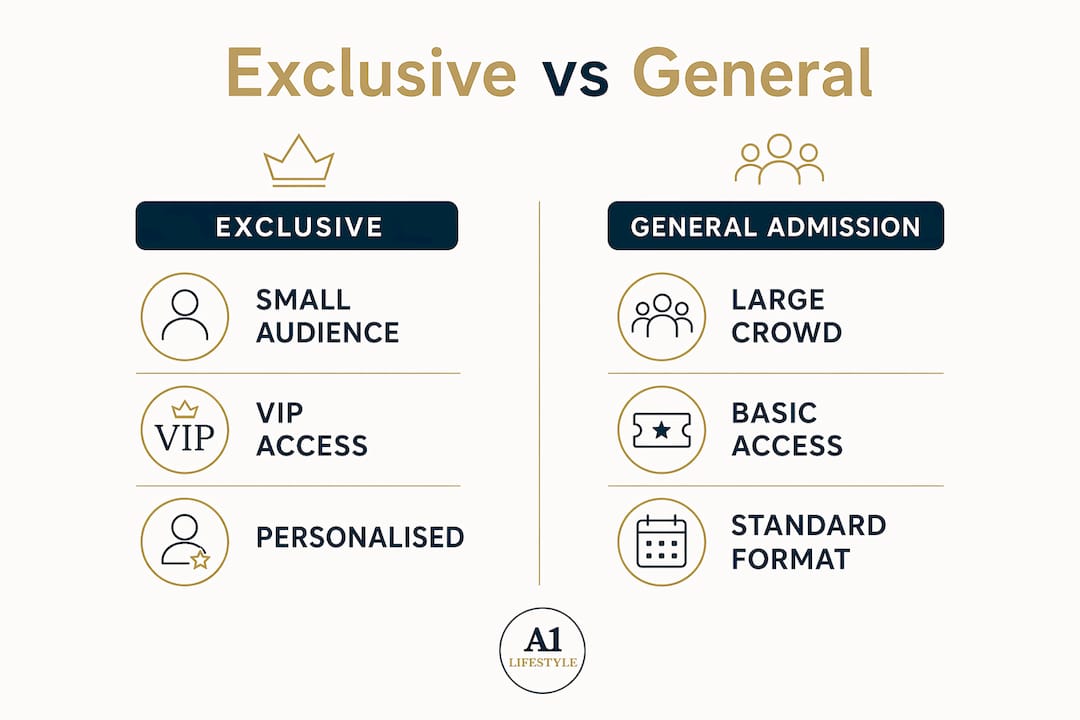
The core difference between exclusive fan events and general admission is not price. It is the type of experience on offer and the community it attracts.

| Factor | Exclusive fan experience | General admission event |
|---|---|---|
| Audience size | Small, curated, intentional | Large, broad, mixed |
| Community feel | Tribal, identity-based | Transactional, anonymous |
| Ticket scarcity | Engineered and deliberate | Incidental to venue size |
| Merchandise access | In-person only, limited run | Available online and at event |
| Demand urgency | Extreme, rapid sellout | Moderate, extended sale window |
| Post-event value | High social currency | Lower social currency |
Thematic events like Bridgerton balls sell out faster than large-scale concerts by artists with broader name recognition. The reason is shared identity. Attendees at a Bridgerton ball are not just fans of a show. They are members of a specific cultural group who want to celebrate that membership together. The event is a tribal gathering, not a performance.
Sport hospitality packages at Premier League matches follow the same logic. A private box at a sold-out fixture is not just a better seat. It is access to a curated experience that most fans will never have. That scarcity drives demand well above what the entertainment itself would justify.
Pro Tip: When comparing ticket options, look beyond the face value. Exclusive packages that include hospitality, merchandise, or rare access often retain or increase their perceived value as the event date approaches.
How fans and organisers can act on these dynamics
Fans who understand the scarcity model can approach high-demand event tickets with a clearer strategy. Organisers who understand fan psychology can build experiences that generate genuine loyalty rather than one-off transactions.
For fans, the practical steps are straightforward:
- Research the event format before tickets go on sale. Exclusive features like phone-free policies or rare setlists signal high demand. Act on that signal early.
- Set a clear budget that includes the full package. Exclusive bundles often include hospitality, transport, and merchandise. Knowing your ceiling prevents hesitation at the point of purchase.
- Use verified specialist services. Platforms with direct relationships to event organisers, such as A1lifestyle, can access allocations that are not available through general sale channels.
- Treat the purchase as time-sensitive. Dynamic pricing means the cost rises with demand. Early action is almost always cheaper than waiting.
- Check for in-person-only merchandise. Physical attendance is the only way to access exclusive merch that cannot be replicated digitally. Factor that into the value of the ticket.
For organisers, the priorities are different. Engineered scarcity requires sophisticated ticketing control, including buyer verification and tier management. Without that infrastructure, exclusivity collapses. Resale markets undermine the experience and erode trust with the core fan base.
Rarity-first events that deploy secret setlists, personalised hospitality, and non-standard formats generate stronger word-of-mouth than standard shows. That advocacy drives demand for future events before a single ticket goes on sale.
Pro Tip: Fans who attend exclusive events and share their experience online create organic demand for the next one. Organisers who build shareable moments into the event design benefit from this cycle directly.
Key takeaways
Exclusive fan experiences sell out first because they combine deliberate scarcity, deep emotional investment, and community identity into a product that fans treat as irreplaceable.
| Point | Details |
|---|---|
| Scarcity is engineered | Limited tickets are a deliberate product feature, not a capacity accident. |
| Fans spend intentionally | Exclusive tickets are among the last purchases fans cut when budgets tighten. |
| Identity drives urgency | Fans buy to affirm tribal membership, not just to watch a performance. |
| Dynamic pricing accelerates sellouts | Real-time price changes reward early buyers and punish hesitation. |
| Physical presence is irreplaceable | Exclusive merchandise and unrepeatable moments cannot be accessed digitally. |
The future of exclusive fan experiences: a personal view
The scarcity model works. That is not going to change. What will change is how fans respond to it when they feel it is being used against them rather than for them.
I have watched the live events industry for a long time. The experiences that build genuine loyalty are the ones where scarcity feels like a gift to the fan, not a mechanism to extract money. When an artist caps a show at 200 people and plays songs they have not performed in a decade, that is a gift. When a promoter drip-releases tickets across six windows to maximise dynamic pricing revenue, that is extraction. Fans know the difference, and they remember it.
The brands that will win in 2026 and beyond are the ones that convert visibility into identity. A fan who feels seen by an event will spend more, advocate louder, and return sooner than one who simply had a good night out. Exclusivity creates deeper loyalty than scale ever will. But it only works when the experience justifies the price and the effort.
Digital alternatives will continue to grow. Livestreams, virtual meet-and-greets, and online fan communities all have real value. None of them replace the feeling of being in a room with 150 people who all know every word. That feeling is what fans are actually buying. The ticket is just the proof.
— Tony
Exclusive fan events and VIP access through A1lifestyle
A1lifestyle has over 30 years of experience securing access to sold-out events across sport, music, and live entertainment worldwide.
Whether you are looking for Premier League hospitality, Formula 1 VIP access, or exclusive concert packages, A1lifestyle works directly with event organisers to provide allocations that are not available through standard sale channels. Every booking includes personalised concierge support, transparent pricing, and verified access. You can also browse the full range of concierge services to find the right package for your event. For fans who understand the value of being there, A1lifestyle removes the uncertainty from the process.
FAQ
Why do exclusive fan experiences sell out faster than general events?
Exclusive fan experiences sell out faster because they combine engineered scarcity with strong community identity, creating urgent demand among a highly motivated group of fans who treat the ticket as a social and emotional milestone.
What makes exclusive events more valuable than standard tickets?
Exclusive events offer features that cannot be replicated elsewhere, including rare setlists, phone-free zones, in-person-only merchandise, and personalised hospitality. Physical attendance is the only way to access these elements.
How does dynamic pricing affect demand for exclusive tickets?
Dynamic pricing raises ticket costs in real-time as demand increases, which rewards early buyers and creates urgency. This pricing model accelerates sellouts by making hesitation financially costly.
Why do fans prioritise exclusive experiences over other spending?
Fans treat exclusive event tickets as identity investments rather than entertainment purchases. Parasocial relationships and social identity theory both explain why fans cut other spending before they give up a rare live experience.
How can fans improve their chances of securing exclusive event tickets?
Fans should research event formats before sale dates, act within the first hour of release to benefit from lower dynamic pricing, and use specialist services with direct organiser relationships to access allocations outside the general sale.