
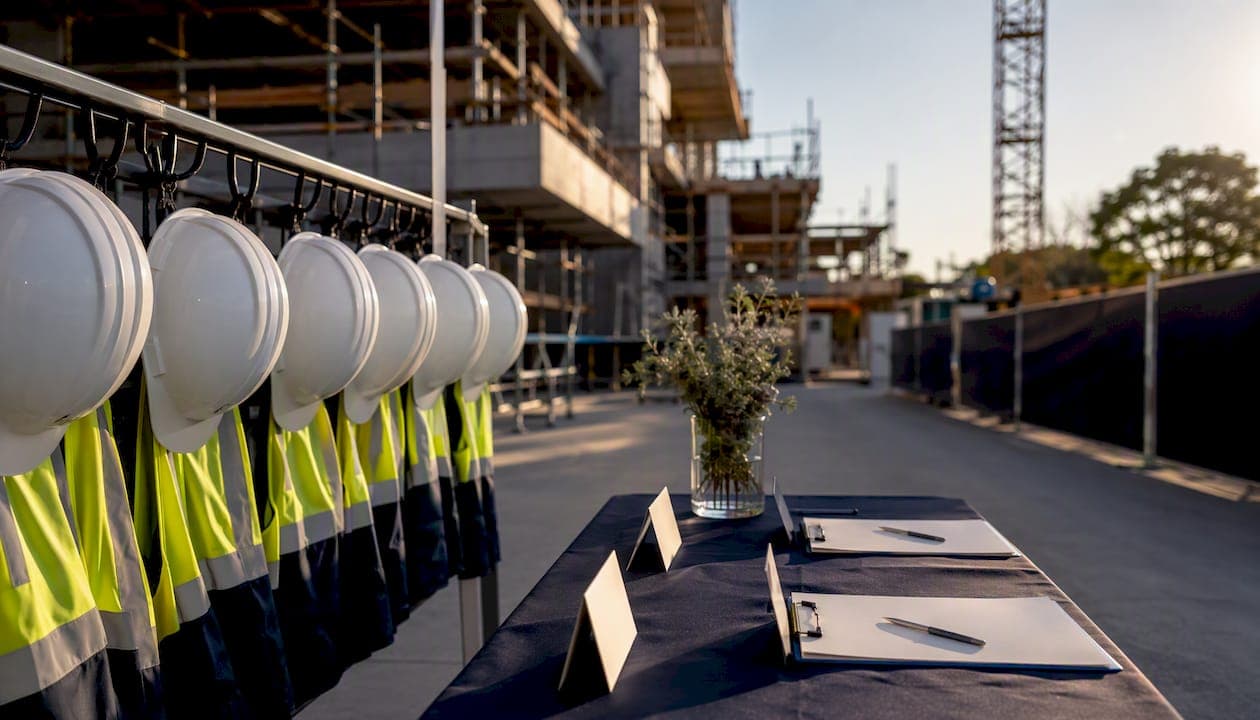
The three formats that consistently deliver the best results for construction client appreciation events are onsite milestone site tours, intimate offsite hospitality, and hybrid technical workshops with a social element. Site tours work because construction clients respond to visual evidence of progress. Offsite hospitality builds trust in a neutral, relaxed setting. Hybrid workshops combine professional development with relationship-building, which suits clients who need to justify attendance to their own teams.
Quick format guide:
- Onsite milestone tour — best when the project is well advanced but not yet complete and you want clients to see tangible progress first-hand
- Offsite VIP hospitality (sporting event, theatre box, awards evening) — best for high-value clients where relationship depth matters more than project updates
- Hybrid technical workshop with networking — best when your client base includes architects, engineers or procurement leads who value CPD-accredited content alongside the social element
Key takeaways
A well-planned construction client appreciation event combines the right format for the project stage, a targeted guest list, and a structured follow-up within 48 hours to convert attendance into commercial outcomes.
| Point | Details |
|---|---|
| Choose format by project stage | Onsite tours work best at 60–80% completion; offsite hospitality suits early-stage or high-value relationship building. |
| Keep guest lists targeted | 20–40 well-chosen guests generate more commercial return than a large, untargeted attendance. |
| Plan safety before the invitation | For onsite events, complete the risk assessment and confirm PPE requirements before sending any invitations. |
| Follow up within 48 hours | Personal thank-you messages and follow-up calls within two days convert event goodwill into meetings and referrals. |
| A1lifestyle for offsite hospitality | A1lifestyle manages VIP ticketing, transport and concierge logistics for corporate group bookings across the UK. |
Table of Contents
- What are the best construction client appreciation event ideas?
- How do you plan a construction client appreciation event step by step?
- Sample timelines and budget brackets for UK construction firms
- Onsite tours, offsite hospitality or virtual: which format suits your event?
- Which activities work best for construction client events?
- How do you manage guest lists and VIP treatment for construction events?
- What catering and transport options work for construction client events?
- What health and safety steps are required for onsite construction visits in the UK?
- How do you measure the success of a construction client event?
- How a VIP hospitality package amplified one construction firm's client programme
- Three practical tips from Tony at A1lifestyle
- A1lifestyle can manage the hospitality so you focus on the relationship
- Sources
- FAQ
What are the best construction client appreciation event ideas?
Construction clients are not a generic audience. They understand build programmes, procurement risk and site logistics. Event ideas that acknowledge that context land better than generic hospitality. Client appreciation event formats that work across sectors — such as receptions, wine tastings, or themed breakfasts — transfer well when the content is made sector-specific.
Here are eight ideas suited to construction-sector client engagement, with execution notes for UK audiences.
-
Jobsite open house at 60–80% completion. The project is visually compelling but still has behind-the-scenes authenticity. Hosting a jobsite tour at this stage makes the vision tangible without the site being fully dressed. Prepare a structured walking route, station team members at key points, and brief them on commentary. In the UK, check CDM 2015 obligations and confirm with the principal contractor that the site is visitor-ready.
-
Family day or community open house. Momentum-building family days maintain engagement across long builds and convert attendees into project ambassadors. They work particularly well for housing developments, schools and community infrastructure. Plan for wet weather with a marquee or covered area — a non-negotiable for UK outdoor events between October and April.
-
Trade-pro VIP breakfast. A morning event for architects, agents and professional referrers. Keep it to 20–30 guests, serve a proper hot breakfast, and give a 15-minute project update. The format suits busy professionals who will not commit to an evening event. Smaller, invitation-only gatherings consistently outperform large conferences for relationship depth in the AEC sector.
-
CPD-style technical workshop. Pair a 45-minute accredited session (materials innovation, sustainability, planning updates) with a networking lunch. Clients gain professional development points; you gain 90 minutes of face time. Register the session with RIBA CPD or CIOB to add credibility.
-
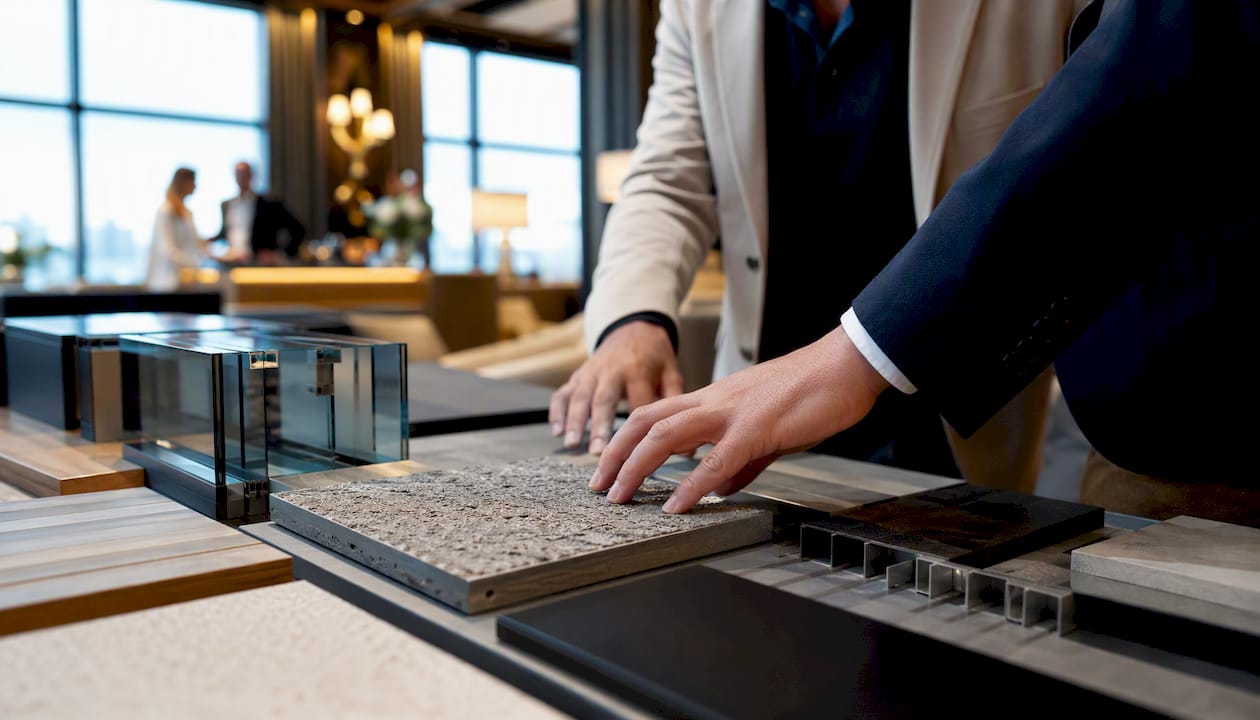
Supplier showcase and materials touch table. Set up a display of key materials, finishes and product innovations used on the project. Clients handle samples, ask questions and understand specification decisions. Low cost, high engagement, and it positions your team as technically informed.
-
Client awards evening. Recognise long-standing clients, project milestones or community contributions with a short awards segment at a dinner or drinks reception. Keep categories genuine — avoid manufactured awards that feel hollow. Themed events with branded giveaways such as Jacobsen Construction's 'Breakfast by the Lake' show how a clear theme and a memorable atmosphere create lasting recall.
-
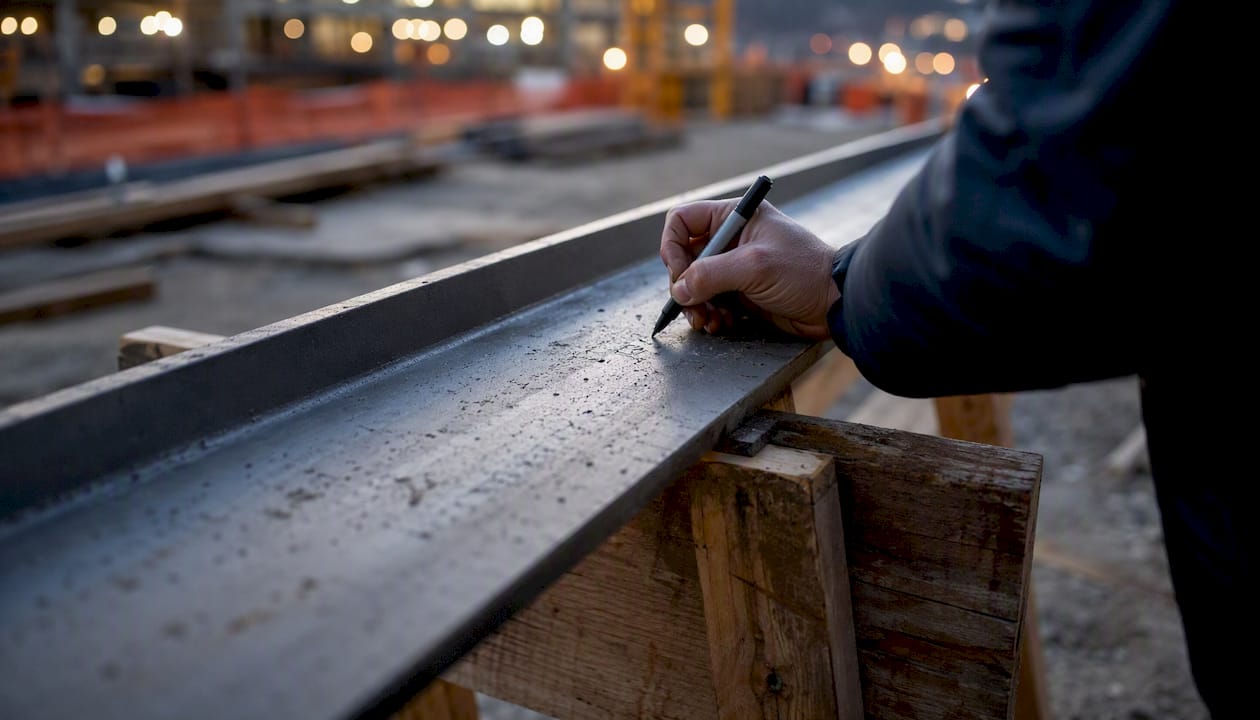
Beam signing or time capsule ceremony. Invite key clients to sign a structural beam before it is installed, or contribute to a time capsule buried at the site. Hands-on participation increases emotional investment beyond what static hospitality achieves. Brief the site manager on access control and PPE requirements in advance.
-
Offsite VIP hospitality. A Premier League match, a motorsport event or a theatre evening in a private box removes the site context entirely and lets relationships develop in a relaxed setting. See the construction client entertainment examples on the A1lifestyle blog for themed and sector-specific formats that work in the UK.
Pro Tip: For UK events planned between November and March, always have an indoor contingency. Even a covered marquee with heating can save an outdoor site event from cancellation. Book it at the same time as the primary venue.
How do you plan a construction client appreciation event step by step?
Start with four decisions before anything else: the event's purpose (relationship maintenance, lead generation, project milestone celebration), the target audience, the format, and the budget ceiling. Everything else follows from those four.
Planning a mid-construction family day follows the same three guiding questions that apply to any construction client event: who is it for, when does it make sense in the build programme, and how large should it be?
Roles and responsibilities:
- Project lead / BD director — owns the guest list, budget sign-off and overall objectives
- Site manager — approves site access, confirms safe areas and briefs the H&S officer
- Marketing / communications — handles invitations, RSVP tracking and post-event content
- H&S officer — produces the risk assessment, visitor induction brief and PPE checklist
- External events coordinator — manages catering, AV, transport and any offsite venue liaison
Planning checklist (numbered by sequence):
- Define purpose, audience and format (12 weeks out for a small event; 16+ weeks for a large site event)
- Set and approve budget with finance or procurement
- Confirm site access permissions with the principal contractor and landowner
- Commission a risk assessment for any onsite element
- Book venue, catering and transport
- Draft and send save-the-date communications (8 weeks out)
- Send formal invitations with RSVP link or dedicated email address (6 weeks out)
- Chase non-responders by phone for top-priority guests (3 weeks out)
- Confirm final numbers with caterers and transport providers (2 weeks out)
- Brief all staff and site personnel (48 hours out)
- Conduct a site walk-through on the morning of the event
- Send personal thank-you messages within 48 hours of the event
Sample timelines and budget brackets for UK construction firms
Two schedules cover most scenarios. A small, focused event (20–40 guests, offsite or a contained site area) needs 4–8 weeks of lead time. A full site milestone event with 80+ guests, structured tours and catering needs 12–16 weeks.
Small event (4–8 week schedule):
| Week | Key tasks |
|---|---|
| 8 | Confirm purpose, format, budget and guest list |
| 6 | Book venue or confirm site access; brief H&S officer |
| 5 | Send invitations with RSVP deadline |
| 3 | Chase outstanding RSVPs; confirm catering numbers |
| 2 | Finalise transport, AV, staffing and PPE stock |
| 1 | Brief all staff; confirm final logistics |
| Event day | Site walk-through; staff briefing; run event |
| +2 days | Send thank-you messages and follow-up calls |
Budget brackets (UK, indicative):
| Line item | Small event (20–40 guests) | Large event (80–150 guests) |
|---|---|---|
| Venue / site preparation | £500–£1,000 | £3,000–£6,000 |
| Catering (per head) | £25–£40 | £40–£80 |
| PPE and safety measures | £200–£600 | £800–£2,000 |
| Transport / coach hire | £300–£700 | £1,500–£4,000 |
| AV and signage | £300–£700 | £1,000–£3,000 |
| Staffing (external) | £400–£900 | £1,500–£3,500 |
| Insurance (event-specific) | £150–£400 | £400–£1,000 |
| Contingency (10%) | £200–£600 | £1,000–£2,500 |
Budget line-item checklist for your planning spreadsheet:
- Venue hire or site preparation costs
- Catering (food, beverages, service staff)
- PPE stock (hard hats, hi-vis, safety boots if needed)
- Risk assessment and H&S consultancy
- Transport and parking management
- Invitations, print and branded materials
- AV, lighting and signage
- Photography or videography
- Event-specific public liability insurance
- Contingency (minimum 10% of total)
For offsite VIP hospitality, sourcing executive entertainment packages through a specialist provider often reduces the coordination burden and can consolidate several line items into a single managed cost.
Onsite tours, offsite hospitality or virtual: which format suits your event?
The right format depends on three factors: the project stage, the audience mix and the time of year.
Onsite site tours
- Pros: high visual impact, demonstrates progress, positions your team as transparent and confident
- Pros: low venue cost when the site is already active
- Cons: weather-dependent; requires CDM-compliant visitor management; not suitable for guests with mobility limitations
- Cons: site must be at a stage where it is visually compelling (the 60–80% window)
Offsite hospitality
- Pros: neutral ground encourages relaxed conversation; no site logistics or PPE requirements; accessible to all guests
- Pros: format flexibility (sporting event, dinner, theatre, awards)
- Cons: higher per-head cost; less direct connection to the project; requires more lead time for premium venues
Virtual or hybrid
- Pros: removes travel barriers; suits geographically dispersed client bases; lower cost
- Cons: lower engagement than in-person; harder to create memorable moments; requires reliable AV and a confident presenter
Quick decision rubric:
- Project at 60–80% completion + clients are local + weather is manageable → onsite tour
- High-value clients + relationship is the priority + budget allows → offsite VIP hospitality
- Clients are spread across the UK or internationally + budget is limited → virtual or hybrid
For group offsite events, a practical group sports hospitality checklist covers transport, ticketing and guest management in detail.
Pro Tip: Hybrid events work best when the virtual element is designed independently, not as an afterthought. Give remote attendees a dedicated host, a separate Q&A channel and a physical welcome pack posted in advance.
Which activities work best for construction client events?
Activities fall into four groups. Each serves a different relationship-building purpose.
Technical demonstrations and materials touch tables
Set up samples of key materials, structural models or digital BIM visualisations. Clients engage directly with specification decisions. Station a technical lead at each display to answer questions. H&S note: keep displays away from active work areas; no loose materials near edges or walkways. ROI: positions your firm as technically credible and transparent, which shortens procurement decision cycles.
Social and networking activities
Structured networking (name badges with conversation prompts, a short quiz about the project) reduces the awkwardness of open networking for guests who do not know each other. An awards moment — even a brief, informal recognition of a long-standing client — creates a shared memory. ROI: clients who feel recognised are more likely to refer.
Family-friendly attractions
A children's craft area, a short age-appropriate tour of a safe site area, or a photo wall showing project progress keeps families engaged and extends dwell time. Family day activities work best when partners and children are explicitly welcomed in the invitation. H&S note: designate a separate, fully controlled family zone away from any active construction.
Experiential touches
Beam signing, progress photo walls and time capsule ceremonies convert guests from observers into participants. These moments photograph well and generate organic social content. H&S note: beam signing requires the structural element to be accessible at a safe height with no overhead risk; confirm with the site manager before scheduling.
| Activity type | H&S note | Relationship ROI |
|---|---|---|
| Materials touch table | Keep away from active areas | Builds technical credibility |
| Awards moment | None required | Increases referral likelihood |
| Family craft zone | Separate controlled area; adult supervision | Extends dwell time; broadens relationship |
| Beam signing | Confirm safe access with site manager | Creates lasting personal connection |
| Progress photo wall | No specific risk | Generates shareable content |
How do you manage guest lists and VIP treatment for construction events?
Guest prioritisation determines the event's commercial return. A broad, untargeted list dilutes the experience for high-value clients and inflates cost without proportionate benefit.
Guest prioritisation checklist:
- Existing clients (current active projects and recently completed)
- High-prospect leads at late-stage procurement
- Professional referrers: architects, structural engineers, planning consultants, estate agents
- Community stakeholders for public-facing projects (local councillors, community group leads)
- Internal team members who have direct client relationships
Invitation timeline and channels:
- 8 weeks out: personal phone call or direct message to top 20 priority guests
- 6 weeks out: formal email invitation with RSVP link and deadline
- 4 weeks out: reminder to non-responders via email
- 3 weeks out: personal follow-up call to outstanding top-priority guests
- 2 weeks out: final confirmation email with logistics details
Personal outreach to the top 20 contacts — by call or direct message rather than email — consistently improves attendance rates and signals that the invitation is genuine, not a bulk send. Structured follow-up within 48 hours of the event converts goodwill into meetings and referrals.
VIP treatment list:
- Separate arrival briefing for top-tier guests (5 minutes with a senior team member before the main event begins)
- Dedicated host assigned to each VIP for the duration of the event
- Curated takeaway: a project-specific item (printed progress report, materials sample, branded item) rather than generic merchandise
- Follow-up meeting scheduled before the guest leaves the event, not as a cold ask afterwards
For guidance on impressing stakeholders with exclusive events, the A1lifestyle blog covers executive hospitality tactics in detail.
What catering and transport options work for construction client events?
Catering format should match the event's tone and the site context. A formal plated dinner does not suit a working site; a food truck does not suit a black-tie awards evening.
Catering format options:
- Drop buffet — flexible, suits mixed dietary needs, works onsite and offsite; requires adequate serving space and staff to manage flow
- Plated hospitality — appropriate for offsite dinners and awards evenings; higher cost, requires confirmed numbers 5–7 days in advance
- Food trucks or street food stations — informal, high visual appeal, suits family days and outdoor events; confirm power supply and surface access for the vehicle
- Tea, coffee and light refreshments — appropriate for morning workshops and site tours; low cost, easy to manage, always appreciated in UK weather
Transport checklist:
- Confirm parking capacity at the venue or site; arrange overflow parking if needed
- For groups of 15+, consider a dedicated coach from a central pick-up point
- Provide clear written directions and a site postcode or what3words address
- Designate a drop-off point separate from the main site entrance
- For evening events, confirm last public transport times and share them in the logistics email
When guests are travelling from outside the region, include a short note in the invitation about nearby accommodation options. You are not obliged to book it for them, but the information reduces friction and signals consideration.
Accessibility and dietary inclusion:
Include this line in every invitation: "Please let us know of any dietary requirements, mobility needs or accessibility requests when you RSVP." Confirm with your caterer that you can accommodate the most common requirements: vegetarian, vegan, gluten-free, halal and kosher. For onsite events, confirm that the visitor route is accessible to guests with limited mobility before the invitation goes out.
What health and safety steps are required for onsite construction visits in the UK?
Onsite visitor events carry specific legal obligations under CDM 2015 and the Health and Safety at Work Act 1974. Treating safety as a checklist item rather than a genuine priority creates liability and reputational risk.
Visitor safety checklist:
- Conduct a formal risk assessment for the visitor route before the event
- Confirm PPE requirements with the principal contractor (hard hats and hi-vis are standard; safety boots may be required depending on the surface)
- Brief all visitors at arrival with a site induction (maximum 3 minutes; cover emergency exits, prohibited areas and behaviour expectations)
- Station a trained team member at each transition point on the tour route
- Confirm welfare facilities are available and accessible (toilets, handwashing, first aid)
- Restrict access to active work areas; use physical barriers and clear signage
- Confirm a first-aider is present for the duration of the event
Insurance and permissions:
- Confirm the principal contractor's public liability insurance covers visitor events, or arrange a separate event-specific policy
- Obtain written landowner consent for the event if the site is not yet in the client's possession
- Check that all contractors working during the event period are aware of visitor presence
- Obtain photographic permission from guests in writing (include a line in the RSVP confirmation)
Sample arrival brief (read aloud at the start of the tour):
"Welcome to [project name]. For your safety, please keep your hard hat and hi-vis on at all times. Stay within the marked visitor route. If you hear a site alarm, follow your host to the nearest assembly point. Please do not touch any materials or equipment unless invited to do so."
Contingency planning:
- Identify an indoor fallback location before the event date
- Agree a cancellation threshold with the site manager (e.g. wind above a specified speed, active overhead crane operations)
- Communicate the contingency plan to guests in the logistics email so they are not surprised by a last-minute change
How do you measure the success of a construction client event?
Attendance rate is a starting point, not the measure. The commercial value of a client appreciation event shows up in the weeks after it, not on the day.
KPIs to track:
- Attendance rate against invitations sent
- Qualified leads generated or identified at the event
- Follow-up meetings booked within 14 days
- Social media reach from event content (posts, photos, video clips)
- Client sentiment (a simple one-question post-event survey: "How likely are you to recommend us to a colleague?")
Post-event follow-up checklist:
- Send a personal thank-you within 48 hours — by email for most guests, by phone or handwritten note for top-tier clients
- Segment follow-up by guest type: existing clients (relationship maintenance message), prospects (meeting request), referrers (thank-you and reciprocal offer)
- Repurpose event photography and video for social media, case studies and future invitations
- Log attendance and follow-up outcomes in your CRM; tools such as Altitude CRM support RSVP tracking and post-event workflow automation
Sample thank-you email (adapt as needed):
Subject: Thank you for joining us at [project name]
"It was good to have you with us on [date]. I hope you found the visit useful. I will be in touch shortly to arrange a follow-up conversation. In the meantime, please do not hesitate to get in touch if you have any questions."
One-line follow-up call script:
"Hi [name], just calling to say thank you for coming along on [date] — I wanted to check in and see if there is anything from the visit you would like to discuss further."
Pro Tip: Repurpose event photography within 72 hours while engagement is highest. A short LinkedIn post with two or three images and a brief project update generates reach among the professional networks of everyone who attended, not just your own followers.
How a VIP hospitality package amplified one construction firm's client programme
A regional UK contractor with a portfolio of commercial and mixed-use projects wanted to strengthen relationships with a group of 12 key clients ahead of a major tender cycle. An internal site event had been considered but ruled out: the project was at an early stage, and the firm wanted a neutral, memorable setting.
The brief given to A1lifestyle was straightforward: arrange a half-day VIP hospitality experience for 12 guests, manage all logistics, and ensure the format encouraged relaxed conversation rather than formal presentations.
A1lifestyle sourced a Premier League hospitality package with a private box, pre-match lunch and dedicated host. Transport was arranged from a central London pick-up point. Guests received a personalised itinerary and a brief welcome note from the contractor's managing director the morning of the event.
The format removed every logistical decision from the client's hands. Guests arrived, were looked after, and left having spent four hours in a relaxed setting with the contractor's senior team. Three follow-up meetings were booked within the fortnight. Two of those clients went on to submit expressions of interest in the firm's next development phase.
Tactical takeaways:
- A neutral, high-quality offsite venue removes the pressure of site logistics and lets the relationship take centre stage
- Personalised logistics (named itinerary, dedicated transport, a host who knows the guest list) signal that the event was designed for these specific people, not a generic group
- Booking through a specialist provider such as A1lifestyle consolidates transport, ticketing and hospitality management into a single point of contact, which reduces the internal coordination burden significantly
- VIP hospitality packages that include concierge-level logistics consistently outperform self-managed offsite events on guest experience scores
Three practical tips from Tony at A1lifestyle
The most common planning mistake is treating the event as the end point. The event is the opening. What happens in the 48 hours after it determines whether the investment returns anything commercially.
Keep the guest list tighter than feels comfortable. Twenty guests who are genuinely relevant to your business will generate more value than 80 who are not. Smaller events allow senior team members to spend real time with each guest, which is the point.
On the day, the host's presence matters more than the production quality. Guests remember whether the managing director was present and engaged, not whether the canapés were exceptional. Brief senior team members on who is attending and what matters to each guest before the event begins.
A1lifestyle can manage the hospitality so you focus on the relationship
Construction firms that outsource the logistics of offsite client hospitality to a specialist consistently report a better guest experience and lower internal coordination cost. A1lifestyle provides VIP hospitality and concierge services for corporate group bookings across the UK, covering sporting events, concerts, award shows and exclusive experiences.
The practical advantage is straightforward: A1lifestyle handles ticketing, transport, private box or suite access, and on-the-day hosting. Your team focuses on the client conversations that matter. With over 30 years of experience and access to sold-out and premium events, A1lifestyle can source packages that are not available through standard booking channels, including sports events and hospitality across the UK calendar.
To discuss a bespoke group booking or VIP package for your next client appreciation event, contact A1lifestyle directly via the services page.
Sources
- Construction open house and job site tour guide
- Leadership League: Building AEC relationships through strategic events
- Event planning to build momentum in construction - Catalyst Construction
- How to host a meaningful client appreciation event - Tom Ferry
FAQ
What is a client appreciation event in construction?
A client appreciation event in construction is a hosted gathering designed to recognise and strengthen relationships with existing clients, professional referrers and key stakeholders. Formats range from onsite project tours to offsite VIP hospitality, depending on the project stage and relationship objectives.
How do you host a client appreciation event for construction clients?
Define the purpose, audience and budget first, then select a format that matches the project stage. For onsite events, complete a risk assessment and confirm CDM 2015 compliance before sending invitations. Follow up personally within 48 hours of the event to convert attendance into meetings or referrals.
What activities work well at construction client events?
Family day formats work particularly well for community and residential projects where engaging a broader stakeholder group matters.
How do you thank someone for attending a construction client event?
Send a personal email or make a brief phone call within 48 hours. For top-tier clients, a handwritten note or a direct call from a senior team member carries more weight than a bulk email. Reference something specific from the event to make the message feel personal rather than templated.
How much does a construction client appreciation event cost in the UK?
Costs vary by format and scale. A small onsite or offsite event for 20–40 guests typically costs in the range of several thousand pounds all-in, including catering, transport and safety measures. A larger milestone event for 80–150 guests involves higher costs depending on venue, catering standard and entertainment.