
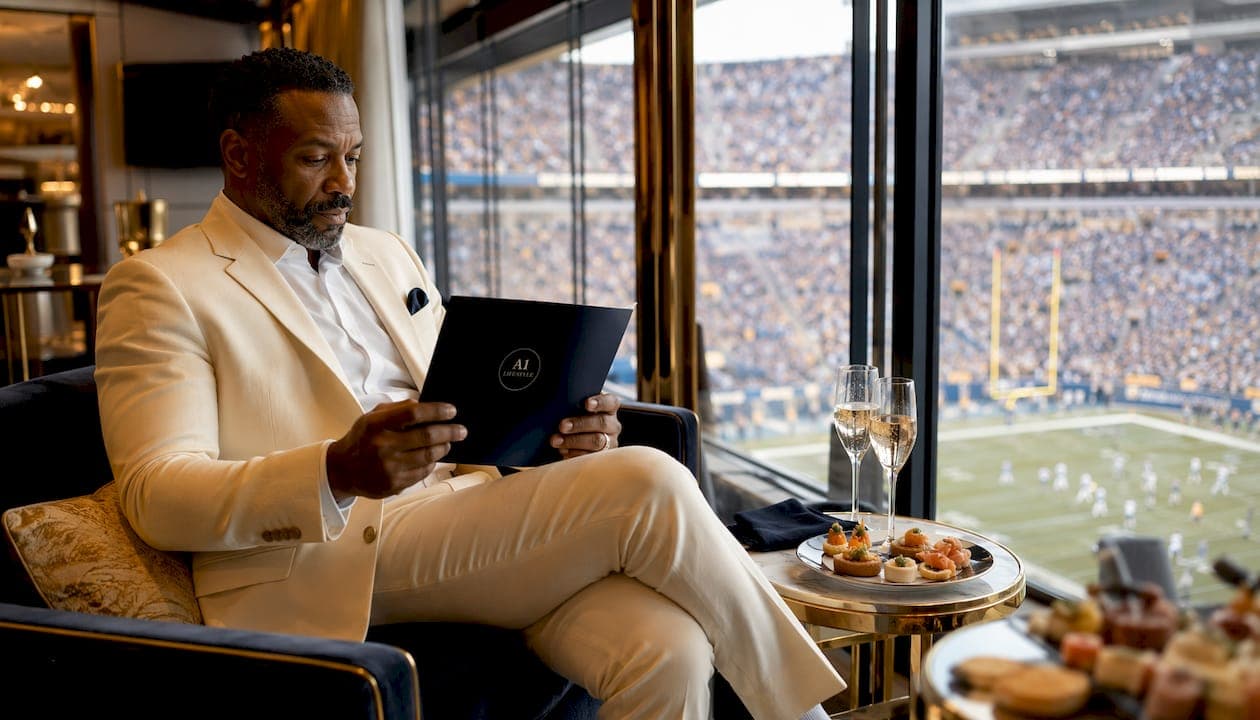
A corporate sports box is a private, self-contained suite inside a stadium or arena that you hire as a single unit for a group, typically 6–12 people. You book the box, manage your guest list, and the venue supplies the space, seating, lounge area, and a baseline catering package. Optional extras such as branded signage, AV equipment, and player appearances can be added on top. The industry term for this product is a private suite or executive box, and it sits at the top of the sports hospitality packages tier structure.
At a glance, a corporate sports box delivers:
- A private lounge with dedicated seating and a direct pitch or track view
- Exclusive entry via a VIP or corporate entrance
- Dedicated stewarding or a named host for the duration of the event
- Standard catering and drinks included in the hire fee or a minimum spend arrangement
- Guest-list control and transferable access for your invitees
The most effective way to treat a box is as a relationship-investment asset with measurable outcomes, not as an occasional perk. Plan it, track it, and measure what it generates.
Table of Contents
- What exactly is a corporate sports box?
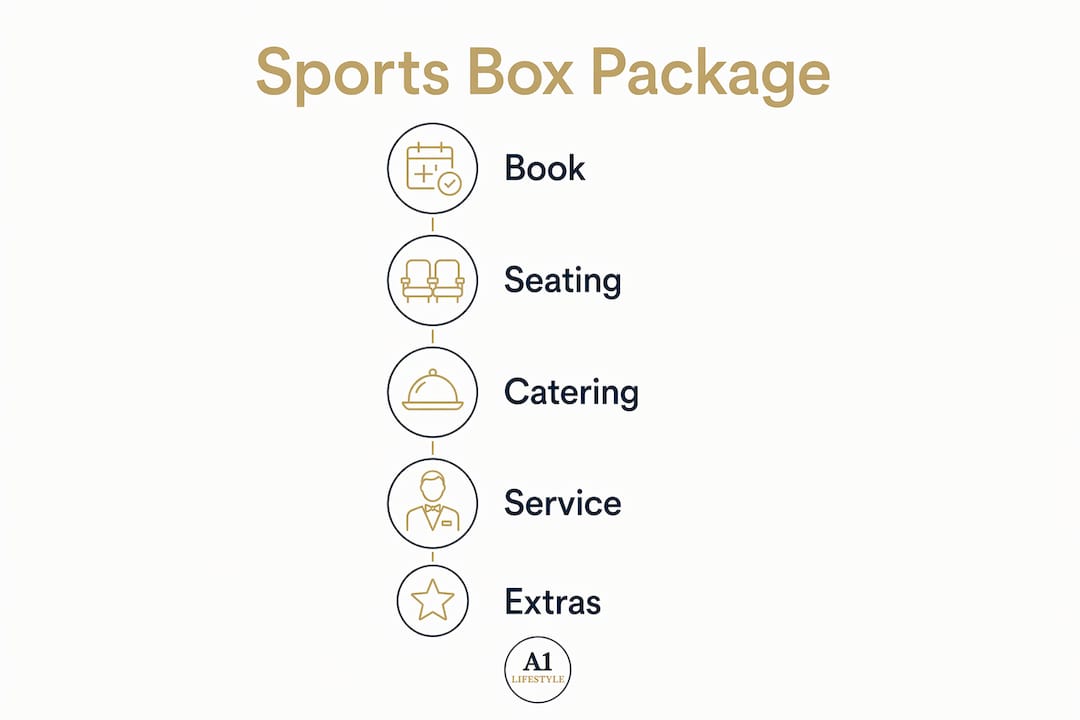
- What does a sports box package include?
- How does booking a corporate sports box work?
- What does a corporate sports box cost in the UK?
- What is the business case for corporate sports box hospitality?
- How do you choose the right provider?
- Practical host etiquette and on-the-day tips
- A1lifestyle: sourcing and managing corporate sports boxes
- Key takeaways
- What experienced hosts actually focus on
- Useful sources
- FAQ
What exactly is a corporate sports box?
A private suite at a major sporting event differs from standard club or restaurant hospitality in one key way: you hire the whole unit rather than buying individual seats. That distinction gives you control over who attends, how the space is configured, and what impression your guests take away.
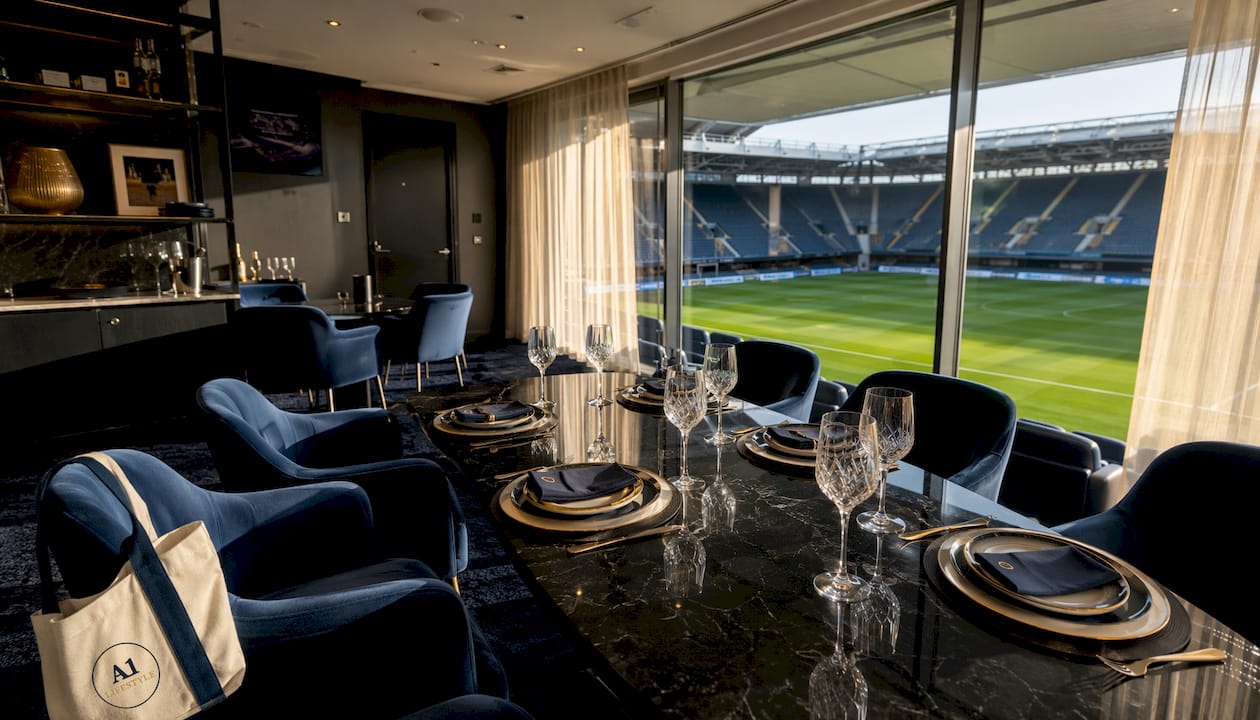
Private boxes and executive suites are the most exclusive tier. Capacities typically run from 6 to 12 guests in a standard suite, with occasional larger boxes at specific venues. The space includes a lounge area, private seating with a direct view, and its own service point. You are not sharing a dining room with other companies.
Corporate lounges and club-level packages sit one step below. These are per-seat arrangements inside a shared premium area. The catering and service quality can be comparable, but you lose the privacy and the ability to brand the space.
In the UK, private boxes are available across Premier League football grounds, international rugby stadia such as Twickenham, racecourses including Ascot and Cheltenham, Formula 1 circuits, and major tennis venues. Clubs and venues typically sell directly through their corporate or hospitality pages. Third-party packagers and concierge platforms act as brokers or full-service arrangers, often with access to sold-out inventory or bundled travel and hotel options that clubs do not offer directly. Understanding how stadium hospitality levels work helps you identify which tier fits your objectives before you start requesting quotes.
What does a sports box package include?
The role of sports hospitality in a guest's experience depends heavily on what the package actually contains. Consistent VIP touchpoints across digital invites, check-ins, and exit experiences are what separate a memorable event from a forgettable one.
Core inclusions you should expect:
- Private seating with an unobstructed view of the pitch, track, or court
- A lounge area with tables, soft seating, and a service counter
- Dedicated stewarding or a named host for the box
- Standard catering: typically a three-course meal or buffet pre-match, with drinks included or on a minimum spend basis
- VIP or corporate entrance with separate access from general admission
- Parking allocation or a designated drop-off point
Common add-ons to request:
- Private chef or upgraded menu (tasting menus, dietary-specific options)
- Branded signage, pull-up banners, or full suite branding
- AV equipment: screens, presentation capability, or live feed
- Player appearances, signed merchandise, or behind-the-scenes tours
- Pre-match or post-match hospitality slots extending your access window
- Personalised gifts or welcome packs for guests
Operational details to confirm before signing:
- Whether catering is inclusive or subject to a minimum food and beverage spend
- Dress code requirements for the venue
- Guest list transfer and substitution policies
- Arrival window (most venues open boxes 90–120 minutes before kick-off or the start of play)
- How long post-event access runs
Pro Tip: Ask the provider for a sample itinerary and a written inclusions list before you sign. Assumptions about service levels are the most common source of disappointment on the day.
How does booking a corporate sports box work?
The process from initial enquiry to guests walking through the door follows a clear sequence. Lead times matter more than most buyers expect: sports hospitality sells out early, particularly for high-demand fixtures such as derbies, cup finals, and international matches.
- Identify the event and box type. Decide whether you need a whole-box hire or per-seat club package, and confirm the capacity you require. Match the event profile to your guest mix.
- Submit an enquiry. Contact the club's corporate hospitality team or a third-party provider. For major fixtures, enquire at least 3–6 months in advance; seasonal suite contracts are typically agreed 6–12 months before the season starts.
- Receive a proposal and inclusions list. Review what is included, the minimum food and beverage spend, and any add-on costs. Compare this against your budget on a per-head basis.
- Review and sign the contract. Key terms to check: event dates, guest capacity, minimum F&B spend, payment schedule (deposit plus balance), cancellation and refund terms, and whether the booking is transferable to another guest or date.
- Manage your guest list. Send invitations, collect RSVPs, gather dietary requirements and accessibility needs. Digital RSVP tools or CRM-linked invitation platforms make this significantly easier for groups above eight.
- Pre-event briefing. Send guests a clear brief: arrival time, meeting point, dress code, parking or transport instructions, and a named contact for the day. Sharing digital passes and parking details in advance removes friction and raises perceived value.
- On-the-day operations. Arrive early to confirm catering timing with the host, check AV or branding set-up, and be in position to greet guests personally. The dedicated steward manages service; your role is host.
- Post-event follow-up. Send thank-you messages within 48 hours. Record attendance in your CRM and note any commercial conversations that warrant follow-up. Integrating suite attendance with CRM allows you to track guest histories and correlate attendance with deal progression.
For renting a private box at a sold-out or high-demand event, a concierge provider with existing venue relationships is often the most reliable route.
What does a corporate sports box cost in the UK?
Pricing depends on several variables. The event profile carries the most weight: a Premier League derby or a Wimbledon final commands a significant premium over a mid-table league fixture. Box size, location within the stadium, catering standard, and any add-on experiences all move the number.
Primary cost drivers:
- Event tier (cup final vs. regular season fixture)
- Seat location and quality of view
- Box capacity and lounge size
- Catering standard and minimum F&B spend
- Add-ons: meet and greet, branding, AV
- Day of week and kick-off time (weekend fixtures cost more)
Most venues require a minimum food and beverage spend per event, which affects the true per-head cost materially when a box is not at full occupancy. Understanding how sports fan packages are priced helps you model the arithmetic before committing.
The effective per-head cost falls as occupancy rises. A box with a fixed hire fee and minimum F&B spend becomes cheaper per person when filled closer to capacity.
| Box type | Typical capacity | Indicative UK price range (per event) | Illustrative per-head (full box) |
|---|---|---|---|
| Small executive box | 6–8 guests | £3,000 | — |
| Mid-size private suite | 6–12 guests | — | — |
| Seasonal suite (full season) | 10–20 guests | — | Varies by utilisation |
Indicative ranges only. Actual prices vary by venue, event, and inclusions. Always confirm VAT treatment, service charges, and minimum F&B spend separately.
Pro Tip: Always ask for a full cost breakdown including VAT, service charges, corkage, and any AV or branding fees. These additions can increase the headline price by 20–30%.
What is the business case for corporate sports box hospitality?
Sports hospitality builds trust and loyalty in ways that presentations and contracts cannot. The shared emotional experience of a live sporting event creates a context for genuine conversation, and that context is difficult to replicate in a meeting room.
The primary use-cases for corporate boxes are:
- Client entertainment: deepening relationships with key accounts or prospects in a relaxed, high-value setting
- Staff recognition: rewarding high performers or teams with an experience that signals genuine appreciation
- Partner and supplier networking: bringing multiple stakeholders together in a neutral, enjoyable environment
- Sponsor activation: co-branded hospitality as part of a wider sponsorship agreement
Corporate sports hospitality can account for more than 10% of some clubs' revenues, which reflects how seriously both buyers and sellers treat the category. A formal management process with defined KPIs benefits both parties.
Well-managed programmes that track utilisation, attendance, and post-event activity can achieve high seat utilisation across a season. That figure matters because underutilised boxes represent wasted fixed cost.
Practical KPIs for leadership:
- Seat utilisation percentage per event and across the season
- Number of follow-up meetings generated within 30 days of each event
- Pipeline movement or deals influenced by hospitality attendance
- Guest satisfaction or NPS scores collected post-event
- Retention rate of clients who attended versus those who did not
Pro Tip: Tag guests in your CRM with event attendance and set a follow-up task for 48–72 hours after the event. This single habit is what separates programmes that generate measurable pipeline from those that feel like a nice day out.
How do you choose the right provider?
The choice between buying direct from a club and using a third-party provider depends on what you need beyond the box itself. Buying direct is often the lowest price for the same product, but it excludes bundled travel, hotel options, or access to sold-out inventory. A concierge provider adds margin but also adds capability. Choosing the best sports hospitality provider requires matching your objectives to the provider's actual strengths.
Selection criteria:
- Direct club access versus broker model and what each means for price and availability
- Breadth of event inventory across sports, venues, and dates
- Transparency on fees, inclusions, and what is excluded
- Contractual flexibility: cancellation terms, transferability, and force majeure provisions
- Insurance and compliance handling, including Bribery Act awareness
- Account management: a named contact who knows your programme
Operational questions to ask any provider:
- Can you provide a sample run-sheet for a comparable event?
- What are the cancellation and refund terms?
- What is the minimum F&B spend and how is it calculated?
- Can guests be substituted after the contract is signed?
- What catering options are available for dietary requirements?
- Is branding permitted, and what are the restrictions?
- Is AV equipment included or available to hire?
Commercial questions:
- What is the deposit and payment schedule?
- Are there service charges, corkage fees, or VAT additions not in the headline price?
- Is there an exchange or resale option if your plans change?
Practical host etiquette and on-the-day tips
The quality of the guest experience depends as much on the host's preparation as on the venue's facilities. Hospitality packages impress clients when the logistics are invisible and the host is present and attentive.
Before the event:
- Send a clear brief to all guests: arrival time, meeting point, dress code, parking or transport details, and a mobile number for the day
- Confirm dietary requirements with the catering team at least 48 hours in advance
- Allocate a single point of contact for guests who are running late or need assistance
On the day:
- Arrive 30–45 minutes before guests to confirm the box set-up, catering timing, and AV or branding
- Greet guests personally at the meeting point where possible; introduce key contacts to each other early
- Manage alcohol service responsibly; the host sets the tone
- Confirm accessibility needs are met before guests arrive, not on the day
Post-event:
- Send a personal thank-you message within 48 hours
- Record attendance and any commercial conversations in your CRM
- Capture brief feedback from guests to improve the next event
Pro Tip: The most common failure in corporate hospitality is not the event itself but the follow-up. A timely, specific thank-you that references a conversation from the day is far more effective than a generic message sent a week later.
A1lifestyle: sourcing and managing corporate sports boxes
A1lifestyle provides broker and concierge services for corporate clients seeking private boxes and VIP hospitality at high-demand sporting events across the UK and internationally. With over 30 years of industry experience, A1lifestyle has the venue relationships and inventory access to source boxes at events that are sold out through standard channels.
The service covers end-to-end event logistics: sourcing the box, managing the contract, coordinating catering and add-ons, and providing a named account manager for the programme. For corporate buyers who need access to Premier League hospitality or club-specific packages such as Arsenal hospitality, A1lifestyle can confirm availability and provide a bespoke quote. The concierge services page covers the full range of corporate entertainment and group booking options.
To check availability for a specific fixture or event, submit an enquiry directly through the A1lifestyle website. A member of the team will respond with options, indicative pricing, and a clear inclusions list.
Key takeaways
A corporate sports box is a whole-unit hire that gives businesses a private, measurable environment for client entertainment, staff recognition, and relationship-building, with outcomes best tracked through CRM integration and defined KPIs.
| Point | Details |
|---|---|
| Definition | A private suite hired as a whole unit for 6–12 guests, with lounge, seating, catering, and a dedicated host. |
| Inclusions to confirm | Always request a written inclusions list covering catering, minimum F&B spend, parking, AV, and branding permissions. |
| Pricing drivers | Event tier, box size, catering standard, and occupancy level all affect the effective per-head cost. |
| Measuring ROI | Track seat utilisation, follow-up meetings, and pipeline movement; well-managed programmes reach 75% to 90% utilisation. |
| Next step | Contact A1lifestyle to check availability and receive a bespoke quote for Premier League, rugby, motorsport, or other UK events. |
What experienced hosts actually focus on
The gap between a corporate hospitality programme that generates measurable business outcomes and one that simply costs money usually comes down to process, not budget.
The programmes that work have three things in common. First, a clear guest strategy: every seat is allocated to a named individual with a defined commercial or relationship objective. Second, run-sheet discipline: the host knows the catering timing, the AV set-up, and the arrival sequence before the first guest walks in. Third, a follow-up cadence that is built into the programme before the event, not improvised afterwards.
The failures are predictable. Late RSVPs that leave seats empty on the day. A guest mix that is too broad to allow meaningful conversation. No post-event follow-up, so the investment produces goodwill but no traceable pipeline. These are operational problems, not hospitality problems, and they are solved by treating the programme as a business process rather than a social occasion.
Scaling a hospitality programme without losing quality requires a dedicated programme manager, whether internal or through a provider like A1lifestyle. The moment box management becomes a secondary task for someone with other priorities, utilisation drops and follow-up stops happening consistently. A single person accountable for the programme, with access to a CRM and a clear brief for each event, is what keeps the return on relationship measurable.
Useful sources
The following sources informed this article and provide further reading for UK corporate buyers.
| Source | What it covers |
|---|---|
| RSVPify: Corporate Hospitality Suite Playbook | CRM integration, utilisation tracking, and suite management best practice |
| JTB USA: Sports Hospitality and Corporate Trust | The relationship-value case for sports hospitality investment |
| Infront Sport: Maximising Revenue with Corporate Hospitality | How venues and rightsholders structure and price hospitality tiers |
| Science@Home: Strategic Approach to Corporate Sports Hospitality | Academic research on KPI-driven hospitality management in football |
| A1lifestyle: How to rent a private box | Practical steps for booking a private box at a major event |
| A1lifestyle: Types of sports hospitality packages | Overview of package formats from boxes to club seats |
Internal resources on the A1lifestyle site:
- Exclusive fan experiences at live sports — add-on options and special access examples
- Why sports hospitality sells out early — demand drivers and booking timing guidance
- Premier League hospitality — availability and enquiry for Premier League boxes
This article provides general information about corporate sports box hospitality in the UK. It is not legal, tax, or financial advice. Confirm current HMRC guidance on business entertaining and any Bribery Act considerations with a qualified adviser for your specific situation.
FAQ
How does corporate sports box hospitality work?
A corporate sports box is a private suite hired as a whole unit inside a stadium or arena. You book the box, manage your guest list, and the venue provides seating, a lounge, catering, and a dedicated host for the duration of the event.
Is football hospitality tax deductible in the UK?
HMRC treats business entertaining, including sports hospitality, as a non-deductible expense for corporation tax purposes in most cases. VAT on client entertainment is also generally not recoverable. Confirm the current rules with a qualified tax adviser for your specific circumstances.
What is typically included with sports hospitality tickets?
Standard inclusions are private seating with a direct view, a lounge area, dedicated stewarding, catering (meal and drinks), and VIP entrance access. Add-ons such as player appearances, branded signage, and AV equipment are usually available at extra cost.
How far in advance should you book a corporate sports box?
For high-demand fixtures such as Premier League derbies or cup finals, 3–6 months is a minimum. Seasonal suite contracts are typically agreed 6–12 months before the season. A1lifestyle can source boxes for sold-out events where direct club availability has closed.
What is the difference between a hospitality box and a club seat?
A hospitality box is a whole-unit private hire for your group only, giving you control over the guest list and the space. A club seat is a per-seat purchase inside a shared premium lounge or dining area, with no private space and no control over who else is present.